Image processed by CodeCarvings Piczard ### FREE Community Edition ### on 2019-02-02 20:42:48Z | | ÿÿÿÿÿo° xÿ
بارعة علم الدين: لحظة الحقيقة في العراق بعد محاولة اغتيال رئيس الوزراء
Iraq’s moment of truth in wake of attempt on PM’s life Baria Alamuddin/Arab News/November 11/2021
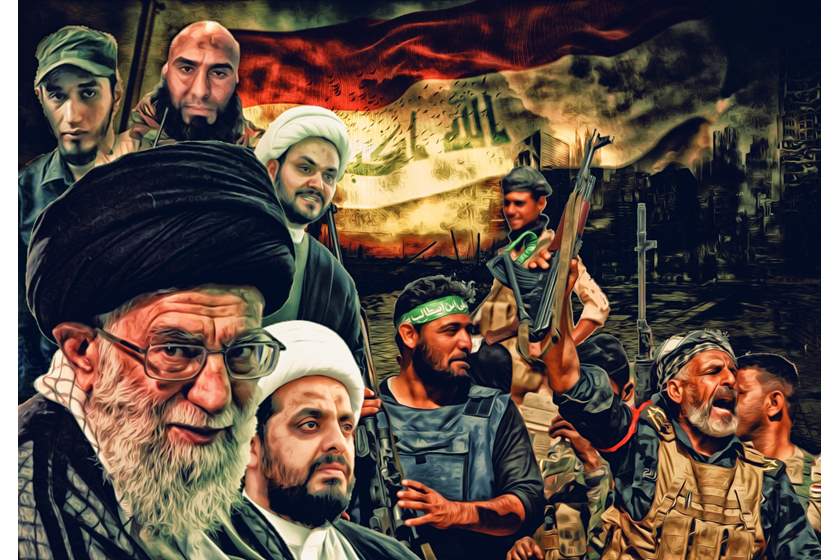
There is no mystery about who tried to kill Iraqi Prime Minister Mustafa Al-Kadhimi. The target himself declared: “We know them very well and we will expose them.” Security sources confirmed that the perpetrators were Iran-backed paramilitaries. Al-Kadhimi should publicly name the perpetrators so that there can be no room for doubt that members of Al-Hashd Al-Sha’abi tried to assassinate their own commander-in-chief.
Prior to the attack, Asa’ib Ahl Al-Haq leader Qais Al-Khazali issued threats and accusations against Al-Kadhimi. This warlord, who was responsible for overseeing the killings of hundreds of demonstrators in 2019 — and who is culpable for innumerable assassinations and sectarian killings — shamelessly accused the prime minister of cracking down on thuggish Hashd agitators who were seeking to forcibly overturn the election results by throwing rocks at security forces. Al-Khazali then risibly alleged that Iraqi intelligence staged the attack against Al-Kadhimi, who is the former chief of the same intelligence apparatus.
A Kata’ib Hezbollah spokesman quipped: “Nobody in Iraq has the desire to lose a drone over the house of a former prime minister.” And Kata’ib Sayyid Al-Shuhada Secretary-General Abu Alaa Al-Wala’i implied that Al-Kadhimi deserved to be assassinated, taunting that he would never again be prime minister.
The Hashd militias believe they can collectively escape accountability; that, whenever the state acts against them, they can flood the capital with their shock troops and assassinate whoever speaks out. They want everybody to know they were responsible — that is the point. They may only be able to win a few pitiful parliamentary seats, but they crave to be perceived as the real power in Iraq, willing to murder anybody who stands in their way.
Sunday’s attack demonstrates how much militants fear Al-Kadhimi obtaining a second term, as he is perhaps the only politician in Iraq with sufficient courage to act against paramilitary dominance. However, as one analyst pointed out, this “stupid and short-sighted move” has already backfired against the militias. It has given Al-Kadhimi greater popular legitimacy, while showing the Hashd up as the murderous, cowardly criminals they are.
Last month’s elections represented a moment of truth for the Iranian proxies in Iraq, Lebanon and elsewhere. Until now, Hezbollah and the Hashd had always been able to gerrymander sufficient support in elections to build parliamentary alliances and exert control over the executive. However, crises in both states have resulted in a spectacular plunge in nationwide popularity for these groups and their allies.
Sunday’s attack has given Al-Kadhimi greater popular legitimacy, while showing the Hashd up as the murderous, cowardly criminals they are.
In Iraq, this saw the Hashd’s Fatah list collapse from about 50 parliamentary seats in 2018 to a pitiful 14 out of 329 seats. Moreover, the January 2020 killing of Quds Force commander Qassem Soleimani means there is no effective figure to bully rival blocs and compel sectarian Shiite factions to act together, although his hapless replacement, Esmail Ghaani, rushed to Baghdad immediately after the Al-Kadhimi attack in an attempt to manage the fallout from the crisis.
Iran has no intention of relinquishing its billions of dollars of investment in its transnational paramilitary proxies. Thus, if Hezbollah and the Hashd are to retain political dominance, they must enforce this through naked military muscle.
The Al-Kadhimi assassination attempt is a tangible example of this shift toward outright confrontation. In parts of the country, Hashd forces are the de facto powers. Many divisions of the security forces are largely composed of personnel originating from paramilitary groups, particularly the Badr Organization. They owe their primary loyalties to figures like Hadi Al-Amiri. In Lebanon, it is perhaps only a matter of time before we see Hezbollah resorting to assassinations and even more aggressive street-level agitation.
These Iranian proxies are demonstrating their readiness to plunge their nations into full-blown conflict as a means of neutralizing democratic setbacks. In the belief that they are the strongest force on the field, some hard-liners apparently embrace the prospect of war, believing they will emerge supreme.
For the Iraqi state and the international community, the Hashd’s electoral defeat represents an unmissable opportunity to curtail its dominance; through the reduction of its budget, the sidelining of Iran-affiliated hard-liners and by challenging the Hashd’s ability to illegally seek revenues from checkpoints, extortion and crime. Arab states must play a greater role in recalibrating Iraq’s lopsided relationship with its eastern neighbor. The Hashd, Hezbollah and other proxies flourished before the eyes of the world as an instrument of Iran’s aggressive regional brinkmanship. The world has failed to act for too long, and US President Joe Biden cannot afford any further foreign policy disasters after Afghanistan.
The fact that Iraqi militants can try to assassinate the prime minister, then openly taunt him about the attack, demonstrates — as if further proof was needed — that no genuine democratic process can exist in nations where militias can outgun the state, exist outside that state’s laws, and plunge this explosive region into renewed conflict.
It is no longer enough for the international community to applaud Al-Kadhimi’s efforts to restrain the Hashd from afar. Al-Kadhimi became the target and needs muscular Arab and Western backing if Iraq is not to permanently become an ungoverned space, dominated by paramilitaries who believe that they are at war against the civilized world.
The strike against the prime minister’s residence at the heart of Baghdad was a moment of truth: It is time for the people of Iraq and Lebanon to confront their demons of destruction. Recent events prove that they can either prosper as sovereign nations or wither as Iranian colonies.
Al-Kadhimi and his Lebanese counterpart Najib Mikati would find strong nationwide support — and they must be given equally unstinting international support — if they were to seize the opportunity to salvage their nations while they still can.
**Baria Alamuddin is an award-winning journalist and broadcaster in the Middle East and the UK. She is editor of the Media Services Syndicate and has interviewed numerous heads of state.