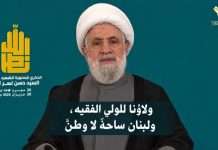
الياس بجاني/نص، فيديو، عربي وانكليزي: أخطاء وخطايا وسقطات تذاكي مكشوفة وتزوير للحقائق ارتكبها جوزيف عون خلال زيارته لأميركا 23 تموز/2026
في اسفل الصفحة رابط فيديو والنص الكامل (عربي وانكليزي) لكلمة رئيس الجمهورية اللبنانية العماد جوزاف عون التي ألقاها في تجمع السفارة اللبنانية في واشنطن العاصمة بتاريخ 21 تموز/يوليو 2026/موقع الأنباء/22 تموز/2026 (ترجمة من الإنكليزية)
ملخص أبرز العناوين التي تناولها التعليق
تقييم إيجابي لزيارة الرئيس جوزاف عون إلى الولايات المتحدة مع تسجيل ملاحظات وانتقادات جوهرية.
اتهام الرئيس عون بتزوير الوقائع التاريخية المتعلقة بنشأة حزب الله.
التأكيد أن حزب الله مشروع إيراني وليس نتيجة للاحتلال الإسرائيلي.
انتقاد وصف حزب الله بأنه تنظيم لبناني مقاوم.
الاعتراض على الثناء على قيادة الجيش وقائد الجيش رودولف هيكل.
انتقاد تقديم نبيه بري كرجل دولة والدفاع عن دوره السياسي.
التحذير من سياسة المسايرة والتذاكي في مقاربة الملفات الوطنية.
انتقاد تركيبة الوفد المرافق للرئيس في زيارته إلى واشنطن.
تحميل المستشارين مسؤولية بعض المواقف والتصريحات الرئاسية.
مقارنة بين نهج الرئيس عون ونهج الرئيس المنتخب بشير الجميل في تسمية الأمور بأسمائها.
دعوة اللبنانيين إلى ممارسة النقد وعدم تحويل المسؤولين إلى أصنام سياسية.
التشديد على أن المسؤول يُحاسَب على أدائه ولا يُمجَّد لمجرد قيامه بواجباته.
زيارة الرئيس عون إلى واشنطن: الإيجابيات والأخطاء
بداية فإن زيارة الرئيس جوزاف عون إلى الولايات المتحدة كانت إنجازاً مهماً، وأن الموقف الأميركي تجاه لبنان كان لافتاً، كما أن المقاربة العامة للزيارة حملت عناصر إيجابية ومشجعة. لكن، وفي الوقت نفسه، لا يجوز تجاهل بعض الأخطاء والخطايا السياسية التي رافقت هذه الزيارة، والتي تستوجب التوقف عندها حرصاً على الحقيقة والتاريخ.
أولاً: تزوير تاريخ نشأة حزب الله
منذ توليه الرئاسة، يكرر الرئيس عون في أكثر من مناسبة أن حزب الله تنظيم لبناني نشأ نتيجة الاحتلال الإسرائيلي. هذا الكلام يشكل تزويراً للتاريخ واستخفافاً بعقول اللبنانيين. فحزب الله، بحسب الوقائع المعلنة وشهادات مؤسسيه وقياداته، لم يكن يوماً نتيجة مباشرة للاحتلال، بل هو مشروع إيراني عقائدي وعسكري وجهادي أنشأه النظام الإيراني وألحقه بالحرس الثوري الإيراني. وقد أعلن قادته مراراً أن ولاءهم العقائدي والسياسي والعسكري هو لولاية الفقيه، وأن تمويلهم وتسليحهم وتوجيههم يأتي من إيران. لذلك، فإن توصيف الحزب بأنه مجرد حركة مقاومة لبنانية لا يعكس حقيقة تكوينه ومساره ودوره.
ثانياً: حزب الله بين الهوية اللبنانية والارتباط الإيراني
صحيح أن عناصر حزب الله يحملون الجنسية اللبنانية، لكن هذا لا يجعل المشروع الذي ينتمون إليه مشروعاً لبنانياً. هم مرتزقة.
فالعقيدة والقرار والتمويل والمرجعية السياسية والعسكرية كلها مرتبطة بإيران. وهم مرتزقة بكل ما تعنيه المفردة في العلوم السياسية. وقد أكد حسن نصر الله في مناسبات عديدة أن الحزب جزء من منظومة ولاية الفقيه، وأن المال والسلاح والدعم يأتي من إيران.لذلك فإن وصف الحزب بأنه تنظيم لبناني مستقل يتناقض مع الوقائع المعلنة من قبل قياداته نفسها.
ثالثاً: قراءة مختلفة لتحرير الجنوب عام 2000
حزب الله لم يحرر الجنوب عام 2000، بل هو يحتله وهجّر أهله وتسبب بتدميره وخرابه، علماً أن الانسحاب الإسرائيلي عام 2000 لم يكن نتيجة انتصار عسكري لحزب الله، بل جاء ضمن معطيات إقليمية ودولية معقدة. كما أن قضية مزارع شبعا استُخدمت لاحقاً لتبرير استمرار السلاح خارج إطار الدولة.
رابعاً: انتقاد الثقة بقيادة الجيش
أما فيما يخص ثقة الرئيس عون بقيادة الجيش، فإن هذه الثقة لا تنسجم مع الوقائع التي يمارسها قائد الجيش رودولف هيكل التابع لبري ولحزب الله. وبالتالي فإن عون يتحمل مسؤولية كاملة عن أي أداء أو قرارات تصدر عن القيادة العسكرية طالما أنه يدافع عنها ويمنحها الغطاء السياسي.
خامساً: نبيه بري ورجل الدولة
إن وصف عون رئيس مجلس النواب نبيه بري بأنه رجل دولة هو خطأ وخطيئة وجريمة، لأن سجل بري السياسي والمالي والدستوري والميليشيوي هو أساس في كل الأزمات التي حلت بلبنان واللبنانيين. فهو مشكلة وليس حلاً. كما أنه غطاء لسياسات حزب الله الجهادية والإيرانية، ومساهم في تكريس واقع سياسي أدى إلى إضعاف الدولة ومؤسساتها.
سادساً: مشكلة التذاكي السياسي ومسايرة الواقع
إن أحد أبرز أسباب الأزمات اللبنانية هو اعتماد أكثرية أصحاب شركات الأحزاب والمسؤولين ورجال الدين أسلوب المسايرة والتذاكي بدلاً من قول الحقيقة كاملة. إن تسمية الأمور بأسمائها هي المدخل الأساسي لبناء دولة حقيقية واستعادة ثقة اللبنانيين بقيادتهم.
سابعاً: انتقاد الوفد المرافق للرئيس
نسأل، مع كثير من اللبنانيين، عن أسباب اختيار بعض أعضاء الوفد الذي رافق الرئيس عون إلى واشنطن، حيث إن هذه التشكيلة “التعتير” لم تكن الأفضل لتمثيل لبنان في زيارة بهذا المستوى. كما أن استبعاد شخصيات ووزراء، ومن بينهم وزير الخارجية، أمر يثير الكثير من الشكوك والأسئلة.
ثامناً: دور المستشارين
إن المستشارين المحيطين بالرئيس عون، وخصوصاً الذين يساهمون في صياغة خطاباته ومواقفه، تتميز مقارباتهم بعدم لبنانيتها وبتزوير مكشوف وفاضح للوقائع التاريخية والسياسية. الرئيس بحاجة إلى مستشارين يتمتعون بالجرأة الكافية لمصارحته بالحقيقة لا لمجاملته.
تاسعاً: مقارنة مع تجربة بشير الجميل
البعض يشبه جوزيف عون ببشير الجميل، وهذا خطأ كبير، حيث إن تجربة البشير كانت مميزة بالصدق والوضوح وبجرأته في تسمية الأمور بأسمائها وعدم اللجوء إلى المسايرة أو المواربة. كما أن بشير أحاط نفسه بمستشارين أكفاء كانوا قادرين على إبداء الرأي المعارض عند الحاجة.
عاشراً: دعوة إلى النقد وعدم صناعة الأصنام
مطلوب من اللبنانيين، ولا سيما السياديين منهم، الكف عن التصفيق الأعمى لأي مسؤول، وفي مقدمهم رئيس الجمهورية الذي هو موظف في خدمة الدولة والمواطنين. وإن قيامه بواجباته لا يجعله فوق النقد أو المساءلة. وجوزيف عون لا يجب أن يتحول إلى “صنم” جديد، لأن التجارب السابقة أثبتت أن التقديس السياسي يؤدي إلى مزيد من الأخطاء والإخفاقات.
الخلاصة
إن زيارة الرئيس جوزاف عون إلى الولايات المتحدة كانت إيجابية من حيث الشكل والنتائج العامة، لكن شابتها أخطاء سياسية أساسية أبرزها:
تبرير نشأة حزب الله وربطها بالاحتلال الإسرائيلي.
تلميع صورة نبيه بري وتقديمه كرجل دولة.
الدفاع عن قيادة الجيش ومنحها ثقة مطلقة.
ويبقى أن الاعتماد على مستشارين ودائع لحزب الله وبري والقومي السوري، والساقطين في كل تجارب إبليس ميشال عون، وجماعات من الوصوليين والمنافقين، لا يقدمون للرئيس قراءة نقدية للواقع. في النهاية فإن قول الحقيقة، مهما كانت صعبة، يبقى واجباً وطنياً وأخلاقياً، وأن المسؤولين يُقيَّمون على أساس أدائهم والتزامهم بالحقيقة، لا على أساس حجم التصفيق الذي يحيط بهم. **الكاتب ناشط لبناني اغترابي رابط موقع الكاتب الإلكتروني https://eliasbejjaninews.com عنوان الكاتب الإلكتروني phoenicia@hotmail.com
Elias Bejjani/Text, Video, Arabic & English: Mistakes, Sins, Blunders of Transparent Political Cleverness, and Falsification of Facts Committed by Joseph Aoun During His Visit to America July 23, 2026
Summary of the Main Topics Addressed in the Commentary
*A positive assessment of President Joseph Aoun’s visit to the United States, while noting major observations and criticisms.
*Accusing President Aoun of distorting the historical facts related to Hezbollah’s creation.
*Affirming that Hezbollah is an Iranian project and not a consequence of the Israeli occupation.
*Criticizing the description of Hezbollah as a Lebanese resistance organization.
*Objecting to the praise directed toward the Lebanese Army leadership and Army Commander Rodolphe Haykal.
*Criticizing the portrayal of Nabih Berri as a statesman and the defense of his political role.
*Warning against policies of appeasement and political maneuvering in dealing with national issues.
*Criticizing the composition of the delegation accompanying the President during his visit to Washington.
*Holding presidential advisers responsible for certain presidential positions and statements.
*Comparing President Aoun’s approach with that of President-elect Bashir Gemayel in calling things by their true names.
*Calling on Lebanese citizens to practice criticism and refrain from turning officials into political idols.
*Stressing that officials should be judged by their performance and not glorified merely for carrying out their duties.
President Aoun’s Visit to Washington: Positives and Mistakes
President Joseph Aoun’s visit to the United States was an important achievement, that the American position toward Lebanon was noteworthy, and that the overall approach of the visit carried positive and encouraging elements. At the same time, however, certain political mistakes and missteps accompanied the visit and deserve to be highlighted out of respect for truth and history.
First: Falsifying the History of Hezbollah’s Creation
Since assuming the presidency, President Aoun has repeatedly stated on various occasions that Hezbollah is a Lebanese organization that emerged as a result of the Israeli occupation. Such a statement constitutes a falsification of history and an insult to the intelligence of the Lebanese people. According to publicly known facts and the testimonies of its founders and leaders, Hezbollah was never a direct result of the occupation. Rather, it is an Iranian ideological, military, and jihadist project established by the Iranian regime and attached to the Iranian Revolutionary Guard Corps. Its leaders have repeatedly declared that their ideological, political, and military allegiance is to the doctrine of Wilayat al-Faqih and that their funding, armament, and direction come from Iran. Therefore, describing Hezbollah as merely a Lebanese resistance movement does not reflect the reality of its formation, trajectory, and role.
Second: Hezbollah Between Lebanese Identity and Iranian Affiliation
It is true that Hezbollah’s members hold Lebanese citizenship, but this does not make the project to which they belong a Lebanese one. Its ideology, decision-making, financing, and political and military references are all tied to Iran. They are mercenaries in every sense of the term as defined in political science. Hassan Nasrallah repeatedly confirmed on many occasions that Hezbollah is part of the Wilayat al-Faqih system and that its money, weapons, and support come from Iran.Therefore, describing Hezbollah as an independent Lebanese organization contradicts the facts publicly declared by its own leadership.
Third: A Different Reading of the Liberation of South Lebanon in 2000
Hezbollah did not liberate South Lebanon in 2000. Rather, it occupies it, displaced its inhabitants, and caused its destruction and devastation. Furthermore, Israel’s withdrawal in 2000 was not the result of a military victory by Hezbollah but came within the framework of complex regional and international considerations. The issue of the Shebaa Farms was later used to justify the continuation of weapons outside the authority of the state.
Fourth: Criticism of Confidence in the Army Leadership
As for President Aoun’s confidence in the Army leadership, this confidence does not align with the realities represented by Army Commander Rodolphe Haykal, who is affiliated with Nabih Berri and Hezbollah. Aoun bears full responsibility for any performance or decisions issued by the military leadership as long as he defends it and grants it political cover.
Fifth: Nabih Berri and the Concept of a Statesman
Describing Speaker of Parliament Nabih Berri as a statesman is both a sin and a crime, because Berri’s political, financial, constitutional, and militia record lies at the heart of every crisis that has afflicted Lebanon and the Lebanese people. He is part of the problem, not the solution.He also serves as cover for Hezbollah’s jihadist and Iranian policies and has contributed to consolidating a political reality that has weakened the state and its institutions.
Sixth: The Problem of Political Cleverness and Appeasement
One of the main causes of Lebanon’s crises is the tendency of the majority of political party bosses, officials, and religious leaders to adopt appeasement and political cleverness instead of telling the whole truth. Calling things by their true names is the essential gateway to building a real state and restoring the Lebanese people’s confidence in their leadership.
Seventh: Criticism of the Presidential Delegation
Many Lebanese, including myself, question the reasons behind the selection of certain members of the delegation that accompanied President Aoun to Washington.
This “poorly assembled” delegation was not the best representation of Lebanon for a visit of such importance. The exclusion of certain figures and ministers, including the Foreign Minister, raises many doubts and questions.
Eighth: The Role of Advisers
The advisers surrounding President Aoun, especially those involved in drafting his speeches and positions, are characterized by approaches that lack a Lebanese national perspective and that openly and blatantly distort historical and political realities.
The President needs advisers who possess the courage to tell him the truth rather than flatter him.
Ninth: Comparison with Bashir Gemayel’s Experience
Some compare Joseph Aoun to Bashir Gemayel, and this is a major mistake. Bashir’s experience was distinguished by honesty, clarity, and courage in calling things by their true names, without resorting to appeasement or ambiguity. He also surrounded himself with capable advisers who were willing to express opposing opinions whenever necessary.
Tenth: A Call for Criticism and Against Creating Idols
Lebanese citizens, especially those who consider themselves sovereignists, should stop blindly applauding any official, including the President of the Republic, who is merely a public servant working for the state and its citizens. Performing one’s duties does not place a person above criticism or accountability. Joseph Aoun must not become a new political idol, because previous experiences have proven that political sanctification leads to further mistakes and failures.
Conclusion
President Joseph Aoun’s visit to the United States was positive in terms of its form and overall results. However, it was marred by major political mistakes, most notably:
*Justifying Hezbollah’s creation and linking it to the Israeli occupation.
*Polishing the image of Nabih Berri and presenting him as a statesman.
*Defending the Army leadership and granting it unconditional confidence.
*Furthermore, reliance on advisers who serve as deposits for Hezbollah, Nabih Berri, the Syrian Nationalist Party, the remnants of Michel Aoun’s disastrous legacy, and groups of opportunists and hypocrites does not provide the President with a critical reading of reality.
Ultimately, speaking the truth, no matter how difficult, remains a national and moral duty. Public officials should be evaluated based on their performance and commitment to the truth, not on the amount of applause that surrounds them.
نص ورابط فيديو كلمة الرئيس جوزاف عون من السفارة اللبنانية في واشنطن عقب اجتماعه مع الرئيس الأميركي دونالد ترامب https://www.youtube.com/watch?v=0O48VD5HR7o The Full Text of President Joseph Aoun’s Speech Delivered at the Lebanese Embassy Gathering in Washington, D.C. on21 July/2026
It’s a small country that has time and again given far more to humanity than its size would ever suggest and, in doing so, has rightfully earned its place as a bridge between the East and the West.
Lebanon is not simply a country of 18 recognized religious communities living within one set of borders. It is proof, after barely a century, that those communities can share one homeland, one flag, one army, without any of them having to disappear into the others.
I have the honor of being the only Christian head of state in the entire Arab world. In fact, from Indonesia to Morocco, I do not say that as a matter of personal distinction. I say it because it reflects Lebanon’s unique model of coexistence—a system that can actually work, generation after generation, through the worst that history has thrown at it.
That is worth protecting, not for Lebanon’s sake alone, but for the region. It is worth protecting because it rests on the same foundation upon which you have built your own nation.
For almost one hundred years, Lebanon has been a democracy. Through occupation, through civil war, through economic collapse, our people never stopped voting, never stopped debating, never stopped believing that they had the right to choose who governed them.
Our democracy has been tested in ways few democracies ever have. It has bent, but it has never broken.In just the past few years alone, our people have endured the strain of hosting the highest number of refugees per capita of any nation on Earth; the horror of the Beirut port explosion; a financial collapse that wiped out a lifetime of savings overnight; a global pandemic; a political vacuum; and a devastating war.
And still, they did not give up on their country.
Lebanon is suffering enormously. Thousands of our civilians have been killed, including many women and children who should have been safe in their own homes. Entire villages have been destroyed. Entire families have been wiped out. Nearly one in five people has been displaced from their homes.
To us, these are not statistics. They are our children, our parents, our neighbors, and our friends. Behind every number is a face, a name, a family, and a life forever changed.
As many of you know, I spent forty-two years of my life serving in the Lebanese Armed Forces, rising through its ranks before becoming its commander-in-chief.
Those four decades rooted in me a conviction that I carry into this office every single day: that Lebanon can only be secure and can only be whole when it is one state, one army, protecting all Lebanese without distinction. That conviction is not a slogan for me. It is the mission of my presidency.
And it is from that conviction that I carry the responsibility to bring this war to an end, to help those families return home, rebuild their communities, look to the future with hope, and to end once and for all the state of hostility with Israel while reinforcing the sovereignty of the Lebanese state.
That responsibility is what brings me to Washington today. And I believe that, for the first time in years, we finally have a real chance to make history. Moments like this appear only once in a generation. Nations either recognize them or spend another generation regretting that they did not.
For nearly fifty years, Lebanon has been a battlefield for other people’s conflicts and interests—Palestinian, Syrian, Israeli, Iranian, and, yes, at times our own. But something new is happening today. Not by chance, not by luck, but by choice—our choice.
First, inside Lebanon itself. Since taking office, the state has worked decisively toward one goal: one state, one army, and an end to non-state armed groups operating outside it.
We are pursuing real reforms, working to end corruption, and rebuilding institutions that the Lebanese people can trust again. Every step we have taken proves the same point: that this path—the path of a sovereign, accountable state—is not just the right path in principle, but the only path that can actually end conflict and deliver the prosperity our people deserve.
And this is not a path that we walk alone. It is one that a clear majority of Lebanese, across every community, stands firmly behind. Second, around us, we have made a deliberate choice to restore Lebanon’s relationships across the region and the world and to reposition Lebanon where it belongs—not as a battleground for others’ agendas, but as a sovereign state that refuses interference from anyone, in any form. That choice has earned us renewed support from France, across the Arab world, and beyond. And that shift is nowhere more significant than with our neighbor Syria. We are building a relationship with Damascus based on what should always have been an exclusive state-to-state relationship founded on mutual respect, sovereignty, and non-interference in internal affairs.
Neither of us wants to repeat the tragedies these interventions caused in the past—tragedies that could destabilize not just Lebanon, not just Syria, but the entire region. And third, there is the United States. Under President Trump’s leadership, and through the trilateral framework this administration brokered between Lebanon and Israel this past June, we have the most serious and sustained American engagement with Lebanon’s stability in decades. That framework did not happen by accident. It happened because your administration pushed for it and because Lebanon showed up ready to make it real.And believe me, domestic will, regional support, and American leadership rarely align at the same time. Tonight, they do. I came to Washington because opportunities like this do not come often. But politics and diplomacy give us the opening. What we need now is an institution strong enough to deliver on it. The Lebanese Armed Forces is the institution that carries the weight of everything I have described tonight. The Lebanese Armed Forces is not simply an army. It is the only true national institution that has the trust of all Lebanese—the one force that belongs to no sect, no party, no faction, but only to Lebanon itself. It guards our land and maritime borders. It defeated ISIS on our own soil. It stands as our front line against narcotics trafficking, organized crime, and smuggling across our borders. It works alongside our internal security forces to maintain public order. It protects the critical infrastructure upon which our people depend every day. And when disaster strikes—flood, explosion, or collapse—it is the Lebanese Armed Forces that answers first, every time, for every community, without exception.
This is the institution in which we are asking you to continue investing because its record speaks for itself: proven, tested, and worthy of the trust we ask you to place in it.
And it is this same institution that the world will be watching most closely as we take on the hardest question of this evening. Let me address directly the question I know is on everyone’s mind tonight: Is the disarmament of Hezbollah realistically achievable?
It is—but only if we are honest about what it actually requires.
The armed group we are speaking of is not a foreign mercenary force. It is composed of Lebanese citizens who, over forty years, were shaped by an enormous and sustained investment—ideological, social, and military—into a non-state armed organization operating outside government control.
That reality does not make the goal less urgent. It makes the method more important.
History offers a proven path—from the FARC in Colombia to the IRA in Northern Ireland—and it is not a mystery: disarmament, demobilization, and reintegration.
It begins by removing the root cause that Hezbollah has long cited as its justification: the Israeli occupation of Lebanese territory.
It continues as the Lebanese Armed Forces assume full operational control, which requires immediate and unconditional support for our military—the sole legitimate defender of this country.
And it concludes through reintegration: a reconstruction program run through the Lebanese state alone, paired with real economic opportunity, so that the choice for every community is no longer between the gun and nothing, but between the gun and a functioning state that delivers.
The equation is simple. A political track without an economic track is a state that cannot compete. An empowered state is the only alternative to a vacuum. And if the state does not fill that vacuum, others will. I want the next generation to remember Lebanon not as the place where wars never ended, but as the place where peace finally prevailed. Not simply because the guns fell silent, but because the state became strong enough to protect its people, provide opportunities for its citizens, and build a future worthy of their talents. That is the partnership we hope to build with the United States.
I believe there has never been a better moment to build it, nor a partner better suited to help us build it than the United States.
Thank you.
النص الكامل لكلمة رئيس الجمهورية اللبنانية العماد جوزاف عون التي ألقاها في تجمع السفارة اللبنانية في واشنطن العاصمة بتاريخ 21 تموز/يوليو 2026 موقع الأنباء/22 تموز/2026 (ترجمة من الإنكليزية)
إنه بلد صغير، لكنه مرارًا وتكرارًا قدّم للإنسانية أكثر بكثير مما يوحي به حجمه، وبذلك استحق عن جدارة مكانته كجسر بين الشرق والغرب. إن لبنان ليس مجرد بلد يضم ثماني عشرة طائفة دينية معترفًا بها تعيش ضمن حدود واحدة. بل هو دليل، بعد ما يقارب قرنًا من الزمن، على أن هذه الجماعات تستطيع أن تتشارك وطنًا واحدًا وعلمًا واحدًا وجيشًا واحدًا، من دون أن تضطر أي منها إلى الذوبان في الأخرى. يشرفني أن أكون الرئيس المسيحي الوحيد في العالم العربي بأسره. ومن إندونيسيا إلى المغرب، لا أقول ذلك باعتباره تميّزًا شخصيًا، بل لأنه يعكس النموذج اللبناني الفريد للعيش المشترك، وهو نظام قادر على الاستمرار جيلاً بعد جيل رغم أقسى التحديات التي ألقاها التاريخ في طريقه. وهذا أمر يستحق الحماية، ليس من أجل لبنان وحده، بل من أجل المنطقة بأسرها. فهو يستحق الحماية لأنه يقوم على الأسس ذاتها التي بنيتم عليها دولتكم. منذ ما يقارب المئة عام، ولبنان دولة ديمقراطية. فخلال الاحتلال، وخلال الحرب الأهلية، وخلال الانهيار الاقتصادي، لم يتوقف شعبنا عن التصويت، ولم يتوقف عن النقاش، ولم يتوقف عن الإيمان بحقه في اختيار من يحكمه. لقد اختُبرت ديمقراطيتنا بطرق لم تختبر بها سوى قلة من الديمقراطيات في العالم. لقد انحنت، لكنها لم تنكسر أبدًا. وفي السنوات القليلة الماضية فقط، تحمّل شعبنا عبء استضافة أعلى نسبة من اللاجئين قياسًا بعدد السكان مقارنة بأي دولة أخرى على وجه الأرض، وعاش هول انفجار مرفأ بيروت، وانهيارًا ماليًا قضى على مدخرات العمر بين ليلة وضحاها، وجائحة عالمية، وفراغًا سياسيًا، وحربًا مدمّرة. ومع ذلك، لم يفقد اللبنانيون إيمانهم بوطنهم. إن لبنان يعاني معاناة هائلة. فقد قُتل آلاف المدنيين، بمن فيهم العديد من النساء والأطفال الذين كان ينبغي أن يكونوا آمنين في منازلهم. ودُمّرت قرى بأكملها، وأُبيدت عائلات بكاملها، واضطر ما يقارب شخصًا من كل خمسة أشخاص إلى النزوح من منزله. بالنسبة إلينا، هذه ليست مجرد أرقام وإحصاءات. إنهم أطفالنا، وآباؤنا وأمهاتنا، وجيراننا، وأصدقاؤنا. فخلف كل رقم وجه، واسم، وعائلة، وحياة تغيّرت إلى الأبد. وكما يعلم الكثير منكم، أمضيت اثنين وأربعين عامًا من حياتي في خدمة الجيش اللبناني، متنقلاً في صفوفه حتى توليت قيادته. وقد رسخت تلك العقود الأربعة في داخلي قناعة أحملها معي إلى هذا المنصب كل يوم، وهي أن لبنان لا يمكن أن يكون آمنًا ولا مكتملًا إلا عندما يكون دولة واحدة وجيشًا واحدًا يحمي جميع اللبنانيين من دون تمييز. إن هذه القناعة ليست شعارًا بالنسبة لي، بل هي مهمة رئاستي.
وانطلاقًا من هذه القناعة أحمل مسؤولية إنهاء هذه الحرب، ومساعدة العائلات على العودة إلى منازلها، وإعادة بناء مجتمعاتها، والتطلع إلى المستقبل بأمل، وإنهاء حالة العداء مع إسرائيل نهائيًا، بالتوازي مع تعزيز سيادة الدولة اللبنانية. وهذه المسؤولية هي التي جاءت بي إلى واشنطن اليوم. وأعتقد أنه للمرة الأولى منذ سنوات، لدينا فرصة حقيقية لصنع التاريخ. فمثل هذه اللحظات لا تأتي إلا مرة واحدة في كل جيل. فإما أن تدركها الأمم، أو تمضي جيلًا آخر وهي تندم على أنها لم تفعل. على مدى ما يقارب خمسين عامًا، كان لبنان ساحة لصراعات ومصالح الآخرين؛ الفلسطينية والسورية والإسرائيلية والإيرانية، وأحيانًا صراعاتنا نحن أيضًا. لكن شيئًا جديدًا يحدث اليوم. ليس بالصدفة، ولا بالحظ، بل بالاختيار…
اختيارنا نحن. أولًا، داخل لبنان نفسه. فمنذ تولينا المسؤولية، عملت الدولة بحزم لتحقيق هدف واحد: دولة واحدة، وجيش واحد، وإنهاء وجود الجماعات المسلحة خارج إطار الدولة. نحن نمضي في إصلاحات حقيقية، ونعمل على مكافحة الفساد، وإعادة بناء المؤسسات التي يمكن للبنانيين أن يستعيدوا ثقتهم بها. وكل خطوة اتخذناها تؤكد الحقيقة نفسها: أن هذا الطريق، طريق الدولة السيدة والمسؤولة والخاضعة للمحاسبة، ليس فقط الطريق الصحيح من حيث المبدأ، بل هو الطريق الوحيد القادر فعليًا على إنهاء الصراع وتحقيق الازدهار الذي يستحقه شعبنا. وهذا ليس طريقًا نسلكه وحدنا، بل طريق تؤيده غالبية واضحة من اللبنانيين، في مختلف الطوائف والمكونات.
ثانيًا، على المستوى الإقليمي والدولي، اتخذنا قرارًا واعيًا بإعادة بناء علاقات لبنان مع محيطه والعالم، وإعادة تموضعه في المكان الذي يستحقه، لا كساحة لصراعات الآخرين، بل كدولة ذات سيادة ترفض أي تدخل خارجي، أياً كان مصدره أو شكله. وقد أكسبنا هذا الخيار دعمًا متجددًا من فرنسا، ومن العالم العربي، ومن المجتمع الدولي الأوسع. ولا يظهر هذا التحول في أي مكان أكثر مما يظهر في علاقتنا مع جارتنا سوريا. فنحن نبني علاقة مع دمشق على ما كان ينبغي أن يكون قائمًا دائمًا: علاقة دولة بدولة، قائمة على الاحترام المتبادل والسيادة وعدم التدخل في الشؤون الداخلية.
ولا نحن ولا هم نرغب في تكرار المآسي التي تسببت بها تلك التدخلات في الماضي، وهي مآسٍ كان من شأنها زعزعة استقرار لبنان وسوريا والمنطقة بأسرها.
وثالثًا، هناك الولايات المتحدة. ففي ظل قيادة الرئيس ترامب، ومن خلال الإطار الثلاثي الذي توسطت فيه هذه الإدارة بين لبنان وإسرائيل في حزيران الماضي، نشهد أكثر أشكال الانخراط الأميركي جدية واستمرارية في دعم استقرار لبنان منذ عقود. ولم يأتِ هذا الإطار من فراغ، بل تحقق لأن إدارتكم دفعت في اتجاهه، ولأن لبنان حضر مستعدًا لتحويله إلى واقع. وصدقوني، نادرًا ما تتلاقى الإرادة الداخلية، والدعم الإقليمي، والقيادة الأميركية في الوقت نفسه. أما الليلة، فهي تلتقي.
لقد جئت إلى واشنطن لأن فرصًا كهذه لا تتكرر كثيرًا. لكن السياسة والدبلوماسية تفتحان الباب فقط. أما ما نحتاجه الآن فهو مؤسسة قادرة على تحويل هذه الفرصة إلى واقع. إن الجيش اللبناني هو المؤسسة التي تحمل على عاتقها كل ما تحدثت عنه هذا المساء. فالجيش اللبناني ليس مجرد مؤسسة عسكرية، بل هو المؤسسة الوطنية الوحيدة التي تحظى بثقة جميع اللبنانيين. إنه القوة التي لا تنتمي إلى طائفة أو حزب أو فئة، بل إلى لبنان وحده. وهو يحمي حدودنا البرية والبحرية، وقد هزم تنظيم داعش على أرضنا، ويشكل خط الدفاع الأول في مواجهة تهريب المخدرات والجريمة المنظمة والتهريب عبر الحدود.
كما يعمل جنبًا إلى جنب مع القوى الأمنية للحفاظ على النظام العام، ويحمي البنية التحتية الحيوية التي يعتمد عليها المواطنون يوميًا. وعندما تقع الكوارث، سواء كانت فيضانات أو انفجارات أو انهيارات، يكون الجيش اللبناني أول من يستجيب، وفي كل مرة، ومن أجل جميع اللبنانيين دون استثناء. ولهذا نطلب منكم مواصلة الاستثمار في هذه المؤسسة، لأن سجلها يتحدث عنها: مؤسسة مجرّبة ومختبرة وجديرة بالثقة التي نطلب منكم أن تضعوها فيها. وهي أيضًا المؤسسة التي سيراقبها العالم عن كثب ونحن نواجه أصعب سؤال مطروح هذا المساء. دعوني أتناول مباشرة السؤال الذي أعلم أنه يدور في أذهان الجميع الليلة: هل نزع سلاح حزب الله هدف واقعي وقابل للتحقيق؟
الجواب نعم، ولكن فقط إذا كنا صادقين بشأن ما يتطلبه ذلك فعليًا. فالمجموعة المسلحة التي نتحدث عنها ليست قوة مرتزقة أجنبية، بل تتكون من مواطنين لبنانيين خضعوا، على مدى أربعين عامًا، لاستثمار هائل ومستمر أيديولوجيًا واجتماعيًا وعسكريًا ضمن إطار تنظيم مسلح خارج سلطة الدولة.
إن هذا الواقع لا يجعل الهدف أقل إلحاحًا، بل يجعل الطريقة أكثر أهمية. فالتاريخ يقدم لنا مسارًا مجربًا، من قوات «فارك» في كولومبيا إلى الجيش الجمهوري الإيرلندي في إيرلندا الشمالية، وهو ليس لغزًا: نزع السلاح، وتسريح المقاتلين، وإعادة دمجهم. ويبدأ ذلك بإزالة السبب الجذري الذي لطالما استند إليه حزب الله لتبرير سلاحه، أي الاحتلال الإسرائيلي لأراضٍ لبنانية. ثم يستمر من خلال تولي الجيش اللبناني السيطرة العملياتية الكاملة، الأمر الذي يتطلب دعمًا فوريًا وغير مشروط لقواتنا المسلحة، بصفتها الجهة الشرعية الوحيدة المخولة الدفاع عن هذا البلد. ويكتمل عبر إعادة الدمج، من خلال برنامج لإعادة الإعمار تديره الدولة اللبنانية وحدها، مقرونًا بفرص اقتصادية حقيقية، بحيث لا يعود الخيار أمام أي مجتمع بين السلاح واللاشيء، بل بين السلاح ودولة فاعلة قادرة على تلبية احتياجات مواطنيها. إن المعادلة بسيطة: المسار السياسي من دون مسار اقتصادي هو دولة عاجزة عن المنافسة. والدولة القوية هي البديل الوحيد للفراغ. وإذا لم تملأ الدولة هذا الفراغ، فسيفعل ذلك آخرون. أريد للجيل القادم أن يتذكر لبنان، لا بوصفه المكان الذي لم تنتهِ فيه الحروب أبدًا، بل بوصفه المكان الذي انتصر فيه السلام أخيرًا. ليس فقط لأن البنادق صمتت، بل لأن الدولة أصبحت قوية بما يكفي لحماية شعبها، وتوفير الفرص لمواطنيها، وبناء مستقبل يليق بمواهبهم وقدراتهم.هذه هي الشراكة التي نأمل في بنائها مع الولايات المتحدة. وأعتقد أنه لم تكن هناك لحظة أفضل من هذه لبنائها، ولم يكن هناك شريك أفضل من الولايات المتحدة للمساعدة في تحقيقها. شكرًا لكم.