Machiavellian and Nietzschean Thinking in Politics and Among Politicians
Elias Bejjani/November 07/ 2026
الثقافة الميكيافيلية والثقافة النيتشوية في عالم السياسة والسياسيين
الياس بجاني/07 تشرين الثاني/2026
مقدمة
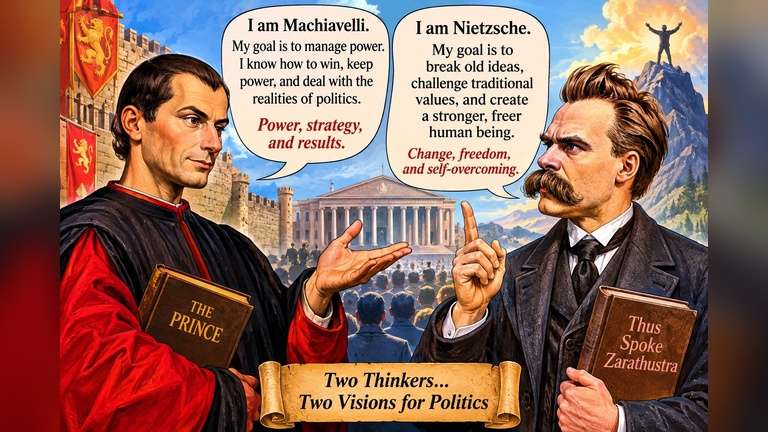
في عالم السياسة والسياسيين، هناك نموذجان فكريان مختلفان في نظرتهما إلى السلطة والإنسان والأخلاق وطبيعة الحكم: النموذج الميكيافيلي المرتبط بالفيلسوف والمفكر السياسي الإيطالي نيكولو ميكيافيللي، والنموذج النيتشوي المرتبط بالفيلسوف الألماني فريدريك نيتشه. ورغم أن كليهما يُربط أحياناً بالقوة وتجاوز الأخلاق التقليدية، فإن هناك فرقاً جوهرياً بينهما. فميكيافيللي ينطلق من واقع السياسة وموازين القوة، ويسأل كيف يستطيع الحاكم المحافظة على الدولة والسلطة ومواجهة الأخطار. أما نيتشه، فينطلق من فلسفة الإنسان والحرية والقيم، ويسأل كيف يستطيع الإنسان التحرر من التبعية والتفكير السائد وصناعة شخصيته الخاصة. بكلام مبسط، الأول يهتم بكيفية إدارة السلطة والمحافظة عليها، والثاني يهتم بتغيير الإنسان وتجاوز الأفكار والقيم التي تقيده. ولفهم تأثير هذين النموذجين في عالم السياسة، لا بد من التوقف عند أفكارهما الأساسية، وكيف تظهر في سلوك السياسيين وطريقة ممارستهم للحكم.
الثقافة الميكيافيلية: فن إدارة السلطة والمحافظة عليها
ترتبط الثقافة الميكيافيلية بالمفكر الإيطالي نيكولو ميكيافيللي، الذي وضع أفكاره السياسية في كتابه الشهير «الأمير» سنة 1513.
تنطلق هذه الثقافة من فكرة أساسية مفادها أن السياسة عالم تحكمه المصالح وموازين القوى والمخاطر، وأن الحاكم لا يستطيع إدارة الدولة بالاعتماد على النوايا الحسنة والمبادئ الأخلاقية وحدها.
فالمهمة الأولى للحاكم، بحسب هذا المنظور، هي حماية الدولة ومنع انهيارها والمحافظة على استقرارها واستقلال قرارها.
أبرز مبادئ الثقافة الميكيافيلية
1. النتائج والمصالح قبل الشعارات: السياسي الميكيافيلي يقيس نجاحه بالنتائج، لا بالكلام والشعارات. وهو مستعد لاستخدام المناورة والتحالفات والضغط والقوة عندما يرى أنها ضرورية لتحقيق أهدافه السياسية. ومن هنا ارتبطت الميكيافيلية بالمقولة الشهيرة «الغاية تبرر الوسيلة»، مع أن هذه العبارة ليست اقتباساً حرفياً عن ميكيافيللي.
2. الواقعية السياسية: لا يتعامل السياسي مع الناس كما يتمنى أن يكونوا، بل كما هم في الواقع، بمصالحهم ومخاوفهم وطموحاتهم وتناقضاتهم. لذلك لا يبني قراراته على العواطف وحدها، بل على قراءة دقيقة للواقع.
3. الاهتمام بالصورة والمظهر: يرى ميكيافيللي أن الحاكم يحتاج إلى الظهور أمام الناس بمظهر الرحمة والصدق والوفاء والتدين، لأن صورة الحاكم تؤثر في شعبيته واستمرار سلطته. لكن هذا لا يعني بالضرورة أن تكون تصرفاته الفعلية مطابقة دائماً للصورة التي يقدمها.
4. الخوف والمحبة: يرى ميكيافيللي أن الأفضل للحاكم أن يكون محبوباً ومهاباً في الوقت نفسه. لكن إذا تعذر الجمع بين الأمرين، فإن الخوف أكثر ضماناً لاستمرار الطاعة من المحبة، شرط ألا يتحول إلى كراهية شعبية تهدد الحكم.
5. المهارة في مواجهة الظروف: نجاح السياسي لا يعتمد على قدراته وحدها، ولا على الظروف وحدها، بل على قدرته على استغلال الفرص ومواجهة المتغيرات والتكيف مع الأحداث. وهذا ما يعبّر عنه ميكيافيللي بمفهومي المهارة السياسية (Virtù) والحظ أو الظروف المتقلبة (Fortuna).
من هو السياسي الميكيافيلي؟
هو سياسي عملي وبراغماتي، هادئ في حساباته، يعرف متى يتحالف ومتى يفاوض ومتى يتراجع ومتى يواجه. لا يتعامل مع السياسة باعتبارها ساحة للمواقف المثالية وحدها، بل باعتبارها مجالاً للصراع على المصالح والنفوذ والقرار.
وقد يغيّر تحالفاته ومواقفه عندما تتغير الظروف، حتى لو اضطر إلى التخلي عن وعود أو مواقف سابقة. وبالتالي، فإن السياسي الميكيافيلي يهتم أولاً بكيفية المحافظة على موقعه السياسي وتحقيق أهدافه وإدارة موازين القوة.
الثقافة النيتشوية: التحرر من القطيع وصناعة الإنسان القوي
ترتبط الثقافة النيتشوية بالفيلسوف الألماني فريدريك نيتشه، الذي تناول أفكاره في كتب شهيرة، أبرزها «هكذا تكلم زرادشت»، و«ما وراء الخير والشر»، و«في جينالوجيا الأخلاق». وعلى خلاف ميكيافيللي، لم يكن نيتشه منظّراً لإدارة الدول أو وضع الخطط السياسية للحكام، بل كان فيلسوفاً يهتم بالإنسان وقيمه وأفكاره، وينتقد التبعية الفكرية والأخلاقية والتقليد الأعمى. فهو يدعو الإنسان إلى التفكير المستقل، ومراجعة الموروثات، وعدم العيش أسيراً لما يفرضه المجتمع أو ما يكرره الآخرون.
أبرز مبادئ الثقافة النيتشوية:
1. إرادة القوة: يرى نيتشه أن الحياة لا تقتصر على البقاء والاستمرار، بل تتضمن السعي إلى النمو والتطور وتجاوز الذات وإثبات القدرة على الإبداع والتفوق. وإرادة القوة عنده مفهوم فلسفي أوسع من مجرد الرغبة في السيطرة على الآخرين.
2. مراجعة القيم السائدة: من أشهر أفكار نيتشه عبارة «موت الإله»، وهي لا تعني مجرد إنكار وجود الله، بل تشير في سياق فلسفته إلى انهيار المرجعيات الدينية والأخلاقية التقليدية التي كانت تمنح المجتمعات الأوروبية معنى وقواعد ثابتة للحياة.
ومن هنا دعا إلى إعادة النظر في القيم السائدة، وعدم قبولها بصورة عمياء، والعمل على خلق قيم جديدة تتحمل مسؤولية الإنسان نفسه.
3. أخلاق السادة وأخلاق العبيد: ميّز نيتشه بين نمطين من الأخلاق: أخلاق السادة، التي ترتبط بالاعتزاز بالنفس والقوة والمبادرة والإبداع، وأخلاق العبيد، التي ربطها بالخضوع والاستياء والشعور بالعجز والانتقام المعنوي.
وهذا التمييز جزء من نقده الفلسفي للأخلاق التقليدية، وليس دعوة مباشرة إلى استعباد الآخرين أو ممارسة الظلم بحقهم.
4. الإنسان الأعلى: الإنسان الأعلى عند نيتشه ليس بطلاً خارقاً أو شخصاً يمتلك سلطة سياسية، بل هو الإنسان الذي يتجاوز التبعية والتقليد، ولا يعيش وفق عقلية القطيع، بل يسعى إلى تطوير ذاته وصناعة قيمه وتحمل مسؤولية اختياراته.
5. العود الأبدي: يدعو هذا المفهوم الإنسان إلى أن يتأمل حياته وتصرفاته وكأنه سيضطر إلى عيشها وتكرارها إلى الأبد. والسؤال الأساسي هنا هو: هل تستطيع أن تقبل حياتك وقراراتك كما هي، دون أن تتمنى لو أنك عشتها بطريقة مختلفة؟
من هو السياسي المتأثر بالفكر النيتشوي؟
هو سياسي يحمل رؤية تغييرية، يرفض الاستسلام للأفكار السائدة والتقاليد السياسية الجامدة، ويدعو إلى مراجعة الواقع وتجاوز الموروثات التي يراها عائقاً أمام التقدم. لا يكون همه الأول المحافظة على الكرسي أو البقاء في السلطة، بل إحداث تغيير في طريقة تفكير المجتمع وبناء مستقبل مختلف. وقد يكون صاحب خطاب جريء وصدامي مع المؤسسات والأحزاب التقليدية، لكن لا يصح اعتبار كل زعيم ثوري أو متمرد نيتشوياً بالمعنى الفلسفي الدقيق.
ما الفرق بين السياسي الميكيافيلي والسياسي المتأثر بفكر نيتشه؟
يكمن الفرق الأساسي بين السياسي الميكيافيلي والسياسي المتأثر بفكر نيتشه في الهدف الذي يسعى كل منهما إلى تحقيقه، والطريقة التي ينظر بها إلى السلطة والناس والتغيير.
السياسي الميكيافيلي ينظر إلى السياسة باعتبارها صراعاً على السلطة والمصالح والنفوذ. همه الأساسي هو الوصول إلى الحكم والمحافظة عليه، وحماية موقعه السياسي والدولة التي يحكمها. لذلك يتعامل مع الأحداث بواقعية وحسابات دقيقة، ويستخدم التحالفات والمفاوضات والمناورات السياسية، وقد يغيّر مواقفه عندما تتغير الظروف وتقتضي المصلحة ذلك. فهو لا يعتمد على المبادئ والشعارات وحدها، بل يقيس نجاحه بقدرته على تحقيق أهدافه والمحافظة على سلطته.
أما السياسي المتأثر بفكر نيتشه، فلا تكون السلطة والحفاظ على المنصب هما هدفه الأساسي، بل يسعى إلى إحداث تغيير عميق في المجتمع وطريقة تفكير الناس. فهو لا يكتفي بإدارة الواقع القائم والتكيف معه، بل يتحدى الأفكار السائدة والتقاليد السياسية الجامدة، ويدعو إلى التحرر من التبعية والتقليد الأعمى. ويهتم ببناء إنسان مستقل في تفكيره، واثق بقدراته، وقادر على تجاوز واقعه والمساهمة في صناعة مستقبل جديد.
ويختلف الاثنان أيضاً في تعاملهما مع المبادئ والأخلاق. فالسياسي الميكيافيلي قد يضع المصلحة السياسية واستمرار الحكم فوق بعض الاعتبارات الأخلاقية، إذا اعتبر ذلك ضرورياً لحماية الدولة أو تحقيق أهدافه. أما السياسي المتأثر بنيتشه، فيميل إلى التشكيك في القيم والأفكار الموروثة، ويدعو إلى إعادة النظر فيها وعدم قبولها لمجرد أن المجتمع اعتاد عليها.
ومن حيث أسلوب القيادة، يعتمد السياسي الميكيافيلي على الحسابات الدقيقة، والتفاوض، وبناء التحالفات، ومعرفة متى يواجه ومتى يتراجع. أما السياسي المتأثر بنيتشه، فيعتمد على قوة الفكرة والجرأة في طرحها، والاستعداد لمواجهة الأفكار التقليدية وفتح الطريق أمام التغيير.
وباختصار، يمكن القول إن السياسي الميكيافيلي يريد أن ينجح داخل النظام السياسي القائم، وأن يعرف كيف يصل إلى السلطة ويحافظ عليها. أما السياسي المتأثر بنيتشه، فيريد أن يتجاوز النظام الفكري والسياسي السائد، وأن يغيّر طريقة تفكير المجتمع ويدفعه نحو واقع جديد.
الأول يسأل: كيف أحكم وأحافظ على الحكم؟
والثاني يسأل: كيف أغيّر الواقع ولا أبقى أسيراً لما ورثناه من أفكار وممارسات؟
وهذا هو الفارق الجوهري بين عقلية إدارة السلطة وعقلية التغيير الفكري والاجتماعي.
أي النموذجين أفضل في عالم السياسة؟
لا يمكن اعتبار أحد النموذجين أفضل بصورة مطلقة، لأن كلاً منهما يتناول جانباً مختلفاً من الحياة السياسية والفكرية.
متى تكون الميكيافيلية مفيدة؟
عندما تواجه الدولة حرباً أو أزمة سياسية أو انقساماً داخلياً أو تهديداً لاستقرارها، تحتاج إلى قيادة واقعية تعرف كيف تتعامل مع الأخطار، وتوازن بين المصالح، وتمنع انهيار المؤسسات.
لكن الخطر يكمن في تحول الميكيافيلية إلى نهج دائم، بحيث يصبح السياسي مستعداً للتضحية بالمبادئ والوعود والحقوق من أجل البقاء في السلطة. وعندها تتحول السياسة إلى شبكة من المناورات والخداع، وتفقد المؤسسات والمواطنون الثقة بالحكم.
ومتى يكون الفكر النيتشوي مفيداً؟ عندما يعيش المجتمع حالة من الجمود والتبعية الفكرية والخوف من التغيير، تبرز أهمية التفكير المستقل والجرأة على مراجعة الأفكار والمعتقدات السياسية الموروثة. لكن الخطر يكمن في إساءة فهم هذا الفكر وتحويله إلى تبرير للتسلط أو احتقار الآخرين أو تقديس الزعيم الذي يزعم أنه وحده يمتلك الحقيقة والرؤية المستقبلية. فالتغيير الحقيقي لا يعني هدم المؤسسات أو إلغاء حقوق الآخرين، بل بناء مجتمع أكثر وعياً وحرية وقدرة على التطور.
الخلاصة العملية
السياسي الناجح يحتاج إلى الواقعية والحنكة في إدارة الدولة، لكنه يحتاج أيضاً إلى رؤية ومبادئ وجرأة فكرية تمنعه من التحول إلى مجرد تاجر مصالح ومناصب. فالواقعية دون ضوابط أخلاقية قد تتحول إلى انتهازية، والتغيير دون مسؤولية ومؤسسات قد يتحول إلى فوضى واستبداد.
خاتمة
الميكيافيلية تعلّم السياسي كيف يتعامل مع السلطة وموازين القوى، أما النيتشوية فتدعوه إلى التفكير في الإنسان والقيم والتحرر من التبعية الفكرية.
الأولى، إذا تحولت إلى أسلوب حكم بلا ضوابط، تنتج سياسيين لا تحكمهم سوى المصالح، وتحوّل الدولة إلى ساحة للمناورات والصفقات.
والثانية، إذا أسيء فهمها، قد تتحول إلى تمجيد للقوة الفردية واحتقار للمؤسسات والتعددية، بدلاً من أن تكون دعوة إلى الإبداع وتجاوز الذات.
إن التحدي الحقيقي أمام السياسي ليس أن يكون ميكيافيلياً أو نيتشوياً بصورة مطلقة، بل أن يمتلك الواقعية دون انتهازية، والقوة دون استبداد، والجرأة دون تهور، والرؤية دون أوهام.
فالسياسة ليست مجرد فن البقاء في السلطة، كما أنها ليست مجرد ثورة على كل ما هو قائم. إنها مسؤولية إدارة الدولة وحماية المجتمع وصيانة حقوق المواطنين، مع امتلاك الشجاعة اللازمة لتغيير الواقع نحو الأفضل.
Machiavellian and Nietzschean Thinking in Politics and Among Politicians
Elias Bejjani/November 07/ 2026
Introduction
In politics, there are two different ways of thinking about power, human nature, morality, and government. The first is Machiavellian thinking, associated with the Italian philosopher and political thinker Niccolò Machiavelli. The second is Nietzschean thinking, associated with the German philosopher Friedrich Nietzsche.
Although both are sometimes associated with power and the rejection of traditional moral rules, there is a major difference between them.
Machiavelli focuses on the realities of politics and the balance of power. He asks how a ruler can protect the state, remain in power, and deal with threats and political challenges.
Nietzsche, on the other hand, focuses on human nature, freedom, and values. He asks how individuals can free themselves from blind obedience, common thinking, and social pressure, and develop their own independent personalities.
In simple terms, Machiavelli is concerned with how to manage and maintain power, while Nietzsche is concerned with changing human thinking and overcoming the ideas and values that limit individual freedom.
To understand how these two ways of thinking influence politics and politicians, we need to examine their main principles and how they appear in political behaviour and leadership.
1. Machiavellian Thinking: The Art of Managing and Maintaining Power
Machiavellian thinking is associated with the Italian thinker Niccolò Machiavelli, who presented his political ideas in his famous book The Prince, written in 1513.
This way of thinking is based on a simple idea: politics is a world of competing interests, power struggles, and risks. A ruler cannot govern a country by relying only on good intentions and moral principles.
From this point of view, the ruler’s first responsibility is to protect the state, prevent its collapse, maintain stability, and preserve its independence and ability to make its own decisions.
The main principles of Machiavellian thinking
1. Results and interests come before slogans
A Machiavellian politician measures success by results, not by speeches or political slogans. He is prepared to use political manoeuvres, alliances, pressure, and force when he believes they are necessary to achieve his goals.
This is why Machiavellian thinking is often associated with the famous expression, “The ends justify the means,” although these words are not a direct quotation from Machiavelli.
2. Political realism
A politician must deal with people as they really are, not as he wishes them to be. People have their own interests, fears, ambitions, and contradictions.
For this reason, a realistic politician does not base decisions on emotions alone. He studies the situation carefully and makes decisions according to the realities on the ground.
3. The importance of public image
Machiavelli believed that a ruler should appear to the public as kind, honest, loyal, and religious. A ruler’s public image can strongly influence his popularity and ability to remain in power.
However, this does not necessarily mean that his actual behaviour will always match the image he presents to the public.
4. Fear and love
Machiavelli believed that it is best for a ruler to be both loved and respected or feared by his people.
However, if he must choose between the two, fear is more reliable than love when it comes to maintaining obedience. But the ruler must avoid becoming hated by the people, because public hatred can eventually threaten his rule.
5. The ability to deal with changing circumstances
Political success depends not only on a leader’s abilities or on circumstances, but also on his ability to recognize opportunities, respond to unexpected events, and adapt to changing situations.
Machiavelli described these two elements through the concepts of political skill and ability (Virtù) and luck or changing circumstances (Fortuna).
What is a Machiavellian politician like?
A Machiavellian politician is practical, realistic, and careful in his calculations. He knows when to form an alliance, when to negotiate, when to step back, and when to confront his opponents.
He does not see politics as a field governed only by ideals and principles. He sees it as a struggle over interests, influence, power, and decision-making.
He may change his alliances and political positions when circumstances change, even if this means abandoning previous promises or positions.
In short, a Machiavellian politician is mainly concerned with protecting his political position, achieving his objectives, and managing the balance of power.
2. Nietzschean Thinking: Breaking Free from the Crowd and Developing a Strong Individual
Nietzschean thinking is associated with the German philosopher Friedrich Nietzsche, whose famous books include Thus Spoke Zarathustra, Beyond Good and Evil, and On the Genealogy of Morality.
Unlike Machiavelli, Nietzsche was not a political theorist who developed plans for governing states or managing political power. He was a philosopher concerned with human beings, their values, and their beliefs. He criticized blind obedience, intellectual dependence, and the habit of following others without independent thought.
He encouraged people to think for themselves, question inherited beliefs, and refuse to live as prisoners of what society expects or what others repeatedly tell them.
The main principles of Nietzschean thinking
1. The Will to Power
Nietzsche believed that life is not simply about survival and staying alive. It is also about growth, development, overcoming one’s limitations, and expressing one’s ability to create and achieve.
For Nietzsche, the Will to Power is a broad philosophical idea. It means much more than simply wanting to control other people.
2. Questioning established values
One of Nietzsche’s most famous expressions is “God is dead.”
In the context of his philosophy, this does not simply mean denying God’s existence. It refers to the decline of traditional religious and moral beliefs that had provided European society with meaning and established rules for life.
Nietzsche therefore called for people to question accepted values instead of following them blindly, and to take responsibility for creating new values.
3. Master morality and slave morality
Nietzsche distinguished between two types of morality.
Master morality is associated with self-confidence, strength, initiative, creativity, and pride in one’s achievements.
Slave morality, as Nietzsche described it, is associated with submission, resentment, feelings of weakness, and a desire for moral revenge against those seen as stronger.
This distinction was part of his philosophical criticism of traditional morality. It was not a direct call to enslave or mistreat other people.
4. The Übermensch, or the Higher Human Being
Nietzsche’s idea of the Übermensch does not refer to a superhero or a person who holds political power.
It refers to someone who rises above blind obedience and imitation, refuses to follow the crowd without thinking, develops his own abilities, creates his own values, and accepts responsibility for his choices.
5. Eternal Recurrence
This concept invites people to think about their lives and actions as if they would have to live the same life over and over again forever.
The central question is simple: Would you be able to accept your life and your decisions exactly as they are, without wishing you had lived differently?
What is a politician influenced by Nietzschean thinking like?
Such a politician has a vision for change. He refuses to surrender to common beliefs and outdated political traditions. Instead, he calls for society to question established ideas and move beyond inherited practices that stand in the way of progress.
His main concern is not simply keeping his position or remaining in office. He wants to change the way society thinks and help build a different future.
He may use bold and confrontational language and challenge traditional institutions and political parties.
However, not every revolutionary or rebellious leader should be described as Nietzschean in the true philosophical sense.
3. What Is the Difference Between a Machiavellian Politician and a Politician Influenced by Nietzsche?
The main difference lies in what each politician wants to achieve and how each one views power, people, and political change.
A Machiavellian politician sees politics as a struggle for power, interests, and influence. His main concern is reaching government, staying in power, protecting his political position, and maintaining control over the state he leads.
He therefore approaches political events through careful calculations and a realistic understanding of the situation. He uses alliances, negotiations, and political manoeuvres, and may change his positions when circumstances or interests require it.
He does not measure success by principles and political slogans alone. He measures it by his ability to achieve his goals and maintain his power.
A politician influenced by Nietzschean thinking, on the other hand, does not see gaining and maintaining political office as his main purpose. His goal is to bring about deep changes in society and in the way people think.
He does not simply manage the existing system or adapt to the reality around him. Instead, he challenges established ideas and outdated political traditions and encourages people to free themselves from blind obedience and imitation.
He wants to help develop individuals who think independently, believe in their abilities, overcome their limitations, and contribute to building a new future.
The two approaches also differ in their attitude toward principles and morality.
A Machiavellian politician may place political interests and the continuation of his rule above certain moral considerations if he believes this is necessary to protect the state or achieve his objectives.
A politician influenced by Nietzsche, however, tends to question inherited values and established beliefs. He encourages people to examine these ideas instead of accepting them simply because society has followed them for generations.
Their leadership styles are also different.
A Machiavellian politician relies on careful calculations, negotiations, political alliances, and knowing when to confront opponents or when to step back.
A politician influenced by Nietzsche relies more on the strength of his ideas, the courage to express them, and his willingness to challenge traditional thinking and open the way for change.
In simple terms, a Machiavellian politician wants to succeed within the existing political system. He wants to know how to reach power and how to maintain it.
A politician influenced by Nietzsche wants to go beyond the existing political and intellectual system. He wants to change the way society thinks and move it toward a new reality.
The first asks: How can I govern and remain in power?
The second asks: How can I change reality instead of remaining a prisoner of inherited ideas and practices?
This is the essential difference between the mindset of managing political power and the mindset of intellectual and social change.
4. Which Approach Is Better in Politics?
Neither approach can be considered absolutely better than the other, because each addresses a different aspect of political and intellectual life.
When can Machiavellian thinking be useful?
When a country faces war, a political crisis, internal division, or a serious threat to its stability, it needs realistic leadership.
Such leadership must know how to deal with dangers, balance competing interests, and prevent the collapse of state institutions.
However, the danger begins when Machiavellian thinking becomes a permanent method of governing.
A politician may then become willing to sacrifice principles, promises, and people’s rights simply to remain in power.
When this happens, politics becomes a network of manipulation and deception, and citizens lose their trust in government and public institutions.
When can Nietzschean thinking be useful?
When a society suffers from intellectual stagnation, blind obedience, and fear of change, independent thinking becomes especially important.
There is a need for people who have the courage to question inherited political ideas and challenge outdated beliefs and practices.
However, the danger lies in misunderstanding Nietzsche’s philosophy and using it to justify authoritarian rule, contempt for others, or the worship of a leader who claims to be the only person with the truth and the vision for the future.
Real change does not mean destroying institutions or denying other people’s rights. It means building a society that is more aware, free, and capable of development.
The practical conclusion
A successful politician needs realism and political skill to govern a country. But he also needs a clear vision, principles, and intellectual courage so that he does not become merely a trader in political interests and positions.
Realism without moral limits can turn into opportunism. Change without responsibility and strong institutions can lead to chaos and dictatorship.
Conclusion
Machiavellian thinking teaches politicians how to deal with power and the balance of political forces. Nietzschean thinking encourages them to examine human nature, values, and the need to free people from intellectual dependence.
If Machiavellian thinking becomes a way of governing without moral limits, it produces politicians guided only by their own interests and turns the state into an arena of political manoeuvres and backroom deals.
If Nietzschean thinking is misunderstood, it can become an excuse for glorifying individual power and showing contempt for institutions and political pluralism, instead of encouraging creativity and personal development.
The real challenge for any politician is not to become entirely Machiavellian or Nietzschean. It is to be realistic without becoming opportunistic, strong without becoming authoritarian, courageous without becoming reckless, and visionary without losing touch with reality.
Politics is not simply the art of staying in power, nor is it merely a revolution against everything that already exists.
Politics is the responsibility of governing the state, protecting society, safeguarding citizens’ rights, and having the courage to change reality for the better.