Will the IDF summon Hezbollah for a round of destruction in Nabatieh?
Colonel Charbel Barakat/May 19/2026
The day the Israelis began advancing toward the city of Khiam, Hezbollah launched its slogans, vowing to turn the city into a graveyard for the “enemy.” Its media outlets began detailing strikes and acts of heroism inflicted upon the “invaders,” even publishing casualty figures and the number of destroyed tanks. However, its pronouncements gradually faded as the “enemy’s” “precise” operation in Khiam continued, allowing some fighters to escape the city via an open corridor toward Balat and Debine. This corridor remains open, perhaps to trap any enthusiastic fighters should they prepare to return and fulfill their dream of martyrdom and ascension to heaven with the help of Israeli forces.
Then, the operation to encircle Bint Jbeil began. Hezbollah considered it the de facto “capital” of the resistance, destined to become the “grveyard of the Israelis.” There, the party reportedly amassed hundreds of fighters from its Radwan forces, fully equipped with weapons, gear, fortified trenches, tunnels, and supply depots. The tragic irony is that some residents, unaware of the plot against the city, tacitly supported the systematic destruction that followed every act of “resistance.” The Israelis then slowly encircled the city, moving from the direction of Aitaroun toward Ainata, and later from the south between Yaroun and Ain Ebel, leaving a corridor for reinforcements and escape toward Qounine.
The bombardment, encroachment, and demolition continued for weeks—long enough to eliminate those who resisted or remained trapped. Every movement within the city was followed by destruction: first bombardment, then demolition, and finally bulldozing. This type of operation continues, as the Israelis wait for any suspicious movement to intensify the destruction. This matches what we witnessed in the previous “cleansing” operations in Gaza; what appears here is a replica, with the only difference being the towering buildings of Gaza versus the private homes and beautiful villas that once adorned Bint Jbeil and its markets.
Today, amidst the negotiations that the party demands and pressures to hold—but then rejects in the media because Iranian orders have not yet been issued—the burden falls on President Berri. He must balance the demands of the affected residents with the orders of the influential members of the armed group. These members hold the reins of power without full authority (because the decision remains in Tehran), yet they continue to burden the “stricken” sect with the consequences of their random decisions and the childish concepts that control the people and their fate. They gamble with all the wealth and real estate the people have accumulated and inherited, which often overflow with memories.
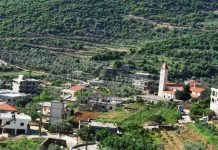
In this atmosphere, the “enemy” is advancing toward a new target, which may be the city of Nabatieh. He has prepared the ground around it and started the encirclement operation by crossing the river at Zawater and increasing the shelling of Nabi Taher, Arnoun, Yahmar al-Shaqif, and its surroundings from the east, and Haboush from the north. He will advance gradually over time to carry out the operation with complete steadiness. During this preparation,he has apparently begun to draw out what remains of the Radwan forces and other fighting units. These units, supported by “new” types of drones, are being used to inflict losses on this “enemy” in lives and equipment, aiming to make him lose his mind so that he begs for a ceasefire and an agreement to withdraw without conditions.
The area between the Litani and Zahrani rivers, from Nabi Taher to Adloun and Ghaziyeh, is the heart of the Shiite presence in the south. It is in this area that the party’s struggle developed and its practical concepts spread, starting from Jebchit and its surroundings to Ansar, and moving down toward the coast. This occurred after it took control of the Amal Movement with Syrian support and handed over the Lebanese file to Iranian leaders. These leaders effectively bought the entire sect, emptying it of its history and dreams to turn it into a hatchery of ideologically driven fighters who serve the system of the Supreme Leader and seek to ensure his control over the entire region.
The enemy is floundering in the south, and Hezbollah is losing its resilience daily, along with the support of the Lebanese people who are gradually freeing themselves from its grip. Is it conceivable that the people of Nabatieh would declare it an open city—free of armed men, tunnels, and weapons depots—thereby eliminating any fighting within its buildings and residential areas? But how can they do so when some still dream of resistance victories and the defeat of the enemy? They act as if southern Lebanon were the size of Russia compared to Napoleon’s armies, relying on the scorched-earth policy adopted by the Tsar, or as if the battle of Nabatieh would be like the Battle of Stalingrad for Hitler’s army in World War II.
The aspirations of the class that claims to understand and formulate theories about warfare and combat remain far removed from reality, despite the abundance of brilliant officers from the school of “Marshal” Hoteit, not to mention the military analysts who promote these dazzling victories. Meanwhile, the Israelis, along with the United States, are striving to expedite the resolution of the Iranian situation and the dismantling of its nuclear program as a prelude to its surrender, thereby cutting off salaries and orders to Hezbollah fighters. Who will prevail in this series of losses and victories? Will there be any room for opinion or maneuvering once the situation is settled and defeats and disasters mount?
The coming days will undoubtedly reveal a new facet of this war, which began with Hamas’s attack in Gaza. The so-called “resistance” faction—deluded by its own arrogance and its swift plan to dismantle the “spider’s web” in seven minutes, return the Jews to their countries of origin, and pray in the Al-Aqsa Mosque—will now reveal the true fate of the resistance front across all its branches, from Gaza to Yemen, Syria, and Lebanon, culminating in Iran, the head of the octopus.
Iran believed that playing with the big players was a matter that could be avoided and left to its tentacles. However, the decision has been made to completely eliminate it, its tentacles, and its centers of power and control over the Iranian people. Neither it nor its tentacles will remain; the head, the tentacles, and even the feet will fall, and it will never rise again.
السيرة الذاتية للكولونيل شربل بركات
خبير عسكري، كاتب، شاعر، مؤرخ، ومعلق سياسي
*ضابط متقاعد من الجيش اللبناني
*متخرج من المدرسة الحربية ومجاز بالعلوم السياسية والادارية من الجامعة اللبنانية
*كلف كأحد الضباط لتنظيم الدفاع عن القرى الحدودية منذ 1976
*تسلم قيادة تجمعات الجنوب
*تسلم قيادة القطاع الغربي في جيش لبنان الحر وأصبح مساعدا للرائد سعد حداد ثم تسلم قيادة الجيش بالوكالة عندما مرض الرائد حداد واستمر بعد وفاته حتى مجيء اللواء أنطوان لحد فأصبح مساعده ثم قائدا للواء الغربي في جيش لبنان الجنوبي
*ترك العمل العسكري في 1988 وتسلم العلاقات الخارجية
*شهد أمام لجنة العلاقات الخارجية في مجلس الشيوخ الأميركي مرتين
*كاتب سياسي وباحث في التاريخ له الكثير من الكتب والمقالات السياسية التاريخية والانسانية
نشر كتابه الأول “مداميك” (1999) الذي يحكي عن المنطقة الحدودية ومعاناة أهلها، ترجم إلى العبرية ونشرته معاريف (2001) والانكليزية (2012) Madameek – Courses – A struggle for Peace in a zone of war موجود على Amazon Books
*نشر كتابه الثاني “الجنوب جرحنا وشفانا” الذي يشرح الأحداث التي جرت في المنطقة بين 1976 – 1986
*الكتاب الثالث “Our Heritage” كتاب بالانكليزية يلخص التراث اللبناني مع رسومات لزيادة الاستيعاب موجه للشباب المغترب
*كتابه السياسي الثالث “لبنان الذي نهوى” (2022) جاهز للطبع
*كتاب مجزرة عين إبل 1920 وهو بحث تاريخي عن المجزرة التي ساهمت في نشوء وتثبيت لبنان الكبير
*كتاب “المقالات السياسية 2005 – 2013” مئة ومقالة منشور على صفحته
*كتاب “الشرق الأوسط في المخاض العسير” مجموعة مقالات سياسية (2013 – 2025)
*كتاب “العودة إلى عين إبل” بحث تاريخي بشكل قصصي عن تاريخ المنطقة بين 1600 – 1900
*كتاب شعر عن المعاناة خلال الحرب الكبرى 1914 – 1918 من خلال قصيدة زجلية نقدية جاهز للطبع
*كتاب “تاريخ فناء صور الخلفي” بحث تاريخي عن المنطقة الجنوبية – قيد الانجاز
*كتاب المقالات الانسانية وكتاب عينبليات قيد الانجاز