Emanuele Ottolenghi/Foreign Policy/Lebanon Is Protecting Hezbollah’s Cocaine Trade in Latin America نقلاً عن موقع الفورن بولسي: لبنان (المقصود الدولة اللبنانية) تحمي تجارة حزب الله بالكوكايين في أميركا اللاتينية
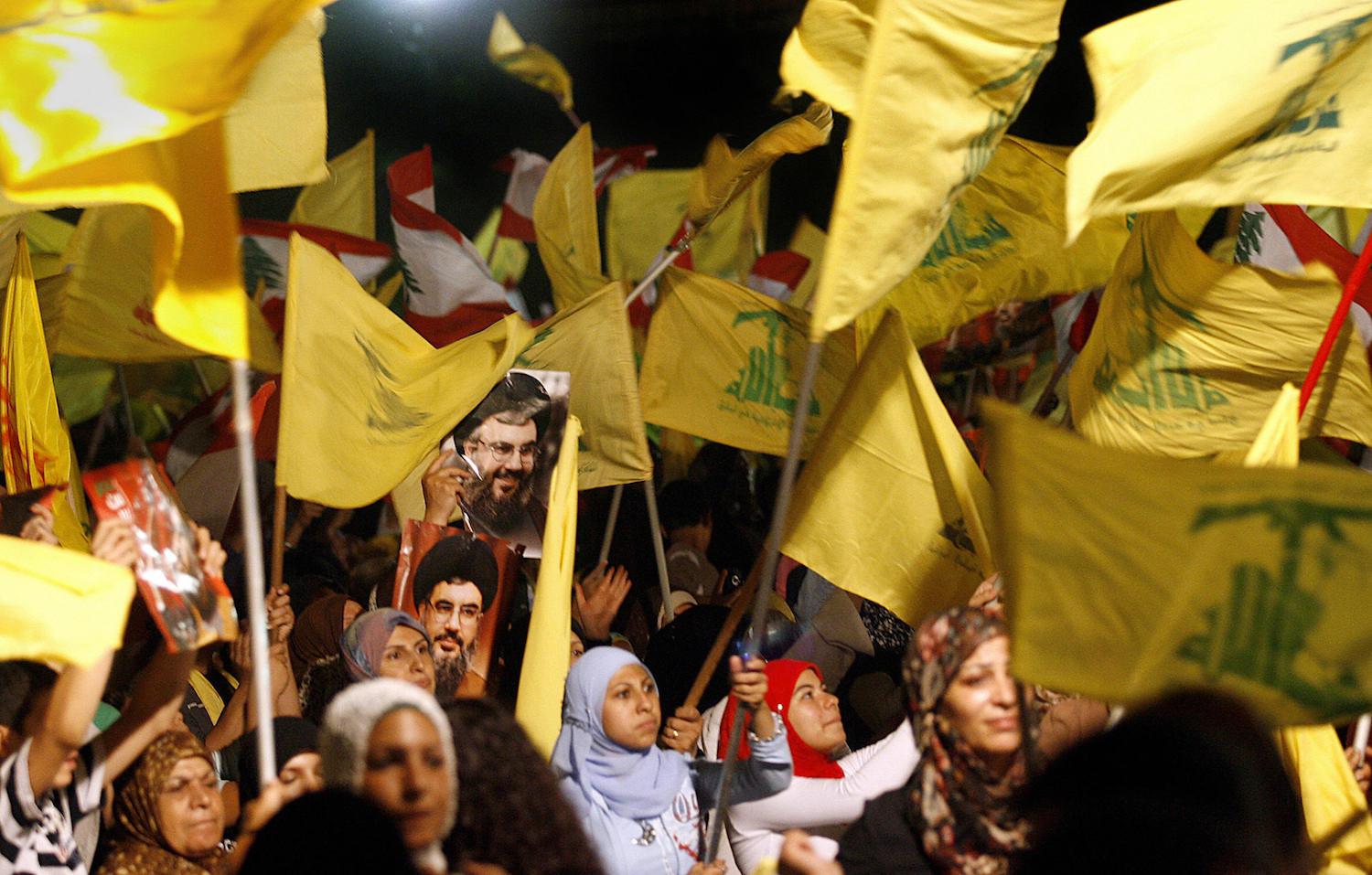
Images of Hezbollah chief Hassan Nasrallah are seen among scores of Hezbollah and Lebanese national flags being waved by Hezbollah supporters during a ceremony to mark first anniversary of the war with Israel, 14 August 2007. Nasrallah reiterated to a mass rally broadcast live on television that his Shiite group had won a divine victory. "Today is the anniversary of the divine victory," Nasrallah told the thousands of men, women and children who had gathered in an empty lot of Beirut's southern suburb of Dahiyeh controlled by Hezbollah. AFP PHOTO/MARWAN NAAMANI (Photo credit should read MARWAN NAAMANI/AFP/Getty Images)
Lebanon Is Protecting Hezbollah’s Cocaine Trade in Latin America نقلاً عن موقع الفورن بولسي: لبنان (المقصود الدولة اللبنانية) تحمي تجارة حزب الله بالكوكايين في أميركا اللاتينية
Emanuele Ottolenghi/Foreign Policy/June 16/18
The country’s institutions are not a counterweight to Hezbollah, but its enablers.
Days after the Trump administration withdrew from the Iran nuclear deal, Washington ramped up sanctions against Hezbollah as part of its offensive against Tehran and its proxies. Yet U.S. policy toward the Lebanese militant group continues to be incoherent. By flexing its muscles against Hezbollah while supporting Lebanese state institutions that it has heavily penetrated or fully controls, the White House ends up undermining its own pursuit of the group’s illicit sources of finance.
This contradiction at the heart of U.S. policy is now playing out in Paraguay, where the Lebanese Embassy is attempting to block the extradition of alleged Hezbollah financier Nader Mohamad Farhat. While Hezbollah’s arsenal and fighters are concentrated in Lebanon and Syria, Latin America is an indispensable theater of operations for the criminal networks that generate much of Hezbollah’s revenue.
Paraguay hosts a significant and growing money laundering operation connected to Hezbollah in the Triple Frontier, where Paraguay intersects with Argentina and Brazil. Increasingly, Hezbollah’s local operatives are involved in the local boom of cocaine trafficking — and there is evidence that Hezbollah is sending senior officials to the Triple Frontier to coordinate these activities.
After more than a decade when U.S. policymakers neglected the Triple Frontier, federal investigations are now finally unearthing multibillion-dollar criminal schemes run by Hezbollah. It was no surprise that Hezbollah would push back by leveraging local influence. It was less obvious that it would do so through the Lebanese Embassy, which is, technically speaking, an arm of the state institutions Washington wants to strengthen as a counterweight to Hezbollah.
On May 17, while the U.S. Treasury was announcing new Hezbollah designations, Paraguayan authorities raided Unique SA, a currency exchange house in Ciudad del Este, on the Paraguayan side of the Triple Frontier, and arrested Farhat, its owner, for his role in an alleged $1.3 million drug money laundering scheme. Farhat is alleged to be a member of the Business Affairs Component, the branch of Hezbollah’s External Security Organization in charge of running overseas illicit finance and drug trafficking operations.
U.S. authorities want to extradite Farhat — the clearest indication that his money laundering activities touched the U.S. financial system. But the Lebanese government wants to prevent that from happening. On May 28, the Lebanese charge d’affairs in Asunción, Hassan Hijazi, sent a letter to Paraguay’s attorney general intimating that she should reject the U.S. request to extradite Farhat.On May 28, the Lebanese charge d’affairs in Asunción, Hassan Hijazi, sent a letter to Paraguay’s attorney general intimating that she should reject the U.S. request to extradite Farhat.
Hijazi is clearly entitled to look after the interests of a Lebanese national. He could do so by offering consular services to the detainee while publicly distancing his country from this type of financial crime. He could also offer prosecutors the embassy’s cooperation and make Lebanese institutions available to oblige any request they might have. Interfering in the legal process of his host country, on the other hand, is an infringement of diplomatic protocol and a sure sign that the Ministry of Foreign Affairs in Beirut is prioritizing Hezbollah’s interests over those of Lebanon.
Washington should not let this slip quietly, and neither should Paraguay. Asunción should declare Hijazi to be persona non grata and unceremoniously dispatch him back to Lebanon. Such a step would send a clear message to Hijazi’s boss, Lebanese Foreign Minister Gebran Bassil: You can get U.S. aid or you can do Hezbollah’s bidding. But you cannot do both at the same time and get away with it.
The United States should give reassurances to Paraguay that punishing the envoy and extraditing the culprit is the right course of action. Farhat’s money laundering scheme is the tip of Hezbollah’s criminal iceberg in the Triple Frontier. Investigators who raided Farhat’s business found deferred checks for millions of dollars issued by companies with the beneficiary’s names purposely left blank. Some of the companies are wholesale importers of brand goods — an indication that the money exchange house may well have been part of a trade-based drug money laundering network.
To run smoothly, such schemes rely on the complicity of local authorities, who rarely check incoming and outgoing merchandise that traverses the Triple Frontier weekly through Ciudad Del Este’s Guaraní International Airport by cargo plane from Dubai and the United States.
Past and ongoing cases are evidence that the airport is a gateway for illicit traffic, much of which goes through the United States. An ongoing case in Miami, investigated by the local FBI’s Joint Terrorism Task Force, specifically mentions a weekly Miami-Ciudad Del Este cargo flight as the conduit for delivery of counterfeited electronics. Last year, Paraguay extradited to Miami a Lebanese drug trafficker with ties to Hezbollah after he was caught shipping cocaine through the same airport.
When they arrested him, authorities found that he was conspiring to ship 100 kilograms of cocaine a month to a Houston business associate by air cargo. Recent visits by U.S. authorities to the airport have only highlighted the glaring deficiencies in local controls.
Paraguayan authorities have been cooperative but are susceptible to local pressure. They may never convict Farhat if he is tried domestically. There is a history of lost opportunities to go after Hezbollah in Paraguay. Last December, the local penitentiary system let two suspected Hezbollah drug traffickers escape during a transfer between prisons.
Asunción has not taken any steps to enforce decade-old U.S. sanctions against Triple Frontier-based Hezbollah operatives, many of whom continue to live and trade on the Paraguayan side of the border.
Washington will no doubt work with the Paraguayans to bring Farhat to justice and, hopefully, to encourage more work to dismantle the larger schemes sustaining Hezbollah’s finances in the Triple Frontier. But it also needs to recognize that Lebanese institutions are not a counterweight to Hezbollah, but its enablers.
“الفورين بوليسي”: سفارة لبنان في “باراغواي” تحاول منع ترحيل مواطن متهم بتمويل “حزب الله” النهار/ترجمة نسرين ناضر/”الفورين بوليسي”/ 16 حزيران 2018
نشرت “الفورين بوليسي” معلومات عن تدخل سفارة لبنان في باراغواي منعاً لترحيل مواطن لبنان متهم “بالضلوع في تمويل حزب الله”.
في الآتي، نعرض ترجمة حرفية لأجزاء من المقال من دون التدخل:
بعد أيام من انسحاب إدارة ترامب من الاتفاق النووي الإيراني، عمدت واشنطن إلى زيادة عقوباتها على “حزب الله” في إطار حملتها ضد طهران ووكلائها. غير أن السياسة الأميركية تجاه الحزب لا تزال غير متماسكة. فالبيت الأبيض، ومن خلال عرض عضلاته ضد “حزب الله” مع تقديم الدعم في الوقت نفسه لمؤسسات الدولة اللبنانية التي اخترقها الحزب اختراقاً واسعاً أو يسيطر عليها كلياً، يتسبّب في نهاية المطاف بتقويض مساعيه الهادفة إلى القضاء على مصادر التمويل غير الشرعية للحزب.
هذا التناقض في صلب السياسة الأميركية يتجلّى الآن في باراغواي، وفق مجلة “فورين بوليسي”، حيث تحاول السفارة اللبنانية منع ترحيل نادر محمد فرحات المتّهم بالضلوع في تمويل “حزب الله”. في حين تتركّز ترسانة الحزب ومقاتلوه في لبنان وسوريا، تشكّل أميركا الشمالية مسرح عمليات لا غنى عنه للشبكات الإجرامية التي تولّد جزءاً كبيراً من عائدات “حزب الله”.
تضم باراغواي على أراضيها عملية كبيرة ومتنامية تابعة لـ”حزب الله” لتبييض الأموال، عند منطقة الحدود الثلاثية حيث تتقاطع باراغواي مع الأرجنتين والبرازيل. يتورّط عناصر “حزب الله” في البلاد، بصورة متزايدة، في الطفرة المحلية التي تشهدها تجارة الكوكايين – وهناك أدلّة بأن الحزب يرسل مسؤولين كباراً إلى الحدود الثلاثية لتنسيق هذه الأنشطة.
بعد أكثر من عقدٍ تجاهل خلاله صنّاع السياسات الأميركيون الحدود الثلاثية، تكشف التحقيقات الفيديرالية الآن النقاب عن مخططات إجرامية بقيمة مليارات الدولارات يُديرها “حزب الله”. لم يكن مفاجئاً أن يعمد الحزب إلى الرد من طريق تعزيز نفوذه المحلي، إلا أنه لم يكن متوقّعاً أن يفعل ذلك من خلال السفارة اللبنانية التي تُعتبَر، من الناحية التقنية، ذراعاً من أذرع مؤسسات الدولة التي تسعى واشنطن إلى تعزيزها بغية التصدّي لـ”حزب الله”.
في 17 أيار الماضي، في حين كانت وزارة الخزانة الأميركية تعلن عن عقوبات جديدة على “حزب الله”، داهمت السلطات في باراغواي مركز صرف العملات Unique SA في مدينة سويداد ديل إستي في جهة الحدود الثلاثية الواقعة داخل أراضي باراغواي، وقامت بتوقيف فرحات، مالك مركز الصيرفة، على خلفية دوره في مخطط مزعوم لتبييض 1.3 مليون دولار من أموال المخدرات. فرحات متّهم بالانتماء إلى “مركّب صفقات الأعمال”، وهو أحد فروع “منظمة الأمن الخارجي” التابعة لـ”حزب الله” ومهمّته إدارة التمويل غير الشرعي في الخارج وعمليات تجارة المخدرات.
تطالب السلطات الأميركية بترحيل فرحات – في مؤشر واضح جداً عن أن أنشطته في مجال تبييض الأموال قد طالت المنظومة المالية الأميركية. غير أن الحكومة اللبنانية تسعى إلى منع ترحيله. ففي 28 أيار، وجّه القائم بالأعمال اللبناني في العاصمة أسونسيون، حسن حجازي، رسالة إلى النائبة العامة في باراغواي يلمّح فيها إلى أنه يجدر بها رفض الطلب الأميركي بترحيل فرحات.
تقديم خدمات استشارية إلى الموقوف مع النأي ببلاده في العلن عن هذا النوع من الجرائم المالية. وكان بوسعه أيضاً أن يعرض على المدّعين العامين التعاون من جانب السفارة، وأن يضع المؤسسات اللبنانية في التصرف بغية الاستجابة لأي مطلب قد يتقدّمون به. غير أن التدخل في العملية القانونية في البلد المضيف هو خرقّ للبروتوكول الديبلوماسي، ومؤشر واضح عن أن وزارة الخارجية اللبنانية تُقدّم مصالح “حزب الله” على مصالح لبنان.
لا يجدر بواشنطن السكوت عمّا جرى، وكذلك الأمر بالنسبة إلى باراغواي. ينبغي على السلطات في باراغواي أن تعلن أن حجازي شخصية غير مرغوب فيها على أراضي البلاد، وتُعيده فوراً إلى لبنان. فمن شأن خطوة من هذا القبيل أن توجّه رسالة واضحة إلى وزير الخارجية اللبناني جبران باسيل، الذي يُعتبَر المسؤول الأول عن حجازي، مفادها ما يأتي: إما تحصل على المساعدات الأميركية وإما تنصاع لإرادة “حزب الله”. إنما لا يمكنك أن تفعل الأمرَين معاً وتنجو بفعلتك.