Soeren Kern/Gatestone Institute/Germany’s Failed Hezbollah Ban/سورين كارين/معهد كايستون: فشل حظر حزب الله في ألمانيا…حظر الحزب الذي تم التباهي به لم يكن أكثر من مجرد حيلة دعائية هدفها إسكات منتقدي السياسة الخارجية للحكومة الألمانية الموالية لإيران.ا
Germany’s Failed Hezbollah Ban Soeren Kern/Gatestone Institute/June 16/2021
سورين كارين/معهد كايستون: فشل حظر حزب الله في ألمانيا
In retrospect, Germany’s much-vaunted Hezbollah ban appears to have been little more than a publicity stunt aimed at silencing critics of the German government’s pro-Iran foreign policy.
بالنظر إلى الوراء ، يبدو أن حظر حزب الله الذي تم التبجح به في ألمانيا لم يكن أكثر من مجرد حيلة دعائية تهدف إلى إسكات منتقدي السياسة الخارجية للحكومة الألمانية الموالية لإيران.
Hezbollah has effectively evaded the ban by transferring many of its activities to charities and cultural centers controlled by Iran.
لقد تهرب حزب الله بشكل فعال من الحظر من خلال نقل العديد من أنشطته إلى الجمعيات الخيرية والمراكز الثقافية التي تسيطر عليها إيران.
Iran’s main base of operation in Germany is the Hamburg-based Shiite Imam Ali Mosque and the associated Islamic Centre of Hamburg (Islamisches Zentrum Hamburg, IZH).
قاعدة العمليات الإيرانية الرئيسية في ألمانيا هي مسجد الإمام علي الشيعي ومقره هامبورغ والمركز الإسلامي المرتبط بهامبورغ (Islamisches Zentrum Hamburg، IZH).
“Like all pro-Iranian institutions, IZH is based on the model of the Islamic state of Allah and the ideas of the 1979 revolution with the aim of expanding and Islamizing the entire world. Western values, liberal ideas or the free democratic basic order are in contradiction to this. Due to the history and the animosity between Iran and Israel, the teachings of IZH have a strong anti-Semitic and anti-Israeli attitude.” — Annual Report for 2020, Germany’s domestic intelligence agency, Hamburg branch.
“مثل جميع المؤسسات الموالية لإيران ، تستند IZH على نموذج دولة الله الإسلامية وأفكار ثورة 1979 الهادفة إلى التوسع في كل أرجاء العالم وأسلمته في حين أن هذه الأفكار والأهداف الإيرانية تتناقض كلياً مع القيم الغربية والأفكار الليبرالية والنظام الأساسي الديمقراطي الحر . وبسبب تاريخ العداء بين إيران وإسرائيل، فإن تعاليم IZH لها مواقف معادية للسامية ولإسرائيل”. (التقرير السنوي لعام 2020 ، وكالة المخابرات الداخلية الألمانية ، فرع هامبورغ.)
“Although it contains ‘democratic’ elements, this doctrine does not serve to establish the rule of the people, i.e., democracy, but rather to establish the rule of Allah, whose ‘guardians’ are Shiite Islamic scholars. Therefore, Hezbollah spreads an extremist Islamist ideology and represents a threat to the constitutional order.” — Annual Report for 2020, Germany’s domestic intelligence agency, North Rhine-Westphalia branch.
وعلى الرغم من احتوائه على عناصر “ديمقراطية” ، إلا أن هذه العقيدة لا تعمل على ترسيخ حكم الشعب ، أي الديمقراطية ، وإنما ترسيخ حكم الله الذي “أولياءه” هم علماء المسلمين الشيعة ، لذلك ينشر حزب الله الفكر الإسلامي وه يمثل تهديدا للنظام الدستوري “. – (التقرير السنوي لعام 2020 ، وكالة المخابرات الداخلية الألمانية ، فرع شمال الراين – وستفاليا.)
“For Hezbollah, Germany represents a space for logistical and financial support services. Although its supporters in Germany are well networked internally, they are not very visible to the outside world because they are careful not to be openly connected with Hezbollah.” — Annual Report for 2020, Germany’s domestic intelligence agency, Rhineland Palatinate branch.
“بالنسبة لحزب الله تمثل ألمانيا موقعاً مهماً لخدمات الدعم اللوجستي والمالي. وعلى الرغم من أن أنصاره في ألمانيا مرتبطون جيدًا بالشبكات الداخلية، إلا أنهم ليسوا مرئيين جدًا للعالم الخارجي لأنهم حريصون على عدم الارتباط علنًا بحزب الله”. – (التقرير السنوي لعام 2020 ، وكالة المخابرات الداخلية الألمانية ، فرع راينلاند بالاتينات).
“One gets the impression that no one has really tried to completely shed light on and smash the structures of Hezbollah in Germany.” — German MP Benjamin Strasser.
“يتكون لدى المرء انطباع بأنه لم يحاول أحد بالفعل تسليط الضوء وبشكل كامل على هيكلية حزب الله في ألمانيا وتحطيمها”. – (النائب الألماني بنيامين شتراسر.)
The Hezbollah ban was in fact a compromise measure between German lawmakers who wanted to take a harder line against Iran and those who did not. As a result, the ban fell far short of a complete prohibition on Hezbollah and was apparently aimed at providing the German government with political cover that allowed Germany to claim that it had banned the group even if it had not.
كان حظر حزب الله في الواقع بمثابة حل وسط بين المشرعين الألمان الذين أرادوا اتخاذ موقف أكثر تشددًا ضد إيران وأولئك الذين لم يفعلوا ذلك. ونتيجة لذلك ، لم يرق الحظر إلى مستوى الحظر الكامل على حزب الله وكان يهدف على ما يبدو إلى تزويد الحكومة الألمانية بغطاء سياسي يسمح لألمانيا بالادعاء بأنها حظرت الجماعة حتى لو لم تفعل ذلك.
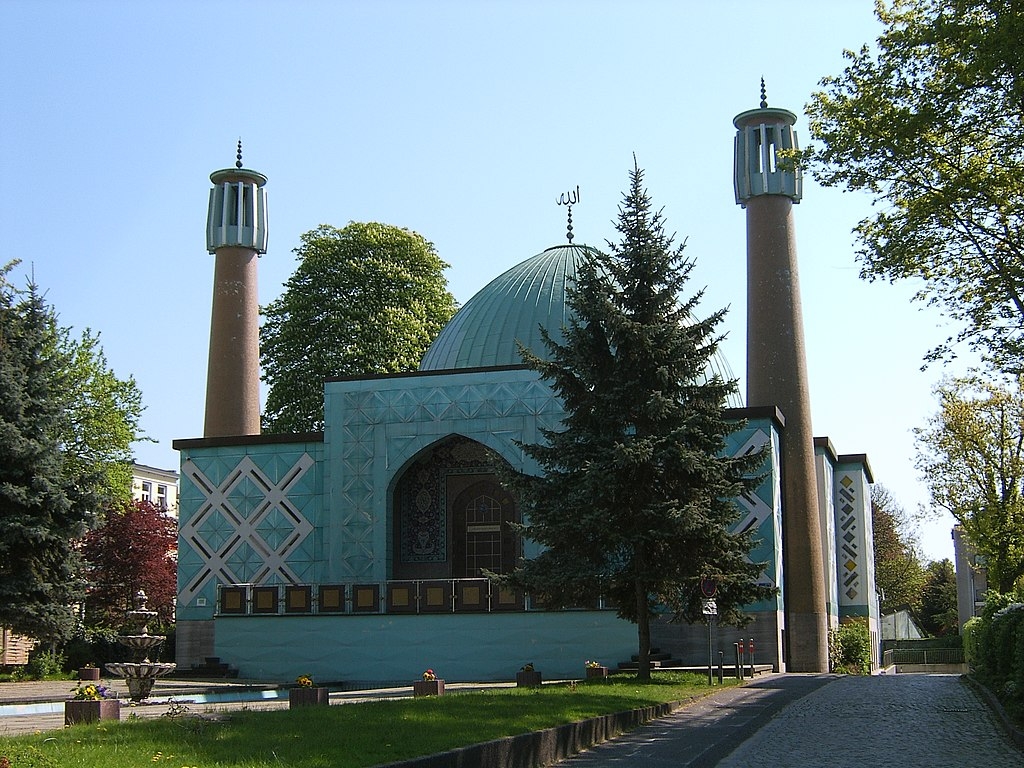
One year after Germany banned Hezbollah from operating on its soil, the Iran-backed, Lebanon-based Shiite terrorist group’s presence in Germany is stronger than ever. Iran’s main base of operation in Germany is the Hamburg-based Shiite Imam Ali Mosque (pictured) and the associated Islamic Centre of Hamburg (Islamisches Zentrum Hamburg, IZH). (Image source: Staro1/Wikimedia Commons)
بعد عام من حظر ألمانيا حزب الله من العمل على أراضيها، أصبح وجود هذه الجماعة الإرهابية الشيعية المدعومة من إيران ومقرها لبنان أقوى في ألمانيا من أي وقت مضى. أما قاعدة العمليات الإيرانية الرئيسية في ألمانيا فهي مسجد الإمام علي الشيعي ومقره هامبورغ (في الصورة) والمركز الإسلامي المرتبط بهامبورغ (Islamisches Zentrum Hamburg، IZH). (مصدر الصورة: Staro1 / ويكيميديا كومنز)
One year after Germany banned Hezbollah from operating on its soil, the Iran-backed, Lebanon-based Shiite terrorist group’s presence in Germany is stronger than ever.
بعد عام من حظر ألمانيا حزب الله من العمل على أراضيها، أصبح وجود الجماعة الإرهابية الشيعية المدعومة من إيران ومقرها لبنان في ألمانيا أقوى من أي وقت مضى.
In the twelve months since the ban entered into effect, Hezbollah’s propaganda and fundraising activities in Germany have continued apace; the number of its followers in the country has increased; and the Hamburg mosque which serves as Iran’s main base of operations in Germany has gained in influence.
في الأشهر الاثني عشر ومنذ دخول الحظر حيز التنفيذ استمرت أنشطة حزب الله الدعائية وكذلك جمع الأموال في ألمانيا على قدم وساق.زاد عدد أتباعه في البلاد؛واكتسب مسجد هامبورغ الذي يعد قاعدة العمليات الإيرانية الرئيسية في ألمانيا نفوذاً كبيراً ..
In retrospect, Germany’s much-vaunted Hezbollah ban appears to have been little more than a publicity stunt aimed at silencing critics of the German government’s pro-Iran foreign policy.
بالنظر إلى الوراء ، يبدو أن حظر حزب الله الذي تم التبجح به في ألمانيا لم يكن أكثر من مجرد حيلة دعائية تهدف إلى إسكات منتقدي السياسة الخارجية للحكومة الألمانية الموالية لإيران.
A recent annual report (Verfassungsschutzbericht 2020) by the Hamburg branch of Germany’s domestic intelligence agency (Bundesamt für Verfassungsschutz, BfV) revealed that despite the ban, which entered into effect on April 30, 2020, Hezbollah continues to operate at least 30 mosques and cultural associations in Germany.
The report added that the number of known Hezbollah followers in Germany had increased by 20% during the past year, jumping to 1,250 in 2020, up from 1,050 in 2019. The increase was attributed to improved intelligence gathering.
The report also said that Hezbollah leader Hassan Nasrallah had ordered Hezbollah followers in Germany to obey German law in order to avoid drawing unwanted attention from German intelligence agencies. At the same time, Hezbollah has effectively evaded the ban by transferring many of its activities to charities and cultural centers controlled by Iran.
“Pro-Iranian institutions in Germany are assessed to be instruments of the Iranian government that represent their theocratic state doctrine,” said the report. “They represent a system of values that is incompatible with the liberal democratic basic order.”
Iran’s main base of operation in Germany is the Hamburg-based Shiite Imam Ali Mosque and the associated Islamic Centre of Hamburg (Islamisches Zentrum Hamburg, IZH). The report stated:
“The director position of IZH has traditionally been filled with a loyal supporter of Iranian state doctrine and Islamic revolutionary goals. He is regarded as the representative of Iran’s Supreme Leader Ali Khamenei in Europe and as the Iran’s religious representative to the Shiite community.
“IZH is headed by Dr. Mohammad Hadi Mofatteh…a well-trained representative of the current regime in Tehran. According to his own statements, he served as an officer with the Revolutionary Guards. Mofatteh’s family is firmly anchored in the state-religious elite of Iran. He himself held various management positions in state-controlled media outlets for many years.
“The IZH is one of the most important centers of its kind in Europe, which is used by Shiite Muslims of various nations as a central religious contact point — in addition to Iranians, above all by Afghans, Arabs, Lebanese, Pakistanis and Turks as well as German converts….
“The IZH aims to export the Islamic revolution by means of extensive public relations work. The content is formulated in a moderate way and rarely offers a target for intelligence observation. To the outside world, the IZH presents itself as a purely religious institution that does not permit any political activities. Public association or identification with the Iranian government is usually avoided. Nevertheless, the IZH’s understanding of the state and society is shaped by the primacy of religion over democracy and the rule of law.
“A number of Shiite Islamic centers and organizations exist in Germany. The IZH has established a nationwide network of contacts and exercises influence over Shiites of various nationalities as well as Shiite-Islamic mosques and associations, up to and including complete control. Through these organizations, the IZH provides financial support, among other things, for the dissemination of the Iranian ‘revolutionary idea’ in various areas of society such as religion, education and sport.”
“The IZH is represented in some Islamic umbrella organizations that currently are not being monitored by German intelligence. In Hamburg it has a leading position in the central Islamic organization Council of Islamic Communities in Hamburg (SCHURA), an amalgamation of numerous mosque-sponsoring associations. At the federal level, representatives of the IZH are active in the Central Council of Muslims in Germany (ZMD) and in the Islamic Community of Shiite Congregations in Germany (IGS), at the European level in the Islamic-European Union of Shia Scholars and Theologians (IEUS). The IGS and IEUS are currently being monitored by German intelligence.”
A separate intelligence report (Verfassungsschutzbericht 2020) by the regional branch of the BfV in the German state of Schleswig-Holstein added:
“IZH is regarded as an important propaganda apparatus on the one hand, but also as an important interface between Iran and Germany and one of the centers of Iranian influence in Europe on the other. The head of the association is the representative of the revolutionary leader Khamenei in Europe and is accordingly appointed from Tehran.
“Like all pro-Iranian institutions, IZH is based on the model of the Islamic state of Allah and the ideas of the 1979 revolution with the aim of expanding and Islamizing the entire world. Western values, liberal ideas or the free democratic basic order are in contradiction to this. Due to the history and the animosity between Iran and Israel, the teachings of IZH have a strong anti-Semitic and anti-Israeli attitude.”
When asked why IZH was allowed to continue operating, a long-time observer of German politics told Gatestone Institute that German authorities were making a trade-off between banning the center and keeping it open so that German security agencies can keep tabs on Hezbollah’s activities in Germany.
Regional Intelligence Assessments on Hezbollah
Germany’s domestic intelligence agency, the Federal Office for the Protection of the Constitution (Bundesamt für Verfassungsschutz, BfV), has branches in all of Germany’s 16 federal states. Following are select statements about Hezbollah from the new 2020 annual reports:
Bavaria: “The long-term goal of Hezbollah (Party of Allah) is the destruction of the State of Israel and the rule of Islam over Jerusalem. Hezbollah has been responsible for terrorist attacks in Israel for years. The group so far has not carried out any violent actions in Germany but uses our territory as a safe haven. Hezbollah activities endanger the foreign interests of Germany and are directed against the concept of international understanding.”
Bremen: “In Germany, the primary goal of Hezbollah is to promote the development of organizational structures. These include their own mosque associations, in which Hezbollah supporters organize themselves. The organization has around 1,250 supporters nationwide.”
North Rhine-Westphalia: “Hezbollah is being monitored due to its extremist aspirations. Its ideological basis is the doctrine of the ‘guardianship of the Islamic jurist’ (Welayat-e Faqih) established by Ayatollah Khomeini and implemented politically in the Islamic Republic of Iran. Although it contains ‘democratic’ elements, this doctrine does not serve to establish the rule of the people, i.e., democracy, but rather to establish the rule of Allah, whose ‘guardians’ are Shiite Islamic scholars. Therefore, Hezbollah spreads an extremist Islamist ideology and represents a threat to the constitutional order.”
Rhineland-Palatinate: “For Hezbollah, Germany represents a space for logistical and financial support services. Although its supporters in Germany are well networked internally, they are not very visible to the outside world because they are careful not to be openly connected with Hezbollah.”
Hezbollah Ban Has Had No Effect
Hezbollah is also hiding its fundraising activities by using generic-sounding charities. On May 19, for instance, Germany’s Interior Ministry banned three charities — Deutsche Libanesische Familie (German-Lebanese Family), Menschen für Menschen (People for People) and Gib Frieden (Give Peace) — accused of collecting money for Hezbollah.
The entities were substitutes for a group called Waisenkinderprojekt Libanon (Orphans Project Lebanon) that was banned in Germany in 2014, after it had raised millions of euros for Hezbollah’s Shahid Foundation (Martyrs Foundation), which supports orphans of Hezbollah suicide bombers.
If the past is any guide, Hezbollah has almost certainly already found replacements for the banned entities. Nevertheless, German Interior Minister Horst Seehofer sounded triumphant. “Our security authorities are wide awake,” he declared. “Those who support terrorism will not be safe in Germany. No matter what clothes their supporters appear in, they will not find a place of refuge in our country.”
Since then, however, the German government has openly admitted that the ban has not had any practical impact on Hezbollah’s activities in Germany. Responding to a parliamentary inquiry on May 31, the government said that German security authorities have not observed any emigration of Hezbollah sympathizers from Germany or a withdrawal of activists from mosque associations. The government added that Hezbollah supporters continue to maintain organizational and ideological cohesion:
“The federal government has no knowledge of any fundamental structural changes within or among the supporters of Hezbollah. As before, the supporters of Hezbollah in Germany maintain organizational and ideological cohesion in local mosque associations which are primarily financed by donations. They are therefore not networked in a uniform, nationwide structure, but are presumably looking for isolated regional meeting places, including mosque and cultural associations. These associations are not homogeneous Hezbollah associations, but contact points for Shiite Muslims, including sympathizers of Hezbollah.”
In a separate parliamentary inquiry on May 14, the government said that a considerable part of Hezbollah’s activities in Germany are being carried out “in the dark” and that German authorities were finding it “difficult” to ascertain criminal activities, a claim that has been emphatically disputed. It added:
“The individual association structures continue to exist even after the activity ban, as no organization bans have been issued in this respect. There was and is no superordinate umbrella organization of Hezbollah in Germany.”
The government also admitted that it has not confiscated any assets of Hezbollah in Germany. When asked why the Hamburg-based IZH has not been banned, the government refused to provide an answer. It also said that Hezbollah does not pose a threat to Jewish interests in Germany:
“The federal government has no reliable information about Hezbollah spying on Jewish, Israeli or American targets in Germany. According to current knowledge, the likelihood of attacks by Hezbollah in Germany is low, as this runs counter to the interests of the organization, for which Germany is more of a safe haven.”
“One gets the impression that no one has really tried to completely shed light on and smash the structures of Hezbollah in Germany,” said FDP MP Benjamin Strasser.
When a Ban Is Not Really a Ban
In April 2020, the German government, after years of equivocating and under sustained pressure from the Trump Administration, announced a ban on Hezbollah — Arabic for “The Party of Allah” — in Germany. The ban — supported by the center-right Christian Democrats and the center-left Social Democrats, the two parties that make up Germany’s ruling coalition, and also by the classical liberal Free Democrats — was hailed as “important,” “significant,” and “long overdue.”
The Hezbollah ban was, in fact, a compromise measure between German lawmakers who wanted to take a harder line against Iran and those who did not. As a result, the ban fell far short of a complete prohibition of Hezbollah and was apparently aimed at providing the German government with political cover that allowed Germany to claim that it had banned the group even if it had not.
On April 30, the German government’s Federal Gazette (Bundesanzeiger) reported that Hezbollah was subject to an activity ban (Betätigungsverbot), but not an organizational ban (Organisationsverbot) — an important legal distinction because the activity ban is weaker than an organizational ban.
The two-page document, which carefully avoided referring to Hezbollah as a terrorist organization, prohibited the group’s logo from being displayed “in public, in meetings or in writings.” In addition, Hezbollah’s assets in Germany were to have been confiscated — which ultimately did not happen.
The ban did not call for Hezbollah mosques or cultural centers to be closed, nor did it require that members of the group be deported. The ban also did not prohibit Hezbollah operatives from travelling to Germany.
German lawmakers said that a complete ban of Hezbollah would be impossible because the group’s structures in Germany are “not currently ascertainable.”
The Deputy Chairman of the CDU/CSU parliamentary group in the Bundestag, Thorsten Frei, stated:
“Hezbollah-related association structures, which could justify an organizational ban (vereinsrechtliches Organisationsverbot), are not ascertainable, despite efforts by the federal government since 2008. An organizational ban is therefore not an option due to the lack of a verifiable domestic organizational structure. However, we are free to pursue an activity ban (Betätigungsverbot) that we have also applied to other terrorist organizations that lack a demonstrable domestic organizational structure.”
The idea to ban Hezbollah in its entirety originated with Germany’s conservative party, Alternative for Germany (Alternative für Deutschland, AfD), the third-largest party in the German parliament. The AfD was not pleased with the partial ban. The deputy chairwoman of the AfD parliamentary group in the German Bundestag, Beatrix von Storch, explained:
“Six months ago, the AfD presented a resolution in the Bundestag to ban Hezbollah, a resolution which you vehemently rejected and which, since then, you have blocked in caucus. Now, six months later, you are collectively rushing through the door that we have politically opened. If this would happen with more AfD proposals, Germany would be in a much better place….
“Nevertheless, your resolution has two central weaknesses. The first weakness is that you are asking for only an activity ban (Betätigungsverbot). We want a specific organizational ban (Organisationsverbot). According to the Crime Fighting Law (Verbrechensbekämpfungsgesetz) of 1994, the activity ban is the weaker legal means when compared to an organizational ban. There is no reason in the world why you would fight a terrorist organization with the weaker means and not the stronger. You are making a loud bark, but you are not biting.
“The second fundamental weakness of your resolution is your justification for using the weaker means. You write, and I quote, ‘Hezbollah-related association structures, which could justify an organizational ban (vereinsrechtliches Organisationsverbot), are not ascertainable.’ That is objectively false, as confirmed by the 2017 and 2018 annual reports of Germany’s domestic intelligence agency (Bundesamt für Verfassungsschutz, BfV). The 2018 report states, and I quote, ‘In Germany, Hezbollah followers maintain organizational and ideological cohesion, among other things, in local mosque associations, which are primarily financed by donations.’ Do you even read your own intelligence reports? In case it is too long for you to read, it is located on page 214. Just check it!
“If you do not want to touch Hezbollah’s mosque associations, then this resolution is pure symbolism politics (Symbolpolitik), and symbolism politics cannot continue. What is needed is the complete ban of Hezbollah. Hezbollah’s propaganda and terror financing in Germany must be stopped. The mosque associations that exist must be disbanded, and most importantly, Hezbollah supporters must be deported. This, by the way, is also demanded by the Bundestag’s Anti-Semitism Resolution, which expressly calls for the deportation of supporters of anti-Semitism. If this does not apply to supporters of Hezbollah, which wants to send Jews to the gas chambers, and wants to destroy Israel, then to whom could it apply?”
At the time, German security expert Stefan Schubert wrote that Germany’s partial ban on Hezbollah reflected a lack of political will to crack down on the group. He also predicted that the ban will likely have only a very small impact on Hezbollah’s activities in Germany:
“Today’s completely late action by the federal government is primarily a symbolic gesture. If the government were really serious about annihilating Hezbollah in Germany, it should have established a special commission and provided the security authorities with financial and human resources to identify and dismantle the group nationwide.”
*Soeren Kern is a Senior Fellow at the New York-based Gatestone Institute.
***Picture Enclosed/Iran’s main base of operation in Germany is the Hamburg-based Shiite Imam Ali Mosque (pictured) and the associated Islamic Centre of Hamburg (Islamisches Zentrum Hamburg, IZH). (Image source: Staro1/Wikimedia Commons)