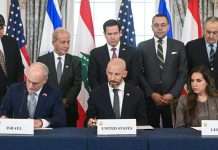
رابط لفيديو ونص حلقة نقاش بالإنكليزية من معهد واشنطن تحت عنوان، “المحادثات الإسرائيلية اللبنانية، الجولة الرابعة: البنتاغون يأخذ مقعداً”./المشاركون: حنين غدار، العميد عساف أوريون وديفيد شينكر/ادار الحلقة روبرت ساتلوف/Video-Link & text to a panel discussion from the Washington Institute under the title: “Israel-Lebanon Talks, Round 4: The Pentagon Takes a Seat”/participants: Hanin Ghaddar,Brig. Gen. Assaf Orion (IDF, Res.) ,David Schenker,/Moderated by Executive Director Robert Satloff
Video-Link & text to a panel discussion from the Washington Institute under the title: “Israel-Lebanon Talks, Round 4: The Pentagon Takes a Seat”/participants: Hanin Ghaddar,Brig. Gen. Assaf Orion (IDF, Res.) ,David Schenker,/Moderated by Executive Director Robert Satloff May 29/2026
رابط لفيديو ونص حلقة نقاش معلوماتية بالإنكليزية من معهد واشنطن تحت عنوان، “المحادثات الإسرائيلية اللبنانية، الجولة الرابعة: البنتاغون يأخذ مقعداً”./المشاركون: حنين غدار، العميد عساف أوريون وديفيد شينكر/ادار الحلقة: روبرت ساتلوف
٢٩ أيار ٢٠٢٦ ترجمة (غوغل) للمقدمة
ستُعقد الجولة الرابعة من المحادثات بوساطة أمريكية بين إسرائيل ولبنان الأسبوع المقبل، ولكن مع تحول ملحوظ: نظرًا لأن مسألة نزع سلاح حزب الله قد عرقلت التقدم في الجولات السابقة، فإن المفاوضات الأمنية ستجرى الآن في البنتاغون بشكل منفصل عن المفاوضات السياسية في وزارة الخارجية. على هذا النحو، يعمل المسؤولون في كلا الوزارتين بجد لإيجاد تسويات بين أولويات البلدين، بهدف تجاوز مجرد تجديد آخر لوقف إطلاق النار والوصول إلى إطار عمل لمفاوضات أوسع.
هل يستطيع الطرفان حل القضايا الشائكة مثل مصادرة الأسلحة وتأمين الحدود قبل أن ينفد صبر إدارة ترامب؟ إذا كان الأمر كذلك، فكيف يمكن للمسؤولين الأمريكيين مساعدة القوات المسلحة اللبنانية في تنفيذ خطة نزع السلاح المتفق عليها؟ وما هي التداعيات التي يحملها المأزق الأمريكي الإيراني والديناميكيات الإقليمية الأخرى على قضايا السياسة الرئيسية مثل إعادة الإعمار ومستقبل التطبيع الإسرائيلي اللبناني؟ للإجابة على هذه الأسئلة، يسعد معهد واشنطن أن يعلن عن منتدى سياسي افتراضي يديره المدير التنفيذي روبرت ساتلوف وبمشاركة:
حنين غدار، زميلة “فريدمان” الأقدم في المعهد والمؤلفة المشاركة لورقته البحثية لعام ٢٠٢٥ “خارطة طريق للسلام الإسرائيلي اللبناني”.
العميد عساف أوريون (جيش الدفاع الإسرائيلي، احتياط)، زميل “روبين” الدولي في المعهد، وباحث أقدم في معهد دراسات الأمن القومي (INSS) في تل أبيب، والرئيس السابق لقسم التخطيط الاستراتيجي في جيش الدفاع الإسرائيلي.
ديفيد شينكر، زميل “تاوب” الأقدم في المعهد، ومدير “برنامج روبين للسياسة العربية”، ومساعد وزير الخارجية الأسبق لشؤون الشرق الأدنى خلال إدارة ترامب الأولى.
Introduction
The fourth round of U.S.-brokered talks between Israel and Lebanon will take place next week, but with one significant shift: because the issue of disarming Hezbollah has obstructed progress in previous rounds, security negotiations will now take place at the Pentagon separate from political negotiations at the State Department. As such, officials in both departments are working hard to find compromises between the two countries’ priorities, aiming to move beyond another ceasefire renewal and reach a framework for broader negotiations.
Can the parties resolve thorny issues such as confiscating weapons and securing borders before the Trump administration’s patience runs out? If so, how can U.S. officials help the Lebanese Armed Forces implement the agreed disarmament plan? And what implications do the U.S.-Iran stalemate and other regional dynamics hold for key policy issues like reconstruction and the future of Israeli-Lebanese normalization? To answer these questions, The Washington Institute is pleased to announce a virtual Policy Forum moderated by Executive Director Robert Satloff and featuring:
Hanin Ghaddar, the Institute’s Friedmann Senior Fellow and coauthor of its 2025 paper “A Roadmap for Israel-Lebanon Peace.”
Brig. Gen. Assaf Orion (IDF, Res.), the Institute’s Rueven International Fellow, a senior research fellow at INSS in Tel Aviv, and former head of the Israel Defense Forces Strategic Planning Division.
David Schenker, the Institute’s Taube Senior Fellow, director of its Rubin Program on Arab Politics, and former assistant secretary of state for Near Eastern affairs during the first Trump administration.
================================== Participants
**David Schenker is the Taube Senior Fellow at The Washington Institute and director of the Linda and Tony Rubin Program on Arab Politics. He is the former Assistant Secretary of State for Near Eastern Affairs.
**Brig. Gen. Assaf Orion (Res.) is The Washington Institute’s Rueven International Fellow, a senior research fellow at INSS, and former head of the IDF Strategic Planning Division.
**Hanin Ghaddar is the Friedmann Senior Fellow at The Washington Institute’s Rubin Family Arab Politics Program, where she focuses on Shia politics throughout the Levant.
Brief Analysis
U.S. and Israeli experts discuss the potential obstacles to progress in upcoming rounds of negotiations, and explain why keeping the Lebanon track separate from the Iran talks would be wise.
On May 28, The Washington Institute held a virtual Policy Forum with David Schenker, Assaf Orion, and Hanin Ghaddar. Schenker is the Institute’s Taube Senior Fellow, director of its Rubin Program on Arab Politics, and former assistant secretary of state for Near Eastern affairs during the first Trump administration. Brig. Gen. Orion is the Institute’s Rueven International Fellow, a senior research fellow at INSS, and former head of the Israel Defense Forces (IDF) Strategic Planning Division. Ghaddar is the Institute’s Friedmann Senior Fellow and coauthor of “A Roadmap for Israel-Lebanon Peace.” The following is a rapporteurs’ summary of their remarks.
David Schenker
The talks in Washington have taken place without one of the main combatants. Yet while Hezbollah may not be in the room, it is an ever-present source of pressure, making its opinion known and placing constraints on Lebanese negotiators through public threats and maneuvers on the ground.
There are now two tracks in the negotiations: the military component at the Pentagon, and political discussions at the State Department. Determining the sequencing and implementation of any agreement reached via these tracks will be incredibly challenging. Lebanon’s objective is to end Israeli occupation of its territory, while Israel aims to end the presence of an Iranian Islamic Revolutionary Guard Corps (IRGC) proxy on its northern border.
Meanwhile, Tehran has been using its separate negotiations with the United States to explicitly link the Lebanon file with any permanent deal to end the Iran war and reopen the Strait of Hormuz, greatly complicating the Israel-Lebanon track. So far, Washington has largely resisted such linkage. During initial talks with Iran, U.S. officials sought to facilitate diplomacy by asking Israel to de-escalate the fighting in Lebanon and avoid further military operations in Beirut and Dahiya. Yet Secretary of State Marco Rubio also publicly stated that Israel had the right to not only respond to Hezbollah missile strikes, but also prevent their launch, giving the IDF more operational freedom.
For the Lebanese government, Iran’s attempts to sway the negotiations are a double-edged sword. On one hand, Beirut seeks sovereignty and an end to Iran’s longstanding domination of the Lebanese state. On the other hand, Beirut’s top priority is to end Israel’s military presence, so if Iranian demands can help compel that outcome, President Joseph Aoun will not protest.
Israel’s ongoing operations in Lebanon are likewise double-edged: although they are advancing the goal of degrading Hezbollah, they may wind up undermining Beirut’s ability to carry out unpopular policies, particularly if the public does not believe the government is truly capable of exerting sovereignty. Although there is no military reason why the Lebanese Armed Forces (LAF) cannot take action against Hezbollah in parallel with Israel’s efforts, the IDF’s continued cross-border operations are contributing to the government’s sense of insecurity.
Yet the fact is that Beirut cannot meet its goal of establishing sovereignty until it compels the LAF to act against Hezbollah. The LAF previously took modest steps to disarm the group in the south, but this was a largely passive effort made with Hezbollah’s de facto acquiescence and intended to fulfill the minimum requirements under the U.S.-led ceasefire monitoring mechanism. When it came to taking action in the north, however, Hezbollah threatened civil war, and the LAF balked by calling for “national consensus” and seeking to avoid armed confrontation with the group.
The recent U.S. sanctions against Lebanese officials may help spur movement on this front. By targeting various Hezbollah members of parliament, Amal movement subordinates of parliamentary speaker Nabih Berri, and—most important—two security officials, Washington essentially delivered a warning to the LAF, which has a history of collaborating and deconflicting with Hezbollah. The LAF cannot see itself as a national institution while simultaneously working on Hezbollah’s behalf; it must be loyal to the state and obey the orders of the democratically elected government.
For the United States, the next step is to start identifying other security officials with ties to Hezbollah and either designating them or encouraging the LAF to quietly push them out of key positions. Providing further monetary or military support to the force without reforming it may be counterproductive. Washington needs to establish clear expectations and provide incentives to demonstrate the potential benefits of peace. This could include offers to help bail Lebanon out of its protracted financial crisis and/or provide substantial investment and reconstruction aid—but only if it meets specific benchmarks on Hezbollah disarmament and reform.
Assaf Orion
After the November 2024 ceasefire halted the previous round of major combat in Lebanon, Hezbollah resumed the conflict this March as part of Iran’s broader response to U.S. and Israeli military operations. Israel’s primary goal in the renewed campaign has been to restore security to its northern communities, but this has not yet been achieved. The IDF established a security zone around 8-10 kilometers deep into Lebanon to prevent direct attacks and stop the use of antitank guided missiles against Israeli communities. It has also destroyed Hezbollah military assets in this area, demolished military-linked buildings, and established operational control up to the Litani River. Yet Hezbollah has first-person view (FPV) drones controlled by fiber-optic cables with a range of up to 60 kilometers, so it continues to pose threats to both northern communities and Israeli soldiers in the new security zone.
The Israeli public is increasingly frustrated by the disconnect between repeated government promises of security and the reality of daily casualties. The government is still hoping for the complete disarmament of Hezbollah, but professional assessments suggest that this will require a combination of diplomatic and military means.
In the upcoming security talks at the Pentagon, two agendas will surface. First, the IDF will insist on disarmament while retaining flexibility on the pace and sequence of this process and preserving its right to self-defense. Second, Lebanon will aim to set a timeline for IDF withdrawal from the south and an end to Israeli strikes. The irony is that Israel is fighting Hezbollah but negotiating with the Lebanese government, which has no control over Hezbollah’s activity. Israel believes that continued military pressure on Hezbollah is needed to convince the LAF to contribute to the disarmament effort. The IDF also seeks to shape Hezbollah’s alternatives, demonstrating the consequences if the group keeps flouting Beirut’s will on disarmament and wider peace negotiations with Israel.
From my past experience leading IDF liaison with the LAF, I can say that Lebanon’s pattern of failing to deliver on promises while citing capacity issues or fears of civil war is a vicious cycle that must be broken. Most recently, Beirut claimed that the LAF had cleared Hezbollah weapons from the entire area south of the Litani following the November 2024 ceasefire, yet Israel subsequently discovered significant weapons caches there, suggesting that the LAF either failed to spot them, lied about them, or both. To be effective, the LAF must take meaningful steps to purge Hezbollah collaborators and infiltrators from its ranks, among other reforms.
If Washington and Tehran reach an agreement to end the Iran war, it will likely include a ceasefire in Lebanon, thereby constraining Hezbollah’s ability to attack Israel. Yet such linkage may also restrict Israel’s freedom to continue striking Hezbollah, since Tehran could threaten to shut down further negotiations with the United States or once again close the Strait of Hormuz.
Hanin Ghaddar
Hezbollah’s resilience cannot be understood through a military lens alone. Following the decimation of its command structure in 2024, the group was reduced to a barely functioning militia. This setback spurred the IRGC to step in directly, dispatching hundreds of commanders to Lebanon to reconstitute Hezbollah, mirroring the IRGC’s foundational role in the militia’s creation in the 1970s. Today, Hezbollah’s operational decisions are being made by the IRGC, not by the militia’s current leaders in Lebanon. Secretary-General Naim Qassem lacks the independent capacity to decide issues of war and peace without prior approval from Tehran.
Moreover, Hezbollah today is sustained more by its ecosystem than its arsenal. Even if all of its missiles, drones, and other military weapons were eliminated today, it would retain the institutional access, financial networks, and procurement channels necessary to rearm and regenerate. According to the U.S. Treasury, the group raised at least $1 billion in 2025 alone, and it continues to move money and materiel through Lebanese airports and other points of entry. As long as Beirut and other actors keep treating Hezbollah as a military problem rather than a systemic one, military action will only produce temporary setbacks, not lasting results.
Recent U.S. sanctions targeting Hezbollah and its allies are meaningful, especially those placed on figures in the General Security Directorate. The GSD has long functioned as an important Hezbollah tool for managing points of entry, forging passports for IRGC operatives, and other tasks. Yet despite sending a signal, the new sanctions are unlikely to modify anyone’s behavior unless they are followed by clear demands, continued pressure, and a structured program of incentives and consequences.
When Lebanese politicians invoke the need for national consensus—often as justification for inaction—they are in practice handing Hezbollah a veto. Hezbollah is Lebanon’s only armed political party, so “consensus” essentially means deferring to its demands. Instead, Lebanon needs to assert its sovereignty through the constitution, not seek Hezbollah’s permission to govern.
As things stand today, however, the main obstacle to disarmament is political will. LAF units are capable of confronting Hezbollah, but no senior political decisionmaker is willing to authorize it. Many fear the legitimate threat of assassination and violence. There is also an institutional trauma rooted in 2008, when the government moved against Hezbollah with U.S. encouragement only to be abandoned when the group retaliated by assaulting Beirut and the Druze heartland. Rebuilding trust will require concrete U.S. assurances that Beirut will not be left exposed again.
Lebanon should take heart from the fact that it successfully confronted the Syrian occupation in 2005, when internal resolve and external support combined to push out the Assad regime. Today, Iran is equally entrenched in Lebanon via Hezbollah, so a similar level of effort is needed.
Two additional principles should guide upcoming negotiations. First, Lebanon must be decoupled from negotiations on the Iran war. Bundling the above issues into the U.S.-Iran track could enable the IRGC to use its presence in Lebanon as a bargaining chip and avoid important concessions elsewhere. Lebanon must be dealt with as a sovereign state on its own terms, not as a side issue in a deal with Iran.
Second, any Lebanon agreement reached while the IRGC retains its current level of control over Hezbollah would carry a significant political risk—namely, that the militia will claim victory, make promises to its Shia constituency, and emerge from the process with a domestic political boost even if it is militarily diminished. If Hezbollah scrapes out a political victory, it will not remain militarily defeated for long and will soon regain its capabilities.
This summary was prepared by Zack Apt, Kate Chesnutt, and Virginia MacArthur. The Policy Forum series is made possible through the generosity of the Winkler Lowy Foundation.
Washington Institute Introduction
**David Schenker is the Taube Senior Fellow at The Washington Institute and director of the Linda and Tony Rubin Program on Arab Politics. He is the former Assistant Secretary of State for Near Eastern Affairs.
**Brig. Gen. Assaf Orion (Res.) is The Washington Institute’s Rueven International Fellow, a senior research fellow at INSS, and former head of the IDF Strategic Planning Division.
**Hanin Ghaddar is the Friedmann Senior Fellow at The Washington Institute’s Rubin Family Arab Politics Program, where she focuses on Shia politics throughout the Levant.
Brief Analysis
U.S. and Israeli experts discuss the potential obstacles to progress in upcoming rounds of negotiations, and explain why keeping the Lebanon track separate from the Iran talks would be wise.
On May 28, The Washington Institute held a virtual Policy Forum with David Schenker, Assaf Orion, and Hanin Ghaddar. Schenker is the Institute’s Taube Senior Fellow, director of its Rubin Program on Arab Politics, and former assistant secretary of state for Near Eastern affairs during the first Trump administration. Brig. Gen. Orion is the Institute’s Rueven International Fellow, a senior research fellow at INSS, and former head of the Israel Defense Forces (IDF) Strategic Planning Division. Ghaddar is the Institute’s Friedmann Senior Fellow and coauthor of “A Roadmap for Israel-Lebanon Peace.” The following is a rapporteurs’ summary of their remarks.
David Schenker
The talks in Washington have taken place without one of the main combatants. Yet while Hezbollah may not be in the room, it is an ever-present source of pressure, making its opinion known and placing constraints on Lebanese negotiators through public threats and maneuvers on the ground.
There are now two tracks in the negotiations: the military component at the Pentagon, and political discussions at the State Department. Determining the sequencing and implementation of any agreement reached via these tracks will be incredibly challenging. Lebanon’s objective is to end Israeli occupation of its territory, while Israel aims to end the presence of an Iranian Islamic Revolutionary Guard Corps (IRGC) proxy on its northern border.
Meanwhile, Tehran has been using its separate negotiations with the United States to explicitly link the Lebanon file with any permanent deal to end the Iran war and reopen the Strait of Hormuz, greatly complicating the Israel-Lebanon track. So far, Washington has largely resisted such linkage. During initial talks with Iran, U.S. officials sought to facilitate diplomacy by asking Israel to de-escalate the fighting in Lebanon and avoid further military operations in Beirut and Dahiya. Yet Secretary of State Marco Rubio also publicly stated that Israel had the right to not only respond to Hezbollah missile strikes, but also prevent their launch, giving the IDF more operational freedom.
For the Lebanese government, Iran’s attempts to sway the negotiations are a double-edged sword. On one hand, Beirut seeks sovereignty and an end to Iran’s longstanding domination of the Lebanese state. On the other hand, Beirut’s top priority is to end Israel’s military presence, so if Iranian demands can help compel that outcome, President Joseph Aoun will not protest.
Israel’s ongoing operations in Lebanon are likewise double-edged: although they are advancing the goal of degrading Hezbollah, they may wind up undermining Beirut’s ability to carry out unpopular policies, particularly if the public does not believe the government is truly capable of exerting sovereignty. Although there is no military reason why the Lebanese Armed Forces (LAF) cannot take action against Hezbollah in parallel with Israel’s efforts, the IDF’s continued cross-border operations are contributing to the government’s sense of insecurity.
Yet the fact is that Beirut cannot meet its goal of establishing sovereignty until it compels the LAF to act against Hezbollah. The LAF previously took modest steps to disarm the group in the south, but this was a largely passive effort made with Hezbollah’s de facto acquiescence and intended to fulfill the minimum requirements under the U.S.-led ceasefire monitoring mechanism. When it came to taking action in the north, however, Hezbollah threatened civil war, and the LAF balked by calling for “national consensus” and seeking to avoid armed confrontation with the group.
The recent U.S. sanctions against Lebanese officials may help spur movement on this front. By targeting various Hezbollah members of parliament, Amal movement subordinates of parliamentary speaker Nabih Berri, and—most important—two security officials, Washington essentially delivered a warning to the LAF, which has a history of collaborating and deconflicting with Hezbollah. The LAF cannot see itself as a national institution while simultaneously working on Hezbollah’s behalf; it must be loyal to the state and obey the orders of the democratically elected government.
For the United States, the next step is to start identifying other security officials with ties to Hezbollah and either designating them or encouraging the LAF to quietly push them out of key positions. Providing further monetary or military support to the force without reforming it may be counterproductive. Washington needs to establish clear expectations and provide incentives to demonstrate the potential benefits of peace. This could include offers to help bail Lebanon out of its protracted financial crisis and/or provide substantial investment and reconstruction aid—but only if it meets specific benchmarks on Hezbollah disarmament and reform.
Assaf Orion
After the November 2024 ceasefire halted the previous round of major combat in Lebanon, Hezbollah resumed the conflict this March as part of Iran’s broader response to U.S. and Israeli military operations. Israel’s primary goal in the renewed campaign has been to restore security to its northern communities, but this has not yet been achieved. The IDF established a security zone around 8-10 kilometers deep into Lebanon to prevent direct attacks and stop the use of antitank guided missiles against Israeli communities. It has also destroyed Hezbollah military assets in this area, demolished military-linked buildings, and established operational control up to the Litani River. Yet Hezbollah has first-person view (FPV) drones controlled by fiber-optic cables with a range of up to 60 kilometers, so it continues to pose threats to both northern communities and Israeli soldiers in the new security zone.
The Israeli public is increasingly frustrated by the disconnect between repeated government promises of security and the reality of daily casualties. The government is still hoping for the complete disarmament of Hezbollah, but professional assessments suggest that this will require a combination of diplomatic and military means.
In the upcoming security talks at the Pentagon, two agendas will surface. First, the IDF will insist on disarmament while retaining flexibility on the pace and sequence of this process and preserving its right to self-defense. Second, Lebanon will aim to set a timeline for IDF withdrawal from the south and an end to Israeli strikes. The irony is that Israel is fighting Hezbollah but negotiating with the Lebanese government, which has no control over Hezbollah’s activity. Israel believes that continued military pressure on Hezbollah is needed to convince the LAF to contribute to the disarmament effort. The IDF also seeks to shape Hezbollah’s alternatives, demonstrating the consequences if the group keeps flouting Beirut’s will on disarmament and wider peace negotiations with Israel.
From my past experience leading IDF liaison with the LAF, I can say that Lebanon’s pattern of failing to deliver on promises while citing capacity issues or fears of civil war is a vicious cycle that must be broken. Most recently, Beirut claimed that the LAF had cleared Hezbollah weapons from the entire area south of the Litani following the November 2024 ceasefire, yet Israel subsequently discovered significant weapons caches there, suggesting that the LAF either failed to spot them, lied about them, or both. To be effective, the LAF must take meaningful steps to purge Hezbollah collaborators and infiltrators from its ranks, among other reforms.
If Washington and Tehran reach an agreement to end the Iran war, it will likely include a ceasefire in Lebanon, thereby constraining Hezbollah’s ability to attack Israel. Yet such linkage may also restrict Israel’s freedom to continue striking Hezbollah, since Tehran could threaten to shut down further negotiations with the United States or once again close the Strait of Hormuz.
Hanin Ghaddar
Hezbollah’s resilience cannot be understood through a military lens alone. Following the decimation of its command structure in 2024, the group was reduced to a barely functioning militia. This setback spurred the IRGC to step in directly, dispatching hundreds of commanders to Lebanon to reconstitute Hezbollah, mirroring the IRGC’s foundational role in the militia’s creation in the 1970s. Today, Hezbollah’s operational decisions are being made by the IRGC, not by the militia’s current leaders in Lebanon. Secretary-General Naim Qassem lacks the independent capacity to decide issues of war and peace without prior approval from Tehran.
Moreover, Hezbollah today is sustained more by its ecosystem than its arsenal. Even if all of its missiles, drones, and other military weapons were eliminated today, it would retain the institutional access, financial networks, and procurement channels necessary to rearm and regenerate. According to the U.S. Treasury, the group raised at least $1 billion in 2025 alone, and it continues to move money and materiel through Lebanese airports and other points of entry. As long as Beirut and other actors keep treating Hezbollah as a military problem rather than a systemic one, military action will only produce temporary setbacks, not lasting results.
Recent U.S. sanctions targeting Hezbollah and its allies are meaningful, especially those placed on figures in the General Security Directorate. The GSD has long functioned as an important Hezbollah tool for managing points of entry, forging passports for IRGC operatives, and other tasks. Yet despite sending a signal, the new sanctions are unlikely to modify anyone’s behavior unless they are followed by clear demands, continued pressure, and a structured program of incentives and consequences.
When Lebanese politicians invoke the need for national consensus—often as justification for inaction—they are in practice handing Hezbollah a veto. Hezbollah is Lebanon’s only armed political party, so “consensus” essentially means deferring to its demands. Instead, Lebanon needs to assert its sovereignty through the constitution, not seek Hezbollah’s permission to govern.
As things stand today, however, the main obstacle to disarmament is political will. LAF units are capable of confronting Hezbollah, but no senior political decisionmaker is willing to authorize it. Many fear the legitimate threat of assassination and violence. There is also an institutional trauma rooted in 2008, when the government moved against Hezbollah with U.S. encouragement only to be abandoned when the group retaliated by assaulting Beirut and the Druze heartland. Rebuilding trust will require concrete U.S. assurances that Beirut will not be left exposed again.
Lebanon should take heart from the fact that it successfully confronted the Syrian occupation in 2005, when internal resolve and external support combined to push out the Assad regime. Today, Iran is equally entrenched in Lebanon via Hezbollah, so a similar level of effort is needed.
Two additional principles should guide upcoming negotiations. First, Lebanon must be decoupled from negotiations on the Iran war. Bundling the above issues into the U.S.-Iran track could enable the IRGC to use its presence in Lebanon as a bargaining chip and avoid important concessions elsewhere. Lebanon must be dealt with as a sovereign state on its own terms, not as a side issue in a deal with Iran.
Second, any Lebanon agreement reached while the IRGC retains its current level of control over Hezbollah would carry a significant political risk—namely, that the militia will claim victory, make promises to its Shia constituency, and emerge from the process with a domestic political boost even if it is militarily diminished. If Hezbollah scrapes out a political victory, it will not remain militarily defeated for long and will soon regain its capabilities. This summary was prepared by Zack Apt, Kate Chesnutt, and Virginia MacArthur. The Policy Forum series is made possible through the generosity of the Winkler Lowy Foundation.
نقلاً عن موقع معهد واشنطن ملخص للحلقة ونبذة عن المشاركين فيها (ترجمة غوغل)
*ديفيد شينكر هو زميل “تاوب” الأقدم في معهد واشنطن ومدير برنامج “ليندا وتوني روبين للسياسة العربية”. وهو مساعد وزير الخارجية الأسبق لشؤون الشرق الأدنى.
*العميد عساف أوريون (احتياط) هو زميل “روبين” الدولي في معهد واشنطن، وباحث أقدم في معهد دراسات الأمن القومي (INSS)، والرئيس السابق لقسم التخطيط الاستراتيجي في جيش الدفاع الإسرائيلي.
*حنين غدار هي زميلة “فريدمان” الأقدم في برنامج “عائلة روبين للسياسة العربية” التابع لمعهد واشنطن، حيث تركز على السياسات الشيعية في جميع أنحاء المشرق العربي. تحليل موجز
يناقش خبراء أمريكيون وإسرائيليون العقبات المحتملة التي تعترض التقدم في جولات المفاوضات المقبلة، ويشرحون سبب حكمة إبقاء المسار اللبناني منفصلاً عن محادثات إيران.
في ٢٨ مايو/أيار، عقد معهد واشنطن منتدى سياسياً افتراضياً بمشاركة ديفيد شينكر، عساف أوريون، وحنين غدار. شينكر هو زميل “تاوب” الأقدم في المعهد، ومدير برنامج “روبين” للسياسة العربية، ومساعد وزير الخارجية الأسبق لشؤون الشرق الأدنى خلال إدارة ترامب الأولى. العميد أوريون هو زميل “روبين” الدولي في المعهد، وباحث أقدم في معهد دراسات الأمن القومي (INSS) في تل أبيب، والرئيس السابق لقسم التخطيط الاستراتيجي في جيش الدفاع الإسرائيلي. غدار هي زميلة “فريدمان” الأقدم في المعهد والمؤلفة المشاركة لورقة “خارطة طريق للسلام الإسرائيلي اللبناني”. وفيما يلي ملخص المقررين لمداخلاتهم.
ديفيد شينكر
لقد جرت المحادثات في واشنطن دون حضور أحد الأطراف المقاتلة الرئيسية. ومع ذلك، ورغم أن حزب الله قد لا يكون موجوداً في الغرفة، إلا أنه يشكل مصدر ضغط دائم الحضور، حيث يعبر عن رأيه ويفرض قيوداً على المفاوضين اللبنانيين من خلال التهديدات العلنية والمناورات على الأرض.
هناك الآن مساران في المفاوضات: الشق العسكري في البنتاغون، والمناقشات السياسية في وزارة الخارجية. وسيكون تحديد تسلسل وتنفيذ أي اتفاق يتم التوصل إليه عبر هذين المسارين أمراً ينطوي على تحدٍ هائل. إن هدف لبنان يتلخص في إنهاء الاحتلال الإسرائيلي لأراضيه، في حين تهدف إسرائيل إلى إنهاء وجود وكيل للحرس الثوري الإيراني على حدودها الشمالية.
وفي غضون ذلك، تستغل طهران مفاوضاتها المنفصلة مع الولايات المتحدة لربط الملف اللبناني بشكل صريح بأي صفقة دائمة لإنهاء الحرب الإيرانية وإعادة فتح مضيق هرمز، مما يعقد المسار الإسرائيلي اللبناني بشكل كبير. وحتى الآن، قاومت واشنطن هذا الربط إلى حد كبير. وخلال المحادثات الأولية مع إيران، سعى المسؤولون الأمريكيون إلى تسهيل الدبلوماسية عبر مطالبة إسرائيل بخفض تصعيد القتال في لبنان وتجنب المزيد من العمليات العسكرية في بيروت والضاحية. ومع ذلك، صرح وزير الخارجية ماركو روبيو علناً أيضاً بأن لإسرائيل الحق ليس فقط في الرد على الهجمات الصاروخية لحزب الله، بل وأيضاً منع إطلاقها، مما يمنح جيش الدفاع الإسرائيلي حرية عمل أكبر على الصعيد العملياتي.
بالنسبة للحكومة اللبنانية، تعد محاولات إيران للتأثير على المفاوضات سلاحاً ذو حدين. فمن ناحية، تسعى بيروت إلى السيادة وإنهاء هيمنة إيران الطويلة على الدولة اللبنانية. ومن ناحية أخرى، فإن الأولوية القصوى لبيروت هي إنهاء الوجود العسكري الإسرائيلي، لذا إذا كانت المطالب الإيرانية يمكن أن تساعد في فرض هذه النتيجة، فلن يعترض الرئيس جوزيف عون.
وبالمثل، فإن عمليات إسرائيل المستمرة في لبنان هي سلاح ذو حدين: فرغم أنها تحرز تقدماً في تحقيق هدف تقويض قدرات حزب الله، إلا أنها قد تنتهي بتقويض قدرة بيروت على تنفيذ سياسات غير شعبية، لا سيما إذا لم يكن الجمهور يعتقد أن الحكومة قادرة حقاً على ممارسة سيادتها. ورغم عدم وجود سبب عسكري يمنع القوات المسلحة اللبنانية من اتخاذ إجراءات ضد حزب الله بالتوازي مع الجهود الإسرائيلية، فإن العمليات المستمرة لجيش الدفاع الإسرائيلي عبر الحدود تساهم في شعور الحكومة بعدم الأمان.
لكن الحقيقة هي أن بيروت لا يمكنها تحقيق هدفها في بسط السيادة حتى تلزم القوات المسلحة اللبنانية بالتحرك ضد حزب الله. لقد اتخذت القوات المسلحة اللبنانية سابقاً خطوات متواضعة لنزع سلاح الجماعة في الجنوب، لكن ذلك كان جهداً سلبياً إلى حد كبير جرى بموافقة فعلية من حزب الله وكان الهدف منه تلبية الحد الأدنى من المتطلبات بموجب آلية مراقبة وقف إطلاق النار التي تقودها الولايات المتحدة. وعندما تعلق الأمر باتخاذ إجراء في الشمال، هدد حزب الله بحرب أهلية، فتراجعت القوات المسلحة اللبنانية داعية إلى “توافق وطني” وساعية لتجنب المواجهة المسلحة مع الجماعة.
وقد تساعد العقوبات الأمريكية الأخيرة ضد مسؤولين لبنانيين في تحفيز الحركة على هذه الجبهة. فمن خلال استهداف العديد من نواب حزب الله في البرلمان، وتابعين لحركة أمل المرتبطة برئيس البرلمان نبيه بري، والأهم من ذلك—مسؤولين أمنيين اثنين، وجهت واشنطن في الأساس تحذيراً للقوات المسلحة اللبنانية، التي تملك تاريخاً من التعاون وتنسيق عدم الاشتباك مع حزب الله. لا يمكن للقوات المسلحة اللبنانية أن ترى نفسها كمؤسسة وطنية وهي تعمل في الوقت نفسه لصالح حزب الله؛ إذ يجب أن تكون وفية للدولة وتطيع أوامر الحكومة المنتخبة ديمقراطياً.
بالنسبة للولايات المتحدة، تتمثل الخطوة التالية في البدء بتحديد مسؤولين أمنيين آخرين لهم صلات بحزب الله وإما فرض عقوبات عليهم أو تشجيع القوات المسلحة اللبنانية على إبعادهم بهدوء عن المناصب الرئيسية. إن تقديم المزيد من الدعم المالي أو العسكري لهذه القوات دون إصلاحها قد يأتي بنتائج عكسية. تحتاج واشنطن إلى وضع توقعات واضحة وتقديم حوافز لإظهار الفوائد المحتملة للسلام. ويمكن أن يشمل ذلك عروضاً للمساعدة في إنقاذ لبنان من أزمته المالية الطويلة و/أو تقديم مساعدات كبيرة للاستثمار وإعادة الإعمار—ولكن فقط إذا استوفى معايير محددة بشأن نزع سلاح حزب الله والإصلاح.
عساف أوريون
بعد أن أوقف وقف إطلاق النار في نوفمبر/تشرين الثاني ٢٠٢٤ الجولة السابقة من القتال العنيف في لبنان، استأنف حزب الله الصراع في مارس/آذار الماضي كجزء من رد إيران الأوسع على العمليات العسكرية الأمريكية والإسرائيلية. وكان هدف إسرائيل الرئيسي في الحملة المتجددة هو إعادة الأمن إلى مجتمعاتها الشمالية، لكن هذا لم يتحقق بعد. فقد أنشأ جيش الدفاع الإسرائيلي منطقة أمنية بعمق يتراوح بين ٨ إلى ١٠ كيلومترات داخل لبنان لمنع الهجمات المباشرة ووقف استخدام الصواريخ الموجهة المضادة للدبابات ضد البلدات الإسرائيلية. كما دمر الأصول العسكرية لحزب الله في هذه المنطقة، وهدم المباني المرتبطة بالأنشطة العسكرية، وبسط سيطرته العملياتية حتى نهر الليطاني. ومع ذلك، يمتلك حزب الله طائرات مسيرة من نوع (FPV) يتم التحكم فيها عبر كابلات الألياف الضوئية ويصل مداها إلى ٦٠ كيلومتراً، لذا فهو يستمر في تشكيل تهديدات لكل من البلدات الشمالية والجنود الإسرائيليين في المنطقة الأمنية الجديدة.
يتزايد إحباط الجمهور الإسرائيلي بسبب الفجوة بين وعود الحكومة المتكررة بالأمن وواقع الخسائر اليومية. ولا تزال الحكومة تأمل في نزع السلاح الكامل لحزب الله، لكن التقييمات المهنية تشير إلى أن هذا سيتطلب مزيجاً من الوسائل الدبلوماسية والعسكرية.
وفي المحادثات الأمنية المقبلة في البنتاغون، ستبرز أجندتان. أولاً، سيصر جيش الدفاع الإسرائيلي على نزع السلاح مع الاحتفاظ بالمرونة بشأن وتيرة وتسلسل هذه العملية والحفاظ على حقه في الدفاع عن النفس. ثانياً، سيهدف لبنان إلى وضع جدول زمني لانسحاب جيش الدفاع الإسرائيلي من الجنوب وإنهاء الضربات الإسرائيلية. والمفارقة تكمن في أن إسرائيل تقاتل حزب الله لكنها تتفاوض مع الحكومة اللبنانية، التي لا تملك أي سيطرة على نشاط حزب الله. وتعتقد إسرائيل أن استمرار الضغط العسكري على حزب الله مطلوب لإقناع القوات المسلحة اللبنانية بالمساهمة في جهود نزع السلاح. كما يسعى جيش الدفاع الإسرائيلي إلى صياغة بدائل حزب الله، موضحاً العواقب إذا استمرت الجماعة في استهجان إرادة بيروت بشأن نزع السلاح ومفاوضات السلام الأوسع مع إسرائيل.
ومن واقع خبرتي السابقة في قيادة ارتباط جيش الدفاع الإسرائيلي مع القوات المسلحة اللبنانية، يمكنني القول إن النمط اللبناني المتمثل في الفشل في الوفاء بالوعود مع التذرع بمسائل القدرة أو المخاوف من الحرب الأهلية هو حلقة مفرغة يجب كسرها. ومؤخراً، زعمت بيروت أن القوات المسلحة اللبنانية قامت بتطهير منطقة جنوب الليطاني بأكملها من أسلحة حزب الله في أعقاب وقف إطلاق النار في نوفمبر/تشرين الثاني ٢٠٢٤، ومع ذلك اكتشفت إسرائيل لاحقاً مخابئ أسلحة كبيرة هناك، مما يشير إلى أن القوات المسلحة اللبنانية إما فشلت في رصدها، أو كذبت بشأنها، أو الأمرين معاً. ولكي تكون القوات المسلحة اللبنانية فعالة، يجب عليها اتخاذ خطوات جادة لتطهير صفوفها من المتعاونين مع حزب الله والمخترقين له، من بين إصلاحات أخرى.
وإذا توصلت واشنطن وطهران إلى اتفاق لإنهاء الحرب الإيرانية، فمن المرجح أن يشمل ذلك وقفاً لإطلاق النار في لبنان، مما يحد من قدرة حزب الله على مهاجمة إسرائيل. ومع ذلك، فإن هذا الربط قد يقيد أيضاً حرية إسرائيل في مواصلة ضرب حزب الله، لأن طهران قد تهدد بوقف المفاوضات الإضافية مع الولايات المتحدة أو إغلاق مضيق هرمز مرة أخرى.
حنين غدار
لا يمكن فهم قدرة حزب الله على الصمود من خلال المنظور العسكري وحده. ففي أعقاب تدمير هيكله القيادي في عام ٢٠٢٤، تحولت الجماعة إلى ميليشيا بالكاد تؤدي وظائفها. وقد دفع هذا التراجع الحرس الثوري الإيراني إلى التدخل المباشر، حيث أرسل مئات القادة إلى لبنان لإعادة تشكيل حزب الله، محاكياً الدور التأسيسي للحرس الثوري في إنشاء الميليشيا في السبعينيات. واليوم، يتخذ الحرس الثوري الإيراني القرارات العملياتية لحزب الله، وليس قادة الميليشيا الحاليين في لبنان. فالأمين العام نعيم قاسم يفتقر إلى القدرة المستقلة للبت في قضايا الحرب والسلام دون موافقة مسبقة من طهران.
علاوة على ذلك، فإن ما يغذي حزب الله اليوم هو بيئته الحاضنة أكثر من ترسانته. وحتى لو تم القضاء على جميع صواريخه وطائراته المسيرة وأسلحته العسكرية الأخرى اليوم، فإنه سيحتفظ بالقدرة على الوصول إلى المؤسسات، والشبكات المالية، وقنوات المشتريات اللازمة لإعادة التسلح والتجدد. ووفقاً لوزارة الخزانة الأمريكية، جمعت الجماعة ما لا يقل عن مليار دولار في عام ٢٠٢٥ وحده، وتستمر في نقل الأموال والمعدات عبر المطارات اللبنانية ونقاط الدخول الأخرى. وطالما استمرت بيروت والأطراف الأخرى في التعامل مع حزب الله كأزمة عسكرية بدلاً من كونها أزمة نظامية، فإن العمل العسكري لن يؤدي إلا إلى انتكاسات مؤقتة، وليس إلى نتائج دائمة.
إن العقوبات الأمريكية الأخيرة التي تستهدف حزب الله وحلفاءه لها مغزى، وخاصة تلك المفروضة على شخصيات في المديرية العامة للأمن العام. إذ لطالما عمل الأمن العام كأداة مهمة لحزب الله لإدارة نقاط الدخول، وتزوير جوازات السفر لعناصر الحرس الثوري الإيراني، ومهام أخرى. ومع ذلك، ورغم إرسالها إشارة واضحة، فمن غير المرجح أن تغير العقوبات الجديدة سلوك أي شخص ما لم تتبعها مطالب واضحة، وضغوط مستمرة، وبرنامج مهيكل من الحوافز والعواقب.
عندما يتذرع السياسيون اللبنانيون بالحاجة إلى توافق وطني—غالباً كمبرر للتقاعس—فإنهم في الممارسة العملية يمنحون حزب الله حق الفيتو. حزب الله هو الحزب السياسي المسلح الوحيد في لبنان، وبالتالي فإن “التوافق” يعني أساساً الخضوع لمطالبه. بدلاً من ذلك، يحتاج لبنان إلى تأكيد سيادته من خلال الدستور، لا أن يطلب إذن حزب الله ليحكم.
ولكن، كما تبدو الأمور اليوم، فإن العقبة الرئيسية أمام نزع السلاح هي الإرادة السياسية. فوحدات القوات المسلحة اللبنانية قادرة على مواجهة حزب الله، ولكن لا يوجد صانع قرار سياسي رفيع المستوى مستعد للمصادقة على ذلك. يخشى الكثيرون التهديد الحقيقي بالاغتيال والعنف. وهناك أيضاً صدمة مؤسسية تعود جذورها إلى عام ٢٠٠٨، عندما تحركت الحكومة ضد حزب الله بتشجيع أمريكي، ل يتم التخلي عنها عندما ردت الجماعة باجتياح بيروت والمعقل الدرزي. إن إعادة بناء الثقة ستتطلب ضمانات أمريكية ملموسة بأن بيروت لن تُترك مكشوفة مرة أخرى.
ينبغي للبنان أن يستمد العزم من حقيقة أنه واجه بنجاح الاحتلال السوري في عام ٢٠٠٥، عندما تضافرت الإرادة الداخلية والدعم الخارجي لإخراج نظام الأسد. واليوم، إيران متجذرة بشكل مماثل في لبنان عبر حزب الله، لذا فإن هناك حاجة إلى مستوى مماثل من الجهد.
هناك مبدآن إضافيان يجب أن يوجها المفاوضات المقبلة. أولاً، يجب فصل لبنان عن المفاوضات المتعلقة بالحرب الإيرانية. إن دمج القضايا المذكورة أعلاه في المسار الأمريكي الإيراني قد يمكن الحرس الثوري الإيراني من استخدام وجوده في لبنان كورقة مساومة وتجنب تقديم تنازلات مهمة في أماكن أخرى. يجب التعامل مع لبنان كدولة ذات سيادة وفقاً لشروطه الخاصة، وليس كقضية جانبية في صفقة مع إيران.
ثانياً، إن أي اتفاق بشأن لبنان يتم التوصل إليه في ظل احتفاظ الحرس الثوري الإيراني بمستواه الحالي من السيطرة على حزب الله يحمل مخاطرة سياسية كبيرة—تتمثل في أن الميليشيا ستدعي النصر، وتقدم وعوداً لقاعدتها الشيعية، وتخرج من العملية بدعم سياسي داخلي حتى لو تراجعت عسكرياً. وإذا انتزع حزب الله نصراً سياسياً، فلن يظل مهزوماً عسكرياً لفترة طويلة وسرعان ما يستعيد قدراته.
أعد هذا الملخص زاك أبت، كيت شيسنوت، وفيرجينيا ماكارثر. أصبحت سلسلة المنتديات السياسية ممكنة بفضل سخاء مؤسسة وينكلر لوي.