Geographic Auxiliaries for Controlling the Strait of Hormuz: As an Introduction to Solutions
Colonel Charbel Barakat/September 05/2026
الجغرافية المساعدة للسيطرة على مضيق هرمز كمقدمة للحلول
الكولونيل شربل بركات/05 أيلول/2026
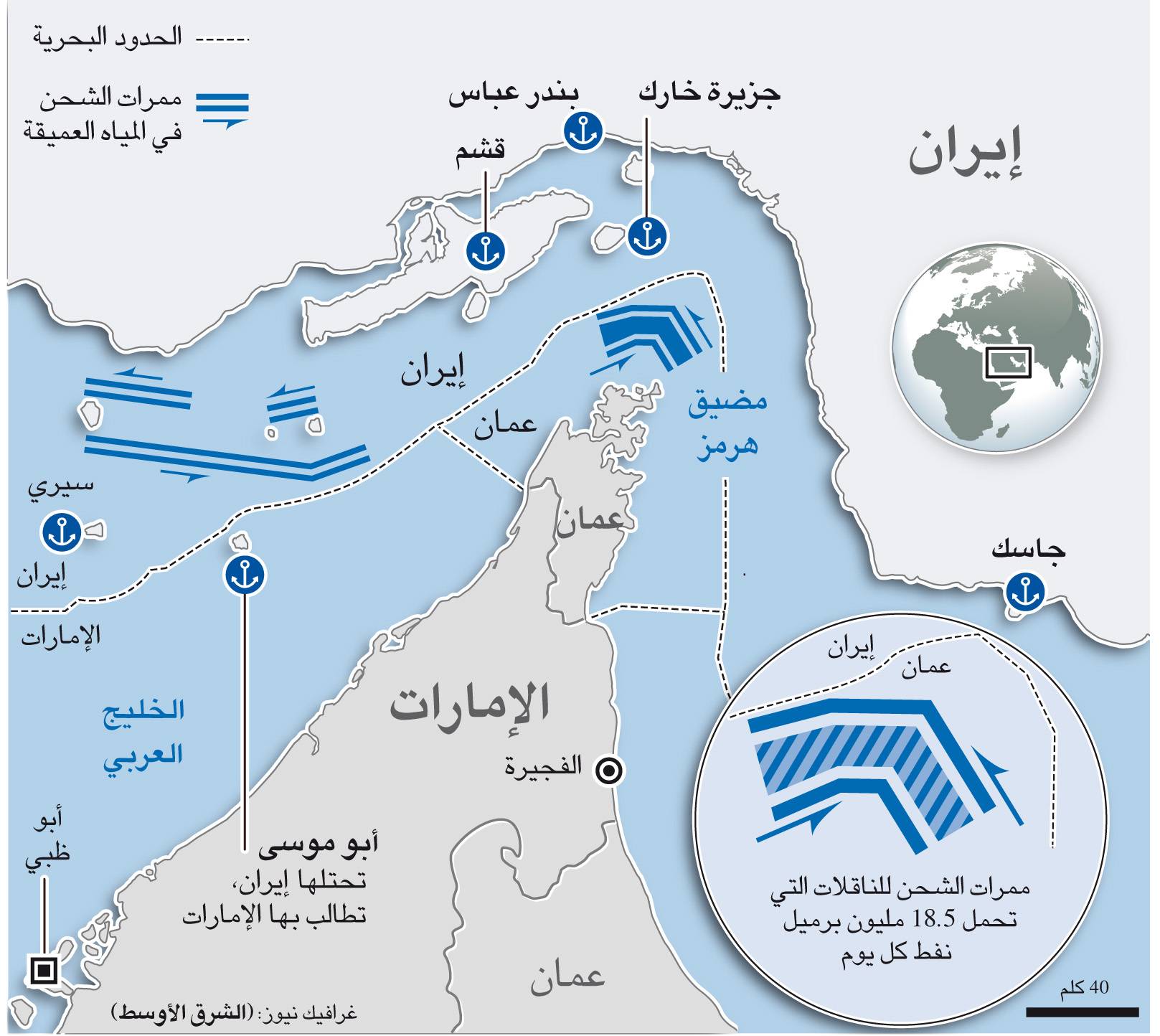
يقع مضيق هرمز بين خليج عمان وما يسميه الفرس الخليج الفارسي، بينما يطلق عليه العرب تسمية الخليج العربي. وتحد هذين الخليجين من جهة الشرق إيران بطول ساحلي يتجاوز 2000كلم يقابلها من جهة الغرب وبنفس الطول تقريبا سواحل سبع دول عربية تبدأ بالعراق والكويت ثم قطر والبحرين والسعودية فالامارات، لتنتهي بسواحل عمان التي تشرف على المضيق نفسه. وتسيطر ايران على الجزء الشمالي للمضيق من خلال جزيرة قشم الكبيرة الممتدة بشكل موازي لسواحلها، والتي يبلغ طولها أكثر من 100كلم، كما بعض الجزر الصغيرة حولها، مثل هرمز ولارك وهنغام. بينما تسيطر عمان على الجزء الجنوبي المباشر في شبه جزيرة قمزار وجزيرة الخيل وأم الغنم ومسندم، والتي تفصلها أراضي الامارات العربية المتحدة عن بقية الأراضي العمانية، وتشكل الواجهة الغربية والشرقية لجنوب المضيق. وتعتبر الجزر الاماراتية الثلاث طمب الكبرى وطمب الصغرى وأبو موسى، مراكز اساسية لحماية مدخل الممرات المائية الرئيسي في المضيق، كونها تقع حول الممر العميق الذي يسمح بمرور ناقلات النفط العملاقة والذي يجب أن يكون عمق المياه فيه ليس أقل من 30متر، وهو في هذه النواحي يبلغ 60 متر تقريبا، كما يعتبر عرض الممر، الذي يجب أن يتجاوز 10كلم في أضيق مجال للسماح بمرور الناقلات ذهابا وإيابا، مقبولا بين جزيرتي طمب الكبرى وابو موسى والذي يبلغ 20كلم. وبالرغم من وجود بعض الجزر الإيرانية الصغيرة مثل سيري وفارور والتي تبعد عن المضيق باتجاه الشمال الغربي، فإن الجزر الاماراتية تعتبر المدخل الرئيسي للمضيق من جهة الخليج العربي حيث ينتطم سير السفن والناقلات في خطوط الدخول والخروج.
كان الإيرانيون منذ إيام الشاه يحاولون أن يستولوا على الجزر الاماراتية الثلاث ليضمنوا سيطرتهم على حركة الملاحة في المضيق من دون منازع. فإيران، التي تعتمد على تصدير النفط والسيطرة على جزء اساسي من السوق العالمي، لن تسمح بأن يعرقل اي كان تصدير منتجاتها أو منعها من الاستيراد، ومن هنا محاولة تنظيم خطوط استعمال المضيق برعاية الأمم المتحدة، بالرغم من أن احتلال الجزر الاماراتية لم يتماشى مع القانون الدولي، ولو أن الإيرانيين حاولوا استمالة السكان باعطائهم الجنسيات ومجالات أوسع لبيع منتجاتهم من الاسماك في السوق الإيرانية. وقد كانت امارة الشارقة تملك حق السيطرة على جزيرة ابو موسى، بينما تملك راس الخيمة حق السيطرة على جزيرتي طمب الكبرى وطمب الصغرى، وينتسب السكان فيها لهذه الامارات. وقد استغل الإيرانيون انسحاب القوات البريطانية التي كانت تحمي هذه الامارات قبل يومين من اعلان نشوء دولة الامارات العربية المتحدة في الثاني من كانون أول 1971.
لم تبادر الامارات لاعلان الحرب على إيران لاسترجاع الجزر الثلاث، ولكنها لم تقبل بالتنازل عنها أيضا، ما جعل وضعها غير نهائي، بالرغم من استمرار مطالبة الامارات بالتحكيم الدولي. بينما فرضت إيران الأمر الواقع بالقوة. من هنا وعند الكلام عن تنظيم المرور عبر المضيق لا يسأل أحد عن رأي الأمارات ولا عن مشاركتها بالاشراف على حركة الملاحة الدولية عبره، بل تتم التسويات بين إيران وعمان باشراف دولي، كما يجري الآن. ولكن يبقى لدولة الأمارات الحق بالمطالبة بالسيادة على هذه الجزر التي بنى فيها الإيرانيون مدارج للطائرات وطرقا وموانئ، كما ثبتوا أقدامهم بالقوات البرية والبحرية مع كامل التجهيزات الدفاعية التي تسمح لهم بفرض سيطرتهم عليها، والادعاء بامتلاك الحق الكامل لتنظيم العبور في المضيق بمشاركة سلطنة عمان التي تتقاسم معهم السيطرة على الملاحة في خليج عمان.
اليوم وبعد الحرب التي استهدف خلالها الإيرانيون دولة الامارات كما المملكة السعودية ودول قطر والبحرين والكويت، وإذ يعاني النظام الإيراني من العزلة الدولية، وتسعى الولايات المتحدة للضغط عليه،
وحتى القيام بانزال بري على شواطئه، هل يمكن أن يعود موضوع الجزر الاماراتية إلى الواجهة، فتقوم القوات الأميركية باحتلالها وتسليمها لدولة الامارات، التي تصبح لاعبا اساسيا في موضوع المشاركة بالسيطرة على حركة الملاحة عبر المضيق، وتتقاسم مع عمان ومن يحكم إيران مستقبلا، الاشراف على العبور في المضيق، والتأكد من عدم الاستفراد بقرارات تضر بمصالح الدول؟ أم أن الامارات التي تزود إيران بالكثير من البضائع التجارية عبر ميناء “جبل علي” في امارة دبي والذي يعتبر الميناء الرئيسي للتجارة بين شرق آسيا والصين والهند مع دول الخليج بما فيهم إيران، تكتفي بهذا الدور الذي يؤمن لها الكثير من المداخيل والتي تضمنها العلاقات الجيدة مع الكل بدون الحاجة للتدخل بمشاكل المضيق، طالما تصل السفن إلى موانئها في الوقت المطلوب وبدون رسوم تذكر؟..
كان الشاه يخاف من سيطرة الأنظمة الثورية العربية، من عبد الناصر إلى صدام وجماعات اليمن وغيرهم على دول الخليج، وبالتالي تشكيلهم خطرا على تصدير النفط واستيراد البضائع، ومن هنا اصراره على السيطرة على المضيق والتحكم به. ولكن مع وصول الخمينية وتطلعاتها التوسعية لم يعد الخوف من العرب وثوراتهم بل عليهم، من توسع السيطرة الخمينية وهيمنة الامبراطورية الفارسية الجديدة على الشرق الأوسط بكامله. ومن هنا تدخل الولايات المتحدة في عملية تهذيب تصرفات حكم الملالي للمحافظة على حسن سير الأمور وعدم تضرر التجارة الدولية والنظم القائمة والتي تؤمن بشكل أو بآخر مصالح الجميع.
فهل يرتدع حكم الملالي ويخفف من عنجهيته ومشاريعه لتصدير الثورة، فيقلّص من استخدام الأذرع والتدخل بشؤون جيرانه، ويحوّل برنامجه النووي إلى برنامج طبيعي لا يسعى لعسكرته، وبرنامجه الصاروخي جزءً من البحوث العلمية لغزو الفضاء ومساعدة البشرية للانطلاق في مغامرات اكتشافه، ويقبل بأن يتشارك في ادارة الثروة مع جيرانه وتأمين تطور الاقتصاد في بلده إيران التي يمكنها أن تنافس الكثير من الدول؟ أم أن على العالم، وخاصة الولايات المتحدة، أن يقوم بالتخلص من هذا النظام الرجعي والسماح بعودة نوع من الديمقراطية التي يضمن استمراريتها نظام ملكي دستوري ربما، قادر على ادارة شؤون حوالي مئة مليون مواطن من أثنيات مختلفة وتطلعات متعددة الوجوه تعيش فوق أراض شاسعة وتمتد من وسط اسيا القريبة من حدود الصين وروسيا لتجاور الهند وباكستان في الجنوب ودول الخليج الغنية بالنفط والغاز في الغرب بينما تشكل تركيا العلمانية الحديثة بديمقراطيتها المتحركة بوابتها على أوروبا من الجهة الشمالية؟
ما يجري في هذه البقعة الجغرافية يؤثر بالتأكيد على استقرار العالم وعلى مستقبل العلاقات فيه وبالتالي فإن القرارات المتخذة لحل المشاكل تدرس بعناية وتنفذ بدراية وبتأن، رأيناه في تصرف الرئيس ترامب الذي لا يزال يحاول التوصل إلى تبدّل ما بتصرفات الزمرة الحاكمة في طهران واستيعابها لضرورات التغيير المتدرج، الذي يؤمن الاستقرار في المنطقة كلها، ويسهم في احلال السلام الدائم في الشرق الأوسط الكبير والتعاون المجدي بين عناصره وشعوبه.
Geographic Auxiliaries for Controlling the Strait of Hormuz: As an Introduction to Solutions
Colonel Charbel Barakat/September 05/2026
The Strait of Hormuz is situated between the Gulf of Oman and what the Persians call the Persian Gulf, while the Arabs call it the Arabian Gulf. Bounding these two gulfs to the east is Iran, with a coastline exceeding 2,000 kilometers. Facing it to the west, along roughly the same length, are the coastlines of seven Arab nations: beginning with Iraq and Kuwait, followed by Qatar, Bahrain, Saudi Arabia, and the United Arab Emirates, and ending with the coastlines of Oman, which directly overlook the strait itself.
Iran controls the northern portion of the strait through the large island of Qeshm, which stretches parallel to its coastline for over 100 kilometers, alongside several smaller surrounding islands such as Hormuz, Larak, and Hengam. Meanwhile, Oman controls the immediate southern portion at the Kumzar Peninsula, Khail Island, Um al-Ghanam, and Musandam—an exclave separated from the rest of Omani territory by UAE land, forming the eastern and western facades of the strait’s southern sector.
The three Emirati islands—Greater Tunb, Lesser Tunb, and Abu Musa—serve as essential outposts safeguarding the entrance to the main shipping channels in the strait. They sit around the deep-water passage required for supertankers, where water depth must be at least 30 meters (reaching approximately 60 meters in these areas). The channel’s width, which must exceed 10 kilometers at its narrowest point to accommodate two-way tanker traffic, is a navigable 20 kilometers between Greater Tunb and Abu Musa. Despite the presence of smaller Iranian islands like Sirri and Farur further northwest, the Emirati islands remain the primary gateway to the strait from the Arabian Gulf side, organizing incoming and outgoing maritime traffic into structured lanes.
Since the era of the Shah, the Iranians sought to seize these three Emirati islands to ensure undisputed dominance over navigation through the strait. Iran, heavily reliant on oil exports and maintaining a key market share globally, would not tolerate any disruption to its export or import channels. Hence, attempts were made to regulate the strait’s transit lanes under UN auspices, even though the occupation of the Emirati islands violated international law—despite Iranian attempts to win over the local population by offering citizenship and broader access to sell their fish in Iranian markets.
Historically, the Emirate of Sharjah held sovereign rights over Abu Musa, while Ras Al Khaimah held rights over Greater and Lesser Tunb, with local populations affiliated with these respective emirates. Iran exploited the withdrawal of British protective forces just two days prior to the declaration of the United Arab Emirates’ federation on December 2, 1971.
The UAE did not initiate a war against Iran to reclaim the three islands, yet it refused to relinquish its territorial rights, leaving their status unresolved despite continuous UAE calls for international arbitration. Iran, however, imposed a fait accompli through force. Consequently, when discussions arise regarding traffic management through the strait, no party solicits the UAE’s input or involvement in supervising international navigation. Instead, arrangements are
negotiated between Iran and Oman under international oversight, as is currently the case. Nevertheless, the UAE retains the sovereign right to claim these islands, where Iran has constructed airstrips, roads, and ports, while reinforcing its presence with land and naval forces alongside defensive hardware. This military footprint allows Iran to enforce control and assert an exclusive right to manage passage through the strait in partnership with the Sultanate of Oman, which shares control over navigation in the Gulf of Oman.
Today, following conflicts in which Iran targeted the UAE, Saudi Arabia, Qatar, Bahrain, and Kuwait, the Iranian regime faces international isolation. As the United States exerts pressure—even contemplating amphibious landings along its shores—will the issue of the Emirati islands re-emerge? Could American forces occupy the islands and hand them over to the UAE, transforming the Emirates into a key player in co-managing maritime traffic through the strait, sharing oversight with Oman and Iran’s future rulers to prevent unilateral decisions harmful to international interests?
Or will the UAE remain content with its current economic role? Through the port of Jebel Ali in Dubai—a major commercial hub facilitating trade between East Asia, China, India, and the Gulf nations, including Iran—the UAE generates substantial revenue anchored in pragmatic relations with all parties, operating without the need to entangle itself in the strait’s geopolitical disputes so long as cargo ships arrive on schedule without prohibitive fees.
The Shah feared that revolutionary Arab regimes—from Nasser to Saddam and Yemeni factions—might control the Gulf states and threaten oil exports and commercial imports, prompting his insistence on dominating the strait. However, with the rise of Khomeinism and its expansionist ambitions, the primary threat shifted from Arab revolutions to a fear of Khomeiniist expansion and the hegemony of a new Persian empire across the Middle East. This prompted U.S. intervention to curb the clerical regime’s actions, ensuring the smooth flow of international trade and maintaining regional order to protect shared global interests.
Will the clerical regime show restraint, curb its arrogance and project to export the revolution, scale back its proxies, refrain from meddling in its neighbors’ affairs, convert its nuclear program into a civilian one, redirect its missile development toward space exploration, and consent to shared regional wealth management to develop its economy? Iran certainly possesses the potential to compete with leading nations.
Or must the world, particularly the United States, dismantle this reactionary system to allow for the return of a constitutional monarchy or democratic framework capable of governing nearly one hundred million citizens? This diverse population spans vast territories reaching from Central Asia near China and Russia down to India and Pakistan in the south, bordering the oil- and gas-rich Gulf states to the west, with modern, secular Turkey serving as its gateway to Europe in the north.
Developments in this geographical hub directly impact global stability and international relations. Decisions addressing these challenges require careful study and deliberate execution—as seen in the approach of President Trump, who continues to seek changes in the Tehran
regime’s conduct to foster gradual transition, regional stability, lasting peace in the Greater Middle East, and constructive cooperation among its peoples.
السيرة الذاتية للكولونيل شربل بركات
خبير عسكري، كاتب، شاعر، مؤرخ، ومعلق سياسي
*ضابط متقاعد من الجيش اللبناني
*متخرج من المدرسة الحربية ومجاز بالعلوم السياسية والادارية من الجامعة اللبنانية
*كلف كأحد الضباط لتنظيم الدفاع عن القرى الحدودية منذ 1976
*تسلم قيادة تجمعات الجنوب
*تسلم قيادة القطاع الغربي في جيش لبنان الحر وأصبح مساعدا للرائد سعد حداد ثم تسلم قيادة الجيش بالوكالة عندما مرض الرائد حداد واستمر بعد وفاته حتى مجيء اللواء أنطوان لحد فأصبح مساعده ثم قائدا للواء الغربي في جيش لبنان الجنوبي
*ترك العمل العسكري في 1988 وتسلم العلاقات الخارجية
*شهد أمام لجنة العلاقات الخارجية في مجلس الشيوخ الأميركي مرتين
*كاتب سياسي وباحث في التاريخ له الكثير من الكتب والمقالات السياسية التاريخية والانسانية
نشر كتابه الأول “مداميك” (1999) الذي يحكي عن المنطقة الحدودية ومعاناة أهلها، ترجم إلى العبرية ونشرته معاريف (2001) والانكليزية (2012) Madameek – Courses – A struggle for Peace in a zone of war موجود على Amazon Books
*نشر كتابه الثاني “الجنوب جرحنا وشفانا” الذي يشرح الأحداث التي جرت في المنطقة بين 1976 – 1986
*الكتاب الثالث “Our Heritage” كتاب بالانكليزية يلخص التراث اللبناني مع رسومات لزيادة الاستيعاب موجه للشباب المغترب
*كتابه السياسي الثالث “لبنان الذي نهوى” (2022) جاهز للطبع
*كتاب مجزرة عين إبل 1920 وهو بحث تاريخي عن المجزرة التي ساهمت في نشوء وتثبيت لبنان الكبير
*كتاب “المقالات السياسية 2005 – 2013” مئة ومقالة منشور على صفحته
*كتاب “الشرق الأوسط في المخاض العسير” مجموعة مقالات سياسية (2013 – 2025)
*كتاب “العودة إلى عين إبل” بحث تاريخي بشكل قصصي عن تاريخ المنطقة بين 1600 – 1900
*كتاب شعر عن المعاناة خلال الحرب الكبرى 1914 – 1918 من خلال قصيدة زجلية نقدية جاهز للطبع
*كتاب “تاريخ فناء صور الخلفي” بحث تاريخي عن المنطقة الجنوبية – قيد الانجاز
*كتاب المقالات الانسانية وكتاب عينبليات قيد الانجاز