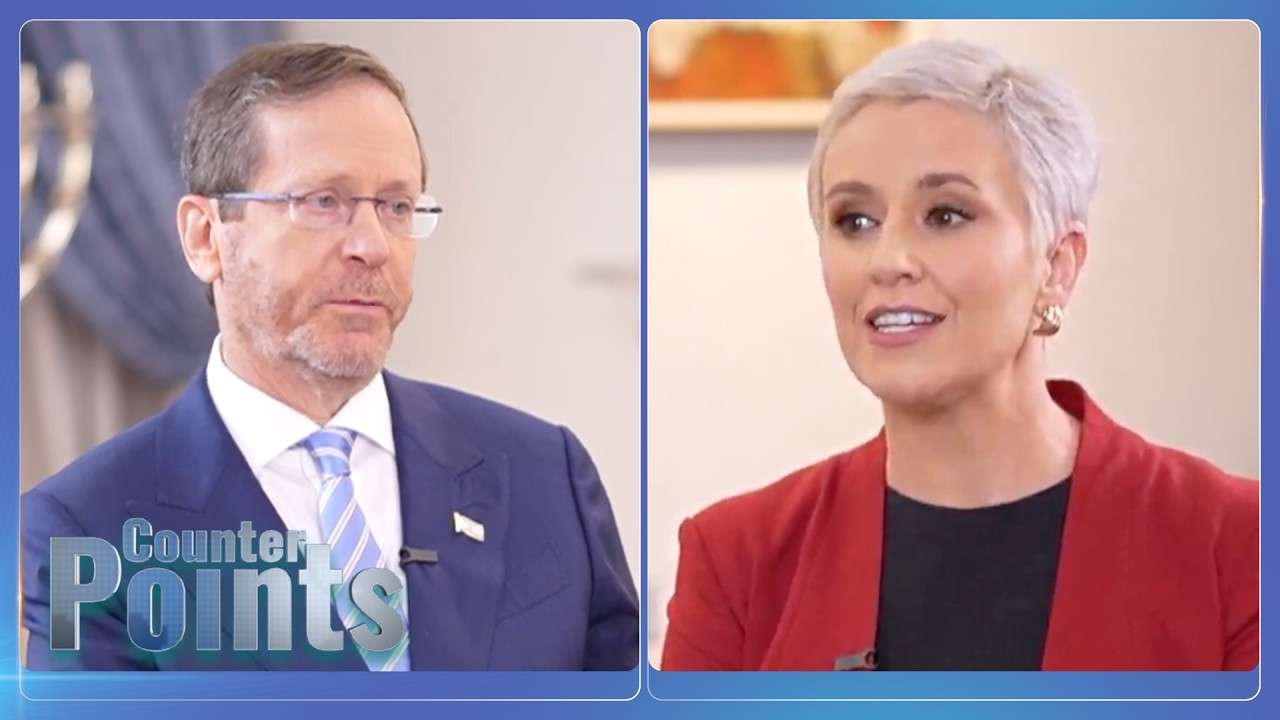
رابط فيديو ونص كامل لمقابلة رئيس دولة إسرائيل إسحاق هرتسوغ (بالإنكليزية) من موقع قناة العربية/النص منقول حرفياً عن موقع العربية على اليوتيوب
Video-Link & full text for an important English interview with Israeli President from Alarabiya-English Channel: My dream is to drive to Beirut/Not Surprised’ Iran-US Deal Fraying, Believe in ‘Diplomatic Solution‘
July 17/2026
NB: The transcript below is copied verbatim from the YouTube transcript of the interview.”
Summary of Initial Topics Addressed Israel President President Herzog in his interview with the Al Arabiya English Channel
In the opening segment of the interview, President Isaac Herzog addressed several key regional security issues:
Iranian Aggression: Herzog stated he was not surprised by the recent escalation in regional tensions, characterizing it as part of a long-standing Iranian pattern of behavior using proxies to radicalize situations and create instability.
The Nuclear Threat: He emphasized that the international community—including the U.S. and the EU—recognizes Iran’s pursuit of nuclear capabilities as the root cause of the current conflict, posing a significant danger to the entire region.
Maritime Security: Herzog defended the necessity of keeping the Strait of Hormuz open for international trade, condemning Iran’s attempts to use its closure as a form of “blackmail” against the world economy. He expressed support for firm American reactions to ensure these routes remain open.
Diplomatic Stance: While acknowledging Israel had legitimate concerns regarding past interim deals, he reaffirmed Israel’s commitment to a diplomatic solution, provided it effectively halts Iran’s nuclear ambitions and regional destabilization.
Interview Transcript: President Isaac Herzog and Melinda Naji
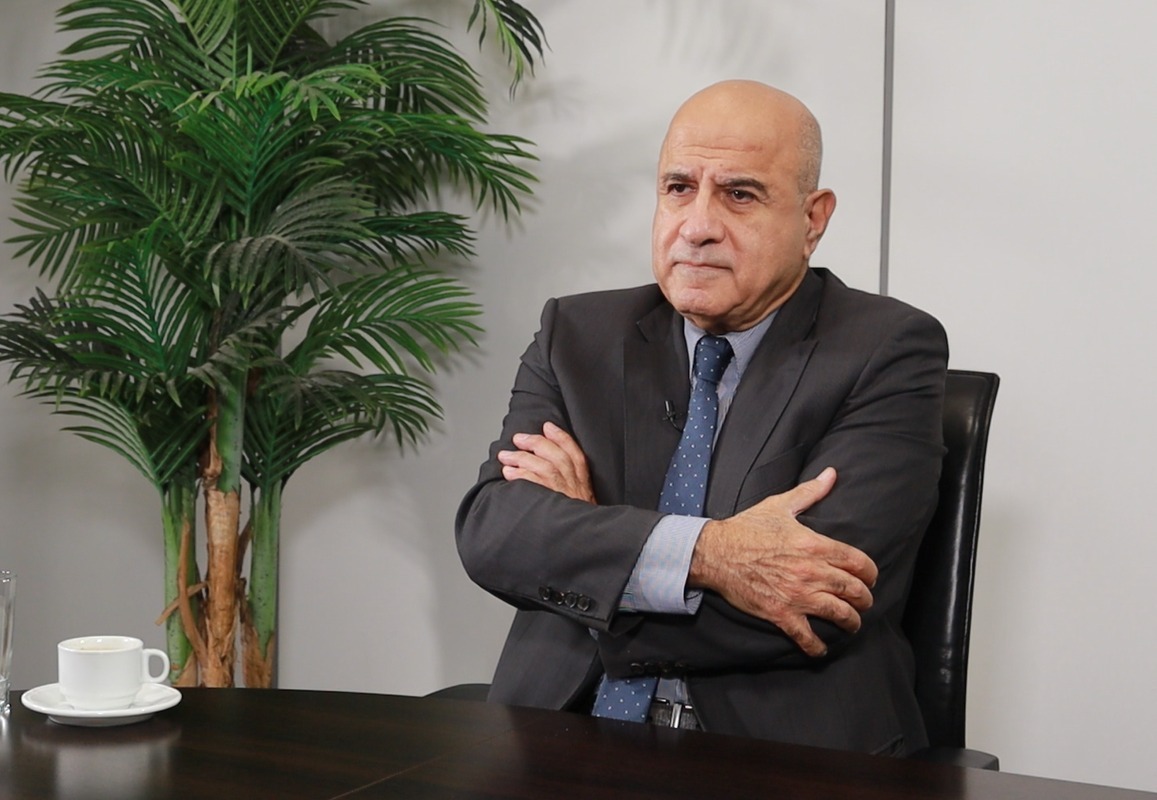
Melinda Naji You’re watching Counterpoints on Al Arabiya English. I’m Melinda Naji coming to you from Jerusalem for this special interview with the Israeli President Isaac Herzog. President Herzog, thank you so much for your time on Al Arabiya English.
Isaac Herzog Thank you very much. It’s a great honor to appear for Al Arabiya.
Melinda Naji We’re sitting down here in Jerusalem at a time of another flare up in regional tensions. We’re seeing Iran again resuming the targeting of some vessels in the Strait of Hormuz. We’re seeing renewed strikes from the United States on Iran. The memorandum of understanding that was signed on to—was it a bad interim deal if we find ourselves back in this position?
Isaac Herzog First of all, I’m not surprised that this is the situation because with the Iranian pattern of behavior which we know it’s impossible to do deals. They violate all the time. They have their own way of interpreting things that are very, very clear. We see in so many instances their proxies are all operating on their behalf simply to stir up and radicalize the situation leading to instability. That’s their ideology for years and years and years. And I must say I believe that this reality also hits the face of many people who thought that there is an opportunity and a chance. Honestly, I believe in a diplomatic solution to the conflict. I think this is absolutely what needs to be done and I actually know that this is the clear Israeli position. But we had legitimate concerns. We raised them and now you see it in front of your eyes with the Iranian behavior. I’m happy that the American reaction is firm so that and clear so that everybody understands especially the Iranians that they cannot goof here and they have to go back on track if they really want to implement a venue of exiting from the war.
Melinda Naji You mentioned that Israel had concerns about the memorandum. Do you think if Israel had been negotiated with in the lead up to the memorandum being agreed to, that this current situation could have been avoided?
Isaac Herzog Look, the whole situation is controlled and led by President Trump and I trust him fully on this and I believe that it is an American-led situation meaning they, the Americans, have to deal with it with their allies as well because closing Hormuz—let’s understand it—closing Hormuz is clearly an another extortionate step in the relations of Iran with the world. If you think about it objectively, now let’s go into bird’s eye view and you remember the map of the Middle East. It cannot be that the world would accept a situation whereby maritime routes which are owned by the world which are internationally open which are part of international rules and part of international maritime law. It cannot be that they will be closed by one nation through its proxies or by itself simply because they want to blackmail the rest of the world. It cannot go this way. It’s impossible because once you do it then the whole world is a mess. And I think here the American position is very clear and I think President Trump is correct in the fact that he’s insisting that it must be open. It’s part of international trade.
Melinda Naji The US though is also asserting its own blockade on the strait. So why should they be allowed?
Isaac Herzog/ Because it’s a counter reaction to the Iranian blockade. And at the end of it all, it’s quite clear that free maritime is an essential element in world affairs. You know, people who watch us now should realize that this blackmailing operation which has been going on for about almost three years—like closing of Bab el-Mandeb, or closing of Hormuz, etc.—increased the cost of living of all these families around the world who are getting these products which are being carried by ships all over the world because of insurance and freight costs and other costs. So it’s obvious that the world is paying a price simply for this Iranian rudeness and Iranian mode of behavior which has always been a terrorist mode of behavior.
Melinda Naji And even after what looked like a potential breakthrough, the world finds itself back in this position. We’re discussing again the closure of the strait, regime change in Iran now looks increasingly unlikely, and their nuclear and ballistic missile capabilities remain.
Isaac Herzog/ Well, but that’s everybody’s clear purpose, to make sure that Iran does not have nuclear capabilities. The president of the United States made it clear, the international community, the European Union—everybody understands now the threat of nuclear capability by a jihadist regime as the Iranian regime. This is the root cause of the war. I mean, you know, the United States went to war with Israel on this issue of the nuclear capability of Iran because it means huge, huge risk and danger to all the people in the region.
Melinda Naji The fact though that we’ve gone so far into this conflict, we’ve had a potential breakthrough, now we seem back to the beginning of where we were. Has it been a strategic failure to this point?
Isaac Herzog/ I don’t know because honestly, you know how it is. There’s an eruption and then there’s negotiations. I know that there’s efforts to go back on track. I cannot comment because I’m not in the room nor are we involved. So I don’t want to give judgment on something and make clear declarations because it may go back on track. All I’m saying is there should be clear guidelines: no nuclear capability for Iran, no blackmailing and extorting the world community by closing off Hormuz.
Melinda Naji Um, and as you say, the negotiations now look like they could potentially get back on track. Would you like to see Israel at the table?
Isaac Herzog/ I always want to see Israel at the table. I want to see Israel at the table speaking with all our neighbors and finding the root for peace in our region and moving forward with our allies and having a real dialogue above board with all the Arab states around us because I believe that we’re at a critical historical moment where there is a trajectory, a shift, a change of a real dialogue between Israel as the only Jewish state in the world and in the region speaking to all these very distinguished Muslim states around us. I believe we are at a moment of dialogue between Jerusalem and Mecca. I believe that there is a moment of dialogue between people of all faith in the region and I’m trying to pursue it in my own way.
Melinda Naji What’s the impetus do you think for that at this current point?
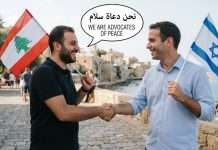
Isaac Herzog/ Because there’s an evolution of the relations. 50 years ago, 30 years ago, there was not even a chance of a dialogue between Israel and any of the Arab states. Following the peace agreement with Egypt, then with Jordan, and the Abraham Accords, there is a major movement moving forward. There’s also reality under—you know—not so above-board dialogue between so many nations and peoples and business and so forth and so on. It is clear and it is my dream as I say all the time. It is my dream to take a car and drive to Beirut. It is my dream to go to Damascus and it is my dream really to see peace between Israel and Saudi Arabia. Definitely normalization moving forward and I believe it’s part of history and I believe we are all the children of Abraham and are destined to live together and must move forward together including with our Palestinian neighbors.
Melinda Naji Okay. Let’s go back to the Kingdom of Saudi Arabia first of all and discuss what that could look like because some Gulf states have reaffirmed their position that normalization with Israel needs to be reliant on an irreversible, time-bound pathway to Palestinian statehood. So would Israel be open to agreements with Gulf states outside of the scope of the Abraham Accords?
Isaac Herzog/ Well, Israel—I’ll say the following right now. It is a clear Israeli desire to have agreements with further and important Arab states and clearly the dialogue between Israel and Saudi Arabia or the normalization is clearly something that should be dealt with directly between the nations with the support of the United States. I don’t say it has to be under any formula or under special cover or definition. You’re dealing with a very serious leader and I have great respect for Crown Prince Mohammed bin Salman. I’ve heard and read and known so much about him from friends who I know and he’s a very admirable leader, and the things that we want most in Israel is to see rapprochement between the nations. As for the way we move forward, of course there are many issues, but right now it’s important for me to tell your viewers that as of today, Israel is on the route, on the path for elections, and the elections will take place on October 27th. I as the head of state—non-executive—I have also the constitutional power to delegate to a member of Knesset to form a government and that’s out of the results of the election. So clearly I would not say things now that are part of the agenda of any of the political sides because there’s a big, big debate on how we move forward with the Palestinians, for example. But I’m leaving it for the Israeli people to decide. All I can say clearly that I believe that the Israeli nation is eager to move to further peace agreements and eager definitely to have a real dialogue and normalization with our Saudi neighbors.
Melinda Naji So just my final question on that. So then to confirm, Israel would be interested in, open to, constructive, creative frameworks catered to individual Gulf countries?
Isaac Herzog/ So I’m not going into the exact formula because again, out of my position, I don’t craft the exact outcome of how to build it, but I do know—and I’ve said it many times—discussion as opposed to a group. I agree it’s not part of a group. We are very happy about the Abraham Accords, I must say, and we’re very proud of our relations with the Kingdom of Morocco, the Kingdom of Bahrain, and with the United Arab Emirates, which is just an example of how successful it can be and moving forward. But clearly, we understand that the Kingdom of Saudi Arabia is a very important country. It’s definitely a country on its own right, a major leader in the Muslim world. And for me, I think it’s the dialogue between Jerusalem and Mecca which should be the real gist of it because I believe Jew and Muslim need to dwell together in this region in peace. It’s a wonderful, great dream. Absolutely. A dream indeed. And I have many friends who visit Saudi Arabia and they enjoy Riyadh tremendously and keep on telling me I should come. I said fine, but you know, I guess I can’t come just as an ordinary citizen. I hope to be able to realize and meet the Saudi Arabian leadership officially in due course.
Melinda Naji If we turn to other diplomatic relationships, the relationship between the US and Israel, we have seen comments from US and Israeli officials that appear to have different focuses at the moment. We see a US administration very focused on reopening the Strait of Hormuz. We see the Israeli focus being very firmly on Iran’s nuclear and missile capabilities and stability in your region. Do you feel that there is a divergence in focus or priorities between Israel and the United States?
Isaac Herzog/ Right now I think there is a close and good dialogue especially in closed rooms. We could have our differences. It’s only natural. We have different viewpoints on things. We live here, they are there. They have the grand picture on things that are matter to the United States. Hormuz is clearly something of vital importance to the world and world economy. We are the ones who bear the brunt, like our neighbors as well and the neighbors of Iran, from Iranian missiles and their aggression. So, we can have our differences, but at the end they’re tactical. We all understand that we are faced with an empire of evil in Tehran with its proxies, with its belief, with their call that the United States is the big Satan and Israel is the small Satan or with their call of annihilating Israel or the fact that they press buttons and fire at nations all around the Gulf simply because they feel like it and they think they can threaten or harass. They’re surprised to find out that dignified Arab states stand up to them. That’s like terrorizing them. And then it’s about time the world tells them, “You know what, we’re not afraid of you guys. We are going to make sure that you won’t be able to do that anymore.”
Melinda Naji You say that it is normal obviously for two allies to have their differences. But is it disappointing to see those differences being aired so publicly when we hear comments from the US Vice President JD Vance speaking on his current podcast tour saying things like, “We know that there is without a shadow of a doubt people within the Israeli government trying to shift us away from negotiations”?
Isaac Herzog/ But we live in a world of politics and we live in a world where a lot of stuff is open and transparent. I can tell you because my family relationship with US administrations goes back 15 presidents since Franklin Delano Roosevelt—but clear, close relations—that the more things change, the more they stay the same. There’s always differences. There’s always arguments. There’s always tension. I respect President Trump and I respect Vice President J.D. Vance and I respect Secretary of State Marco Rubio and the entire administration. We work closely with them on many issues. And I believe the grand picture which the United States should push with Europe and others is of course the connectivity between the east—that what should go through the eastern hemisphere meaning through us, Israel, all the way to Saudi Arabia, through the Gulf, all the way to India—the major connectivity on transportation, on communications, on energy which could change the entire world. And I believe that with the incredible Israeli advantages in so many spheres together with the incredible advantages and qualities of the Arab nations and definitely Saudi Arabia, we can get very far.
Melinda Naji If we turn away from the US and back to more of your regional neighborhood, there have been several high-profile Israeli officials who have expressed concerns recently that some countries within your region are trying to change or even destroy the balance of power in the region. Do you think that that’s a very real and present threat?
Isaac Herzog/ First of all, it’s a very important comment that was stated by Prime Minister Netanyahu. We’re very much aware of it. We believe this region should move to peace, not to an arms race of sorts and threats and so forth. I mean, the next big objective should be peace with Syria, peace with Lebanon, between Israel and Syria. Israel and Lebanon are not tilting the balance towards all sorts of elements that may divert and kind of change the equation in this region and the equilibrium which is quite sensitive.
Melinda Naji Because Israel obviously has its own very legitimate security concerns. But since the atrocities of October 7, we’ve witnessed or the world has seen a reported death toll in Gaza of approximately estimated 73,000 people, about more than a million displaced from Gaza and Lebanon. Israel is accused of genocide at the International Criminal Court and Israeli politicians accused of war crimes. As a head of state—non-executive—are you sorry and uncomfortable at that level of unnecessary civilian death and scrutiny on Israel?
Isaac Herzog/ So first of all, we reject a lot of this data and we of course insist that we operated according to international law by defending ourselves. One has to understand the frontier, the arena of battle because we alerted every citizen who was there in advance to move out so that we can get in and unravel those tunnels of terror where our hostages were kept there or where huge ammunition was kept there to attack our citizens and go for this massacre of October 7th. People had missiles, long-range missiles, in their living rooms, in their bedrooms, in their kitchens, in their mosques, and in their shops, and what’s not in their schools. So, at the end, what do you do? You send your soldiers to get them out. And unfortunately, there were tragedies, although we’ve done our best to maintain international law. And by the way, many of those killed were Hamas operatives, and we have all the names and numbers and all. Now I must say fast forward where we are now. Clearly there’s a hope and clearly there’s a venue. There’s a venue because of the 20-point plan of President Trump adopted as a security council resolution on Gaza. Phase one was done. Israel and all sides, they had demarcation of where we are. In order for Israel to withdraw, first of all, there has to be—according to the 20-point plan—the clear disarming of Hamas. That’s the phase we’re at—the heavy negotiations by the board of peace, international chair of it all Nikolai Mladenov and his team, bringing in a technocrat government of Palestinians to Gaza from Egypt. The precondition of all of it is to move on all the issues, including the disarming of Hamas. That’s where we’re at. So, I’m saying to the world, “Guys, you can keep on going on the blame game. We defended ourselves and actually protected the free world, by the way we fought this empire of evil.” Same in Lebanon, same in here. If you get the terrorists out, you will have real hope for peace and real hope for the people living in Gaza. These people in the Gaza, they deserve good life. We want good life for them. They were there when Hamas took it all, took them over. Even now Hamas is money laundering some of the incoming food supplies in order to maintain their regime. But if they’ll go out and a technocrat government takes over, there’s huge hope. Same goes for Lebanon. We can have peace with Lebanon. The one who are stopping it is Hezbollah, and they’re a proxy of Iran just like Hamas—a proxy of Iran. So that’s the strategic situation we’re looking at. And believe me, my heart aches for every innocent civilian in the Palestinian side because this is not our aim or desire in any way.
Melinda Naji And just finally, the tide of public opinion after a lot of these situations in Gaza, in Lebanon, has in some quarters globally turned against Israel as the Israeli government, I should say, and perhaps their actions. As the head of state, how do you grapple with the public opinion problem?
Isaac Herzog/ That first of all, we have to differentiate. I’m answering and replying to all these allegations all the time. There’s an international campaign and onslaught against Israel as part of trying to weaken Israel in its battle against the Iranian Empire of Evil. That is a clear equation and therefore a huge part of this campaign is aimed to affect public opinion by viral movies, by messaging, by demonstrations, and so forth. Having said all that—not organically—sort of, it’s not organically. A lot of it is fake, too. I don’t shy away from the fact that there are people who believe that. But we can—we know that it’s instigated and organized and paid for and financed and a lot of was exposed in recent months all over the place. Because some of the people have no clue. They don’t know anything about the region. They don’t know anything about my country. They don’t know that 20% of Israel is Muslim. They have no clue. You know, recently I posted a beautiful picture of the way I swore in five new judges—qadis—for the Sharia court in Israel including one woman which is a great story. The amount of response I got from the Arab world in the international community was great. “What, you have Muslims in Israel? What, you mean they’re equal citizens?” People don’t know that they have parties and they are very important in our politics and they are now in the political picture in Israel—counts them as very interesting in the political game—and they have no clue about their TV, radio and the fact that they’re part and parcel of all our lives. But that’s the greatness of this nation. We are a very moderate nation. We want peace. We were attacked, butchered, slaughtered, raped our sisters and daughters and husbands and brothers. That’s what happened to us. And we went to fight simply to defend ourselves. But now after showing resilience and leading to a major change which occurred in Syria, in Lebanon, in Gaza, now is the opportunity for the international community to stop this blame game and move to peace. And we can move to peace if we really want to. But for this, Iran has to pull out its proxies, its war machine, and enable people to live. There’s no difference between us. I mean, there’s no real arguments between us and Lebanon on the solution for peace. The border is clear. We don’t have disputes. We simply want to live in peace in our northern border without being attacked by… And I’m telling you, I spoke in Arabic to the people of Lebanon saying we just want to be there as real good neighbors to you guys.
Melinda Naji I guess the counterargument to that is those who would say that the Israeli government doesn’t show that they want to live in peace.
Isaac Herzog/ So the issue is that I’m not dealing with what people say here or express. In our democracy, the variety of views is unimaginable. So people can say whatever they want. At the end, Israel made clear, we just signed an MOU with Lebanon with clear guidelines for peace. It’s a major, major step and we heard what the President said and Prime Minister Salam. We know it’s not easy for any one of them. We are clear and also for Israelis. Our people in the north want to make sure that they can live in peace, not go to school being bombarded by Hezbollah attacks all day long. So that’s why we took over this strip of 10 kilometers or so until the Litani River simply as a buffer to protect our citizens. But it’s not that we can’t have an arrangement. The previous UN Security Resolutions and ceasefire agreements were violated by them, so that’s why—and I know it’s also a very big interest of the region to have peace on that side of the Middle East and we are eager to it, but guys, the world has to understand we are not willing to be attacked again and Israelis have lost their trust in their ability of trusting their neighbors. That’s the result of October 7th. But that doesn’t mean it’s over. It means that the Israeli public—at least as I speak for the Israeli nation—wants to have peace and wants to make sure that it will be safe under that agreement.
Melinda Naji President Isaac Herzog, I appreciate your comments and this wide-ranging interview. Thank you for your time on Al Arabiya English.
Isaac Herzog Thank you.