President Trump and Political Genius
Colonel Charbel Barakat/March 28/2026
الرئيس ترامب والعبقرية السياسية
الكولونيل شربل بركات/28 آذار/2026
الرئيس دونالد ترامب، الذي يعتبره البعض، خاصة في الأوساط الصحفية اليسارية، بأنه صريح لدرجة السذاجة وانه يطرح كل ما يدور برأسه بدون الكثير من التفكير أو التخطيط، يبدو اليوم وبعد أن بدأنا نرى نتائج تصرفاته التي تدير العالم بكل دقة وتوازن بأنه كان يقصد ما يقول، ومن ثم توضحت لنا الكثير من طروحاته “المتسرعة” كما يقول البعض. واليوم صارت الصحافة، التي تدّعي احترام نفسها والقراء، تنتظر بفارغ الصبر لتسمع تعليقاته “الخفيفة” لتفهم ما يدور وما يخطط بالنسبة لمستقبل العلاقات الدولية ومصير الشعوب التي تتأثر بها.
منذ اليوم الأول لدخوله البيت الأبيض في ولايته الثانية بدأ الرئيس ترامب حملته للسيطرة على الحدود الأميركية تحت ستار العمل ضد الهجرة الغير شرعية، ولم يفهم الشارع ولا المشرعون ما يرمي إليه، ولكنه أراد أن يسيطر الأمن الأميركي على الساحة بدءً من الحدود الخارجية وصولا إلى داخل المدن والشوارع. ومن هنا انتقل إلى مرحلة محاربة الهجرة الغير شرعية في الداخل وطرد بعض هؤلاء الذين يتخفّون داخل المجتمعات الأميركية ويعملون لصالح مخابرات دول عدوة وعلى رأسها إيران تحت مظلة الأصولية الاسلامية. وبدل أن يتحرك الشارع ضد أي عمل في الشرق الأوسط فضحت كل أجهزة قيادة التحركات الشعبية والتظاهرات مسبقا وانتهى دورها بدون عناء.
وهو أعلن فرض الضرائب على الأصدقاء قبل الأعداء ومن ثم أطلق أفكارا توسعية باتجاه باناما وكندا وغرينلاند وغيرها، وبعد ذلك قام بحملة “جباية” من دول الخليج والتي أعتبرها البعض خوّة يفرضها على الحلفاء تحت شعار الاستثمار في الاقتصاد الأميركي، وعاد بأكثر من أربعة تريليون دولار. ولم يكتف بذلك فقط بل فرض التاريف (Tarif) على البضائع الأوروبية والكندية وغيرها من الدول الصديقة. وبالطبع قامت قيامة الاعلام والمشرّعين على السواء في هذه الدول. ولم ينس مساهمات الحلفاء بميزانية حلف شمال الأطلسي وهو هدد بترك موضوع أوكرانيا للأوروبيين الذين ينامون على وسادات السيطرة اليسارية في بلادهم وعدم تحمل المسؤولية لدرجة احتلال مناطق داخل دولهم وفرض قوانين لا تمت لثقافاتهم بشيء.
ومن ثم ترك لاسرائيل المجال لتهذيب حركة حماس وكل من يساندها حول العالم، ثم عندما بدت بأنها نضجت تدخل لفرض الحلول على طريقته، محاولا ادخال الدول الاسلامية المعتدلة في التسوية، غير عابئ بالعرب المعترضين، والذي خلال ثمانين سنة لم يطرحوا حلولا ولا تقدموا بمبادرات تمنع التطرف وتحمي القوانين.
ثم ركّز على فنزويلا ليضرب كارتيلات التهريب التي تقودها دول في أميركا الجنوبية وعلى رأسها نظام مادورو المتحالف مع إيران وأحد أزرعه الخارجية حزب الله، فأسقطه باستعمال القوة ولكن بدون حرب. وكان منع عدة حروب حول العالم ليس أقلها ما كان سيقوم بين الهند وباكستان الدولتين النوويتين.
ولن نغوص أكثر في تحليل ما كل قام به ولكننا سننتقل إلى الموضوع الإيراني حيث نضجت كافة جوانب هذا الخطر الذي يسيطر على واحدة من أهم الدول في الشرق الأوسط من حيث انتاج الطاقة والسيطرة على تصديرها، بالاضافة إلى امتداداتها، ليس فقط في دول الشرق الأوسط بل وفي العالم أجمع. وطرحها مشروع الدولة الاسلامية العالمية إي السيطرة على العالم تحت شعار الاسلام السياسي المتطرف الذي يقوده الولي الفقيه من طهران.
اليوم وعندما يقول الرئيس ترامب بأن الأموال التي جمعت من التاريف على البضائع مولت الحملة نعرف كيف أنه فرض مساهمة الحلفاء بدون علمهم والتصويت على المشروع من قبل نوابهم اليساريين في برلماناتهم حيث لن يمر أي من هذه المشاريع لا بل سوف تحارب الفكرة من أساسها. أما مساهمات دول الخليج بالاقتصاد الأميركي والتي بلغت تريليونات من الدولارات فهي لكي يشعر المواطن الأميركي بأن الحرب ضد إيران هي لحماية هذه الدول وبالتالي اقتصاده، وهو ما أعلنه أحد المسؤولين في الامارات العربية منذ يومين، عندما صرّح بأننا نسهم بواحد فاصلة سبعة تريليون دولار كاستثمارات في الولايات المتحدة ما يرتب عليها المساهمة بحماية أمننا لأنها تحمي بذلك مصالحها.
أخيرا إن حديث الرئيس ترامب دوما عن المصالح الاقتصادية والتركيز على الحصص التي ستعطى للولايات المتحدة بعد سقوط النظام الإيراني، خاصة الشركات الأميركية التي ستعمل في انتاج النفط واعادة الاعمار في كافة المجالات، سوف يترتب عليها وجود عسكري أميركي لحمايتها، وبالتالي فإن من سيحكم إيران مستقبلا عليه أخذ هذه الأمور بعين الاعتبار وادخالها في حساباته. وكما بقيت القوات الأميركية في أوروبا واليابان منذ الحرب العالمية الثانية وفي كوريا الجنوبية منذ الخمسينات ولا تزال، فإن هذه القوات ستبقى مستقبلا في الخليج لحمايته من المغامرين وتأمين الاستقرار لدوله ومؤسساته، وقد يكون ضمنها استرجاع الامارات العربية المتحدة للجرز التي تحمي مداخل مضيق هرمز وهي طنب الكبرى والصغرى وأبو موسى، والتي ستعود إليها ربما بقواها الذاتية وتحت المظلة الأميركية لأنها تدربت في العمليات التي قامت بها في جزيرة سوقطرة وغيرها من الجزر اليمنية لكي تعرف كيف تسترجع حقها من إيران وتسهم بحماية الممر الدولي المهم بمشاركة دولية كبيرة بدأت تظهر علاماتها والذي يؤدي للاستقرار في المنطقة.
يبقى موضوع الرئيس ترامب ولبنان سوف نتكلم عنه في مقال آخر.
**هذا التقرير غايته توعية العاملين في السياسة والاعلام
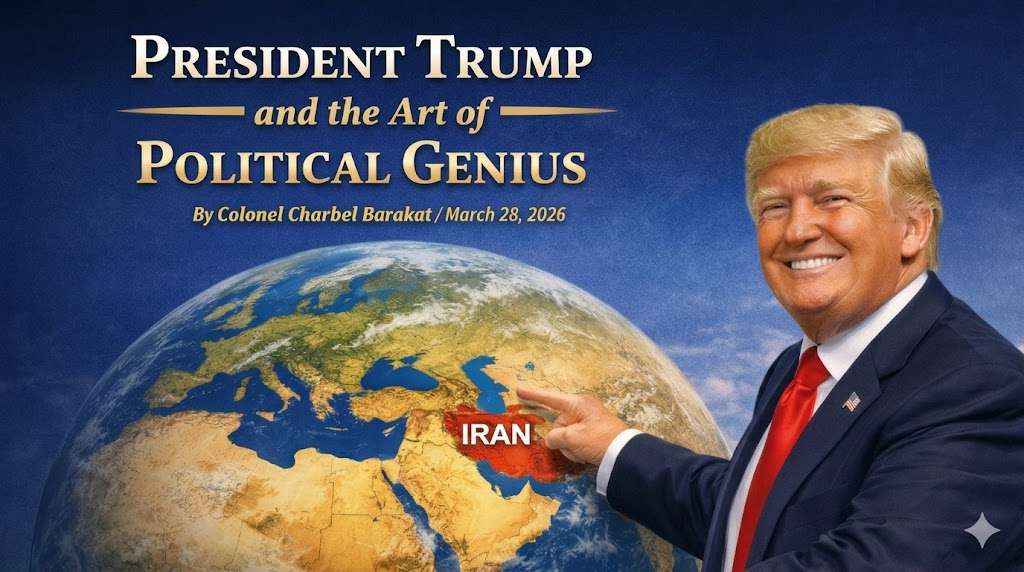
President Trump and Political Genius
Colonel Charbel Barakat/March 28/2026
President Donald Trump—considered by some, especially in left-wing journalistic circles, to be outspoken to the point of naivety, and as one who presents whatever crosses his mind without much thought or planning—appears today, as we begin to see the results of his actions that manage the world with precision and balance, to have meant what he said. Consequently, many of his seemingly “hasty” proposals, as some call them, have become clear to us. Today, the press, which claims respect for itself and its readers, waits with bated breath to hear his “light” comments to understand what is happening and what is being planned for the future of international relations and the fate of the peoples affected by them.
From the first day he entered the White House for his second term, President Trump began his campaign to control the American borders under the guise of working against illegal immigration. Neither the public nor the legislators understood what he was aiming for, but he wanted American security to control the scene, from the external borders to the inside of cities and streets. From here, he moved to the stage of fighting illegal immigration internally and expelling some of those hiding within American societies and working on behalf of the intelligence services of enemy countries, primarily Iran, under the umbrella of Islamic fundamentalism. Instead of the public moving against any action in the Middle East, all the apparatus for leading popular movements and demonstrations were exposed in advance, and their role ended without effort.
He announced the imposition of tariffs on friends before enemies, and then launched expansionist ideas towards Panama, Canada, Greenland, and others. After that, he conducted a “collection” campaign from the Gulf states, which some considered a tribute he imposed on allies under the slogan of investing in the American economy, and returned with more than four trillion dollars. He was not satisfied with that alone but also imposed tariffs on European, Canadian, and other friendly nations’ goods. Of course, the media and legislators alike in these countries revolted. He did not forget the allies’ contributions to the NATO budget, and he threatened to leave the issue of Ukraine to the Europeans, who are sleeping on pillows of leftist control in their countries and avoiding responsibility to the point of occupy areas within their own countries and imposing laws that have nothing to do with their cultures.
Then he left the stage for Israel to discipline the Hamas movement and everyone who supports it around the world. Then, when it appeared to be ripe, he intervened to impose solutions in his own way, trying to include moderate Islamic countries in the settlement, unconcerned by the objecting Arabs, who for eighty years have not put forward solutions nor advanced initiatives that prevent extremism and protect laws.
Then he focused on Venezuela to strike the smuggling cartels led by countries in South America, primarily the Maduro regime allied with Iran and one of its external arms, Hezbollah. He overthrew him using force but without war. He prevented several wars around the world, not least of which was the one that was about to break out between India and Pakistan, two nuclear-armed states.
We will not delve deeper into analyzing everything he did, but we will move to the Iranian issue, where all aspects of this danger that controls one of the most important countries in the Middle East in terms of energy production and control over its export have ripened, in addition to its extensions, not only in the countries of the Middle East but in the entire world. It presents its project of a global Islamic state—that is, control over the world under the slogan of extremist political Islam led by the Supreme Leader (Wali al-Faqih) from Tehran.
Today, when President Trump says that the money collected from tariffs on goods funded the campaign, we know how he forced the contribution of allies without their knowledge and without their leftist representatives voting on the project in their parliaments, where none of these projects would pass—in fact, they would fight the idea from the start. As for the contributions of the Gulf states to the American economy, which amounted to trillions of dollars, they are so that the American citizen feels that the war against Iran is to protect these countries and, consequently, his economy. This is what an official in the United Arab Emirates announced two days ago, when he stated that we contribute $1.7 trillion as investments in the United States, which makes it incumbent upon it to contribute to protecting our security because it is thereby protecting its own interests.
Finally, President Trump’s constant talk about economic interests and the focus on the shares that will be given to the United States after the fall of the Iranian regime, especially American companies that will operate in oil production and reconstruction in all fields, will necessitate an American military presence to protect them. Therefore, whoever rules Iran in the future must take these matters into consideration and include them in his calculations. Just as American forces remained in Europe and Japan since World War II, and in South Korea since the 1950s and still are, these forces will remain in the future in the Gulf to protect it from adventurers and secure stability for its countries and institutions. This may include the United Arab Emirates regaining the islands that protect the entrance to the Strait of Hormuz—namely Greater and Lesser Tunb and Abu Musa—which will perhaps return to it with its own forces and under the American umbrella, because it has trained in operations it conducted on the island of Socotra and other Yemeni islands to know how to reclaim its rights from Iran and contribute to protecting this important international waterway with major international participation that is beginning to appear and which leads to stability in the region.
The topic of President Trump and Lebanon remains; we will talk about it in another article.
*This report aims to raise awareness among those working in politics and media.
السيرة الذاتية للكولونيل شربل بركات
خبير عسكري، كاتب، شاعر، مؤرخ، ومعلق سياسي
*ضابط متقاعد من الجيش اللبناني
*متخرج من المدرسة الحربية ومجاز بالعلوم السياسية والادارية من الجامعة اللبنانية
*كلف كأحد الضباط لتنظيم الدفاع عن القرى الحدودية منذ 1976
*تسلم قيادة تجمعات الجنوب
*تسلم قيادة القطاع الغربي في جيش لبنان الحر وأصبح مساعدا للرائد سعد حداد ثم تسلم قيادة الجيش بالوكالة عندما مرض الرائد حداد واستمر بعد وفاته حتى مجيء اللواء أنطوان لحد فأصبح مساعده ثم قائدا للواء الغربي في جيش لبنان الجنوبي
*ترك العمل العسكري في 1988 وتسلم العلاقات الخارجية
*شهد أمام لجنة العلاقات الخارجية في مجلس الشيوخ الأميركي مرتين
*كاتب سياسي وباحث في التاريخ له الكثير من الكتب والمقالات السياسية التاريخية والانسانية
نشر كتابه الأول “مداميك” (1999) الذي يحكي عن المنطقة الحدودية ومعاناة أهلها، ترجم إلى العبرية ونشرته معاريف (2001) والانكليزية (2012) Madameek – Courses – A struggle for Peace in a zone of war موجود على Amazon Books
*نشر كتابه الثاني “الجنوب جرحنا وشفانا” الذي يشرح الأحداث التي جرت في المنطقة بين 1976 – 1986
*الكتاب الثالث “Our Heritage” كتاب بالانكليزية يلخص التراث اللبناني مع رسومات لزيادة الاستيعاب موجه للشباب المغترب
*كتابه السياسي الثالث “لبنان الذي نهوى” (2022) جاهز للطبع
*كتاب مجزرة عين إبل 1920 وهو بحث تاريخي عن المجزرة التي ساهمت في نشوء وتثبيت لبنان الكبير
*كتاب “المقالات السياسية 2005 – 2013” مئة ومقالة منشور على صفحته
*كتاب “الشرق الأوسط في المخاض العسير” مجموعة مقالات سياسية (2013 – 2025)
*كتاب “العودة إلى عين إبل” بحث تاريخي بشكل قصصي عن تاريخ المنطقة بين 1600 – 1900
*كتاب شعر عن المعاناة خلال الحرب الكبرى 1914 – 1918 من خلال قصيدة زجلية نقدية جاهز للطبع
*كتاب “تاريخ فناء صور الخلفي” بحث تاريخي عن المنطقة الجنوبية – قيد الانجاز
*كتاب المقالات الانسانية وكتاب عينبليات قيد الانجاز