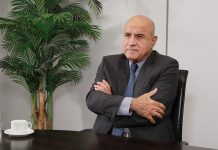
Video link and text from FDD for an important English interview with Journalist Carine Hajjar (American Of Lebanese Descent) addressing the Lebanese on going and current problems with Hezbollah/رابط فيديو ونص من مؤسسة الدفاع عن الديمقراطيات لمقابلة هامة باللغة الإنجليزية مع الصحفية كارين حجار (أمريكية من أصل لبناني) تتناول فيها المشاكل الحالية والمستمرة التي يواجهها اللبنانيون مع حزب الله.
Video link and text from FDD for an important English interview with Journalist Carine Hajjar (American Of Lebanese Descent) addressing the Lebanese on going and current problems with Hezbollah Interview was conducted by Mark Dubowitz 01 July/2026
رابط فيديو ونص من مؤسسة الدفاع عن الديمقراطيات (FDD) لمقابلة هامة باللغة الإنجليزية مع الصحفية كارين حجار (أمريكية من أصل لبناني) تتناول فيها المشاكل الحالية والمستمرة التي يواجهها اللبنانيون مع حزب الله. أجرى المقابلة مارك دوبويتز. 1 يوليو/تموز 2026
قد يكون إطار العمل الإسرائيلي اللبناني الذي توسط فيه وزير الخارجية روبيو تاريخيًا، لكن حزب الله لم ينزع سلاحه بعد. يربط الاتفاق الانسحاب الإسرائيلي بتأمين الجيش اللبناني للمناطق التجريبية المحددة، إلا أن حزب الله وحلفاءه البرلمانيين رفضوه رفضًا قاطعًا. في الوقت نفسه، تهدد مذكرة التفاهم الأمريكية الإيرانية بتقويض الجهود برمتها، مما يمنح طهران نفوذًا على حق إسرائيل في الدفاع عن النفس، وربما يفتح المجال أمام مليارات الدولارات للنظام الذي يسلح حزب الله في المقام الأول. وبما أن حزب الله هو حجر الزاوية في “محور المقاومة” الذي تتبناه طهران، فإن ترك لبنان دون معالجة يمثل خطرًا لا يمكن تجاهله. مع كون حزب الله حجر الزاوية في “محور المقاومة” الإيراني، فإن ترك لبنان دون معالجة يشكل خطرًا لا يمكن تجاهله. تنضم كارين حجار، الصحفية المتخصصة في الرأي في صحيفة واشنطن بوست وزميلة معهد ستيمبوت ذات الجذور العميقة في لبنان، إلى مارك دوبويتز في برنامج “انهيار إيران” لتسأل عما إذا كانت هذه هي الفرصة الحقيقية للبنان للتحرر من قبضة إيران، أم أنها مجرد فجر زائف آخر.
The Israel-Lebanon framework brokered by Secretary Rubio may be historic, but Hezbollah still hasn’t disarmed. The deal ties Israeli withdrawal to the Lebanese army securing designated pilot zones — yet Hezbollah and its parliamentary allies have already rejected it outright. Meanwhile, the U.S.-Iran MOU threatens to undercut the whole effort, handing Tehran leverage over Israel’s right to self-defense and potentially unlocking billions of dollars for the regime that arms Hezbollah in the first place. With Hezbollah the linchpin of Tehran’s “axis of resistance,” leaving Lebanon unaddressed is a danger that can’t be ignored.
Carine Hajjar — opinion journalist at The Washington Post and Steamboat Institute fellow with deep roots in Lebanon — joins Mark Dubowitz on The Iran Breakdown to ask whether this is Lebanon’s real chance to break free of Iran’s grip, or another false dawn
Transcript
About
The Israel-Lebanon framework brokered by Secretary Rubio may be historic, but Hezbollah still hasn’t disarmed. The deal ties Israeli withdrawal to the Lebanese army securing designated pilot zones — yet Hezbollah and its parliamentary allies have already rejected it outright. Meanwhile, the U.S.-Iran MOU threatens to undercut the whole effort, handing Tehran leverage over Israel’s right to self-defense and potentially unlocking billions of dollars for the regime that arms Hezbollah in the first place. With Hezbollah the linchpin of Tehran’s “axis of resistance,” leaving Lebanon unaddressed is a danger that can’t be ignored.
Carine Hajjar — opinion journalist at The Washington Post and Steamboat Institute fellow with deep roots in Lebanon — joins Mark Dubowitz on The Iran Breakdown to ask whether this is Lebanon’s real chance to break free of Iran’s grip, or another false dawn.
https://www.youtube.com/watch?v=ckOpGkrwCxM&t=1s
Transcript
DUBOWITZ: Today I’m speaking with someone who spent her career untangling American foreign policy with a sharp eye on Lebanon. Carine Hajjar is an opinion journalist at The Washington Post where she writes on a wide range of topics, including US foreign policy in the Middle East. She’s a Steamboat Institute fellow and before joining the Post, she was a columnist and editorial board member at the Boston Globe and served as a fellow on The Wall Street Journal’s editorial board. She was awarded the Joseph Rago Memorial Fellowship for Excellence in Journalism by the Fund for American Studies, and her analysis made her a regular guest in Fox News, CBC, NewsNation and other outlets. I wanted to speak with Carine because the piece she recently published in The Washington’s Post, which we’ll link to in the show notes, responding to President Trump’s comment that Lebanon is quote, a very small piece of the puzzle in the Middle East.
That question has become even more consequential after Secretary Rubio brokered a landmark agreement between Israel and Lebanon, an agreement that could reshape the strategic landscape if it holds. Lebanon isn’t a piece of the Iran puzzle. It’s the front line of the Islamist revolution. As long as Hezbollah remains armed and entrenched, that revolution doesn’t end at Iran’s borders. It lives on in Beirut’s southern suburbs. So, do the White House must calculate by giving Tehran a veto over Israel’s right to defend itself in the U.S.-Iran MOU? Can any deal with the Islamic Republic endure while Hezbollah remains armed, entrenched, and answerable, not to Beirut, but to the IRGC? And does Secretary Rubio’s new Israel-Lebanon agreement offer a real chance to break Hezbollah’s grip, disarm its terrorist army and restore Lebanese sovereignty?
Or will it merely freeze the battlefield until the next war? Few people are better positioned to answer those questions than Carine Hajjar. Welcome to the Iran breakdown. So, let’s break it down. Carine, great to have you.
HAJJAR: Thanks for having me on. Thanks for that very generous introduction. Appreciate it.
DUBOWITZ: Well deserved. You’ve had a great career at such a young age, so it’s really, really impressive. I want to start with your personal story and tell us a little about you and your family and your connection to Lebanon before we break it down.
HAJJAR: Yeah, absolutely. I was born in Boston. My family, we’re all proud Americans, but we have a Lebanese background. My mom is Venezuela in Lebanese. My dad’s grandparents are from Lebanon, and we are always raised very close to the culture. We’re Melchite and Maronite Christians. I was raised in both of those churches in the Boston diaspora. And so from a young age, I was always interested in Lebanon from a cultural and religious perspective, but as I’ve gotten older and written more about foreign policy and studied these issues more, it’s also become sadly a conundrum that I’ve followed for a long time now, but it’s looking like Lebanon is close to, or at least we’ve been saying for the last year, this is the best opportunity that they have to break free from Iran’s shackles through via Hezbollah. But I’m really hoping that they can take this opportunity in particular the agreement, the framework agreement that was brokered last week by Secretary Rubio between the Israelis and the Lebanese and take this opportunity to regain their sovereignty and move.
They’ll have a lot of challenges after that too, by the way, but it’s a good opportunity for them.
DUBOWITZ: Well, so your mom’s Venezuelan and Lebanese. So, two countries that are going through some incredibly sweeping changes. Still have family in Venezuela and Lebanon or most of them have left?
HAJJAR: Yeah. A lot of people have, with the instability in both countries over the years, have gone to school elsewhere, have moved and started new lives. But I do still have family in these places and they’re both places that I’ve visited actually and have been a part of my childhood, my young adulthood. And so, it’s been really tragic to watch them go through so much and both countries at the same time actually going through a lot of change, a lot of tragedy, also a lot of opportunity, but my heart’s been with the Venezuelan people after this earthquake in particular. And I really hope that the country, it was on the path to maybe a better opportunity and really hoping for free and fair elections in Venezuela. I think that’s what it would take and that’s what the White House should try to do to get that country back on track.
DUBOWITZ: So, Carine, you had a piece in The Washington Post just recently on Lebanon and I want you to explain to our listeners the sort of main thesis of that piece and particularly responding to President Trump’s comment that Lebanon is just a small piece of the puzzle. Give us broad outlands of what you had written and let’s dig into that.
HAJJAR: Yeah. Well, I’m sure that the White House wishes that Lebanon was a small piece of the puzzle, but the truth is that based on the negotiations that they’ve carried out with the Iranians, they’ve in a lot of ways made Lebanon the linchpin of their diplomatic dealings with the Iranians. And so, if you really zoom out, if we’re talking about Iran, one of President Trump’s original objectives was to undercut their funding and enabling of terrorist proxies. And Hezbollah is like the crown jewel of the Islamic Republic’s axis of resistance. And so, losing Hezbollah is the Iranians are just saying it explicitly. They’re just not going to tolerate it. They’ve said that they will not sign a final agreement, for example, unless Israel withdraws from Lebanon where they’re actively in conflict with Hezbollah or things have calmed down for now, but conflict kicks up all the time.
But the piece just points out, the president is trying to do two things at once. He’s pursuing this diplomatic track, this very positive diplomatic trap between the Lebanese and the Israelis. We had this really historic framework on last week from the White House with both countries saying and saying directly to each other, we haven’t seen something like this in decades, but going even further and saying that they want peace and recognizing each other’s right to self-defense, recognizing the need to work together, to work towards peace, to work towards Lebanon sovereignty. So, this is a major diplomatic victory. Now at the same time, President Trump risks undercutting it through this memorandum of understanding with the Iranians, which not only allows the Iranians to call strategic shots in Lebanon, the Iranians insisted, for example, that there would have to be a ceasefire in Lebanon. I’m not sure why they were given the leverage to do that.
We had a crippling blockade. We had militarily weakened the regime, nevertheless, that was on the table. And on top of that, the MOU could free up billions of dollars for the Islamic Republic, and we know what they do with that money because they’ve done it time and time again. When they have cash that’s freed up, they will send it to terrorists before helping their own population.
DUBOWITZ: Right. So, the MOU you’re talking about, I mean, it’s actually the first provision in the MOU, which effectively gives the Islamic Republic of Iran a veto right of Israel’s right to defend itself from Hezbollah. And as you say, effectively saves Hezbollah from the massive beating that it has sustained since October 7th, 2023. But then Secretary Rubio comes in and I think in some respects sort of overturns that with this Lebanese Israeli framework agreement. Tell us a little bit more about the agreement. I mean, it’s obviously a detailed agreement. We’ll also link to it in the show notes, but what struck you about the agreement that was new, hopeful, and also what worries you about the agreement?
HAJJAR: Yeah. So, one of the most extraordinary parts of it is that the Israelis and the Lebanese were even sitting down together and taking pictures together. That shouldn’t be the case, but over decades, again, we haven’t seen them directly communicate in this way very much. So that’s already in and of itself a victory. And then both countries committing to each other’s peace, the commitment to Lebanese sovereignty, these are again, shouldn’t really be surprising, but given the history between the two countries are really big step forward. So, I was pleased to see that. Another funny thing about the MOU, it also has about the framework agreement between the Lebanese and the Israelis is that it also has 14 points in the same way that the MOU does. So, whether or not there’s some meaning there, not sure, but that’s an interesting part of it. But look, it basically says it puts Lebanon sovereignty in the Lebanese government’s hands.
And to understand what that means, we have to zoom out a little. The Lebanese government right now is supposed to by UN resolutions, by its own declarations, is supposed to have a monopoly on the state’s arms, but Hezbollah is an armed militant group within the country that loves to pick fights with the Israelis, dragging innocent Lebanese civilians into war over and over again. And so, what this MOU does is… And that’s why the Israelis right now are in Lebanon because they are creating a buffer zone to keep Israel’s north safe. And so, what the framework agreement is basically saying is that, okay, the Israelis are going to give the Lebanese army to, they’re calling them pilot zones. They’re saying, if you can keep these secure and disarmed of Hezbollah, we can continue to move forward incrementally on giving back land and giving the Lebanese state control, but it all depends on the Lebanese state’s ability to disarm Hezbollah.
Now they’ve been saying that they want to do this. They’ve dragged their feet on it. There are a lot of internal political challenges. I don’t want to downplay them. There is a legitimate fear of sparking a sort of civil war. If you’re fighting Hezbollah fighters within the country, Lebanon has unfortunately had a very long civil war, very deadly civil war. And so just psychologically, there’s a fear of sparking internal conflict. And there’s also a lot of corruption. There’s also Hezbollah operatives, no doubt in the Lebanese armed forces, but hopefully this is a chance to prove, okay, if we can take these two pilot zones and the Lebanese army can keep them free of Hezbollah, then things will keep moving along and the Lebanese army can prove, look, we’re maintaining sovereignty, we’re setting the table for the Israelis to leave safely and we can do this and you don’t need Hezbollah.
DUBOWITZ: So, Carine, there’s been obviously a lot of optimism about this because as you say, it’s the first time, I think since 1983, there actually has been an agreement. That agreement, of course, was short lived and was blown out by both the Syrians and the Iranians with their Hezbollah proxy. So maybe now there’s more optimism because Hezbollah’s been severely weakened. And I hear a lot of criticism of Israel that Israel has moved into the security zone, has taken over large chunks of Southern Lebanon in order, as you say, to protect its north and that the IDF is going to stay there and operate there until the Lebanese government and the Lebanese armed forces are actually capable of taking back territory and holding it against Hezbollah. Are you one of those people who believes that the IDF is a problem or a solution? Is the IDF something that can enforce this kind of agreement or should the IDF be withdrawing from Lebanon and letting the Lebanese government try to clean up the mess?
HAJJAR: Well, look, I mean, I think any country in this situation has a right to self-defense. The truth is that starting from October 8th, Hezbollah picked a fight with the Israelis by shooting rockets into Israel just the day after the October 7th attack. And I think a lot of Lebanese both understand this and also are waking up to the fact that Hezbollah continues to drag them into wars. A lot of Lebanese don’t want to go to war. They just don’t want war period. They’ve gone through conflict over and over again. So, there’s a lot of fatigue. That being said, I think it’s hard to just boil it down to black and white, good guy, bad guy, because we have to look at the facts on the ground and how complicated it is just for the Lebanese people themselves. I very much understand when I talk to Lebanese people and they’re saying, “We are just tired of war.” It’s less about necessarily who’s shooting the rockets and just the fact that rockets are falling down on a civilian population.
That’s tragic no matter which way you look at it. But I mean, even some polling is showing that Hezbollah is becoming less and less popular. I mean, it’s already just unpopular in Lebanon because people understand that it continues to drag the Lebanese people into war and that’s what actually makes this framework. So, Hezbollah’s whole raison d’étre to, at least they claim to defend Lebanese sovereignty from Israeli aggression, but this completely undercuts that sham of a narrative because it’s basically saying, Israel is saying, “We will leave Lebanon. We will help you even rebuild and regain your sovereignty, but the Lebanese state has to prove that they can disarm Hezbollah.” And so the message that should be sending to the Lebanese and not just the Lebanese to the hundreds of thousands of Shiites who have been displaced by the war in the South because Southern Lebanon, there’s a large Shiite population there.
This is the population that tends to be more aligned with Hezbollah. The message this is sending to them is like, wait, Hezbollah is basically our only barrier to going home. The Israelis are saying they’re ready to pack up and leave if the Lebanese state can prove that they can hold down the fort here. And it is just Hezbollah that’s saying, “We’re not going into this agreement. We’re not going to disarm.” And I mean, the implication is that they just want more conflict. So…
DUBOWITZ: What do you say to people who are sort of skeptical and I guess Israelis, but as well, Americans too, who say we’ve seen this movie before, right? This was 2000 where the Israelis withdrew from Lebanon, all their soldiers came back to the UN designated border. And in response to that, Hezbollah began massively arming and rearming, kidnapping Israeli soldiers, launching terrorist attacks, firing rockets, missiles, and drones across the border. By the way, clearing out tens of thousands of Israeli citizens from their homes in the north after October 7th. And here we go again. We’ve seen this movie before. The Israelis are back in. They have another security zone the way they did from 1982 to 2000 and the Lebanese government seems well intentioned and the LAF has been well trained by the Americans. We put a billion dollars into the LAF, but what do you say to people who are just deeply skeptical that this is going to be any different than it was before?
HAJJAR: I say that I share their skepticism, to be completely honest. I’m very, very cautiously optimistic and just the existence of an opportunity doesn’t mean that the Lebanese will take it or necessarily can take it. It is really difficult. I mean, I think what makes this time different is that Hezbollah has been so diminished. And again, that’s what makes me so concerned about the MOU and frankly just befuddled by it because the Trump administration seems to be doing two things at once. If this MOU with Iran goes, if these billions of dollars that are in the deal are unfrozen and sent to the Iranians, if they have $300 billion unlocked to help with reconstruction, well, money’s fungible. That frees up resources to help rebuild Hezbollah. And so I think that it’s always a big if, but this could work if a lot of pieces fall in place.
And then there’s another layer of skepticism that I have just beyond the current condition right now and the two diplomatic tracks. We’ll say that the Lebanese state does manage to disarm Hezbollah and have a monopoly on the state’s arms. Well, you still have the next problem, which is that Lebanon’s been in a deep economic crisis for years. There’s deep corruption in the state and in the government. And so, these are going to be big political questions for them to grapple with as well.
DUBOWITZ: Yeah. I mean, I always say about Iran that the only place where Iranians don’t succeed is inside the Islamic Republic of Iran because you’ve seen incredible Iranian diaspora communities right all over the world in the United States and Canada and Australia and Europe, very successful, very well educated, very entrepreneurial Iranians. You can say the same thing about Lebanese. I mean, Lebanese people are also incredible immigrants. I grew up in Canada, huge Lebanese community, very successful. We’ve seen Lebanese Americans and Lebanese Australians and yet inside Lebanon itself because of the corruption, because of the wars, because of the devastation inflicted on that country by the Islamic Republic of Iran and Hezbollah, the Lebanese people have really suffered. I mean, what used to be called the Paris of the Middle East, right? I’ve never been a Beirut. I couldn’t go there. I’m sanctioned by Iran and I’m sure Hezbollah would not welcome me with open arms there.
But I imagine Beirut has the potential to be the most beautiful city and certainly my dream is to have breakfast in Tel Aviv and dinner in Beirut and then go clubbing with my Israeli and Lebanese friends. Again, is that a dream? Will we see that in our generation or do you think that the Trump administration is really giving it away through this MOU and through an attempt and agreement with the same regime in Iran?
HAJJAR: I’m really worried that the political pressure is just going to get to the White House and they are going to give it away. I mean, ultimately, I think that for Lebanon, I think that the clearest path to seeing being able to drive from Tel Aviv to Beirut is the fall of the Iranian regime and it feels as if the White House has sort of abandoned that objective. Now what is really frustrating about negotiating with the Iranians at all is that I don’t think that we have to be negotiating with the Iranians. Certainly FDD has done great work on the economic toll that the Iranians have faced by when the US had our blockade on Iranian oil exports. I mean, it just completely dried up their main source of income and so there was tremendous economic pressure on top of tremendous military pressure and I think that we could have just made it clear to the regime, step a foot out of line and we’re going to strike hard.
We don’t need to negotiate. We can keep the pressure up. And that’s what President Trump has historically been really good at. I mean, the first administration was a great example of maximum pressure and really weakening the regime and when their source of cash starts to weather, that also causes the proxies to suffer. And so the whole thing was sort of working and I don’t know why we’re abandoning that strategy. I think the president had actually placed himself in a great opportunity to continue putting pressure on the Iranians even more now that the proxies were weakened, the regime was weakened. But ultimately, I think the regime in Iran falling would make it much easier for Lebanon to thrive. But look, I mean, this framework agreement is really hopeful. I’m skeptical, but I really do hope the Lebanese can pull it off. I really hope the Lebanese state takes this seriously.
I know that there’s a lot of concern about having the Lebanese armed forces clash head to head with Hezbollah, but at some point there’s going to have to be some type of conflict to regain the country. Hopefully it’s not a civil war or anything like that, but the Lebanese army is going to have to prove we will go after your weapons and we’ll do what it takes to do that. And the Israelis are trying to make that easier by handing over these pilot zones. Secretary of State Rubio, I think said he was going to give an extra 30 million to the Lebanese army to help bolster them to do the job, but certainly being able to drive from Tel Aviv to Beirut would be good for the Lebanese too. I mean, they’re just sick of war.
DUBOWITZ: Yeah. So, the question that I have is also beyond Hezbollah and then Lebanese armed forces is the Lebanese government itself because it is not a monolith as you know better than anyone and there are factions within the Lebanese government that are pro – Hezbollah. I’ve been personally out there publicly trying to lead a, maybe at this point, a one-man campaign to get Nabih Berri sanctioned because of his support for Hezbollah and because of his corruption and also because he’s standing in the way of a peace process. Talk a little bit about the sort of inner workings of Lebanese politics, Lebanese government, the sort of Lebanese game of thrones that has been endemic to Lebanon for so many years.
HAJJAR: Yeah. You’ve actually seen the prime minister and the president Joseph Aoun speak out in favor of disarmament. And so again, even that, that should sound obvious, but these are big steps for the Lebanese who the fact that both Trump and the Israelis had really weakened Iran and Hezbollah made it so that at least like for the first time in my life, I had never heard so much open criticism of Hezbollah in Lebanon. I was there last summer, and I did some reporting and I was pretty struck by how much… I mean, these were things that you always heard privately, but people were openly criticizing Hezbollah. And so, the prime minister, the president are saying all the right things. Again, it comes down to doing the right things. Are you willing to take on Hezbollah head on? Are you willing to do that and take on that confrontation?
And then you have Nabih Berri, the speaker who is part of the Amal movement, a close ally of Hezbollah, and he has basically rejected the framework agreement. Hezbollah has rejected the framework agreement. But again, what they’re basically rejecting is a roadmap to getting Israel out of Lebanon. And so, it directly, again, undercuts the whole raison d’étre of Hezbollah’s moment, which is again, it’s a sham but to guard Lebanon sovereignty. And so, I think the Lebanese people are going to start to see that this is absolutely ridiculous, especially those who have been displaced. We want to go home and the only people that are stopping us from being able to do that are Hezbollah and Berri and his allies.
DUBOWITZ: Yeah. My colleagues had in the Wall Street Journal last week that had an op-ed about this, and it struck me that we talk a lot about Hezbollah. We talk a lot about Lebanese government, but that actually on the ground right now, I think they cited about 150 Islamic Revolutionary Guard Corps commanders who are actually directing Hezbollah and directing the war against Israel. I think it underscores what you said earlier about for Iran, I mean, this is, as you say, the crown jewel in the axis of resistance or what we like to call the axis of misery on this podcast and they’re not willing to let Hezbollah go. They will fight to the death, and they will fight to the death as they always have to the last dead Lebanese, the last dead Palestinian, the last debt Iraqi and Yemeni because they have no problem wasting the lives of other people that defend the Islamic Republic.
Do you get a sense when you are in Lebanon, and you are speaking to people there that they are sick and tired of having the Islamic Republic take that country into war repeatedly? Is there a lot of anti-Iranian sentiment? And I guess in particular, I wanted to ask you, I imagine on the Sunni side of the street and the Christian side of the street, yes, but on the Shiite side of the street, are you seeing a growing rejection of the role of the Islamic Republic?
HAJJAR: Well, I think that there’s a potential for that to happen again because the people who have been the most impacted by Israel’s presence in the south of Lebanon have been the Shiites. That is the Shiite stronghold, and they want to go home. I mean, we’re talking hundreds of thousands of people. A lot of these people are living intents, they just want to go home and the main obstacle to going home is Hezbollah sparking wars over and over again. And of course, the narrative that Hezbollah uses is, “Well, the Israelis are keeping you out of your homes.” But again, why this framework is so important is because Israel literally says, “If you can disarm Hezbollah, we will leave. We have no territorial ambitions in Lebanon. You can go home.” So, it really puts a lot of pressure on the Lebanese state and yeah, I mean, to just the original question about how people are feeling about Hezbollah, like I said, I was pretty surprised by how openly people were criticizing Hezbollah.
And then with Iran, you had President Joseph Aoun telling or addressing the IRGC basically, this was in an interview I want to say a few weeks ago saying, “It’s not your country, it’s ours.” So, the implication is that Iran is directly undermining Lebanese sovereignty. So, people are coming around to it. I think most reasonable people agree that Iran and Hezbollah are the main problem in Lebanon right now. It’s just a matter of acting on that and doing what it takes to get rid of them.
DUBOWITZ: So, Carine, you and I are based in Washington. We live in this ecosystem of think tank experts and policymakers and journalists. I think it’s fair to say that the prevailing narrative today where we live and work is that Iran is winning the war. America and Israel are losing. All of this aggression that we’re seeing is Israeli aggression and Trump aggression and that without that there would be diplomatic opportunities and hope and peace and the absence of war. Is that a narrative that you think is fair? Have I fairly characterized that? And if so, is that right? Are there elements of it that people like me are not understanding? Because I just came back from the Aspen Ideas Forum a few days ago and it was interesting because it was just sort of what you would expect, like very left of center views of the Middle East and the Trump administration.
And there was a lot of obviously Trump skepticism bordering on Trump arrangement syndrome there. Obviously in Washington, the pro-Trump crowd is like Trump Messiah syndrome. So, everything the president does is right and can’t be criticized. But I feel like you and I and some others, somewhere between Trump arrangement syndrome and Trump Messiah syndrome where people are trying to be analytically fair, analytically honest and trying to look at the region with open eyes and be clear minded about what the opportunities are. What’s your sense of the narrative, the ecosystem, and obviously the media environment in which you work?
HAJJAR: Yeah, I think you’ve pretty much nailed it. There’s a sense that the White House has gone into this. I mean, the White House ripped up the Obama deal, the Trump White House ripped up the Obama deal and at the time I thought that was a good idea. I didn’t think it was a good deal and now it seems as if they’re settling for something that is even weaker. I mean, look, the MOU is only temporary. They’re going to continue negotiating, but by negotiating with the Iranian regime, you’re legitimizing it basically and if they get access to $300 billion, well then you’re allowing them to not only be legitimized, but also to thrive and to rebuild and to regenerate.
I share a lot of the skepticism that I’ve heard about the president’s dealings with the Iranians. I really do think that there’s a lot of political pressure on him right now with gas prices so high. This is one of his worst polling issues. The poll I was looking at yesterday had gas prices with higher disapproval than the economy, but both are pretty low down for the president. He’s really struggling and this is a problem going into the midterm, so we have to acknowledge the political realities here. But like I said earlier, it’s only a loss because we chose a loss. It’s only a loss because the White House chose a loss. There was, again, economic leverage, there was military leverage and the president was in a great place to say, if he didn’t want to continue the conflict, especially the kinetic aspects of the conflict, he could have walked away and said, “All right, we’re going to continue squeezing your economy.
“We’re not sitting down to negotiate when you’re ready to surrender or give us exactly what we want, then we’ll come back to the table until then step a foot out of line, here are X, Y, Z terms. We’re going to hit you hard.” So unfortunately, I share a lot of the resignation on this topic in particular.
DUBOWITZ: I’ve been working on Iran for 23 years, so I’ve gone through lots of ups and downs and twists and turns. I mean, it does occur to me that if you just sort of zoom out and you look at the thousand-day war, which is the war since October 7th, 2023, that Iran was at its height on that day. Iranian power, Hezbollah power was really at its height. In a thousand days, the United States and Israel have taken the Islamic Republic and its terror proxies from the height of that power to the nadir of the power. I mean, we’ve seen extraordinary, I think, devastation of nuclear missile, defense industrial base, economy, terror proxies. And so, the big question I think that you’re raising is why take all that leverage that you’ve built over a thousand days and squander it in a 14 provision MOU that looks like it was written by Iran and Qatar translated into English using ChatGPT, which by the way, replete with some spelling mistakes.
I’m always the sort of looking as an editor and you can see the mistakes, but not only in grammar, but the absolute giveaways in terms of massive concessions to an Islamic Republic that is on its knees why another president would extend a hand and pull them up to their feet. But you mentioned the domestic situation. I mean, maybe say a little bit more about that. It seems to me like this is President Trump hitting the pause button, getting to November, getting oil prices down, gasoline prices down, inflation down, trying to keep the house and Senate other he’s going to be impeached and under investigation for the next two and a half years. And then maybe it’s a big maybe coming back to the battle to win the Battle of Hormuz and to continue to double down on his strategy of crippling the regime. Is that a fair characterization of that or are you deeply worried that we’re not going back and the regime is going to rebuild, reconstitute, and as you say, regenerate with all the implications for Hezbollah and Lebanon?
HAJJAR: Well, I certainly hope that you’re right because to your point, and I don’t want to downplay the historic achievement that the president… I mean, this was a historic achievement. He really did weaken the regime. He really did weaken the proxies and the reason why it is so frustrating is because he was so successful and again, is willing to undercut that success. So, I do hope that this is a political pause. I mean, look, it’s not ideal, but these are the politics. My other hat that I wear is I go around and cover a lot of the hot races right now. I’ve been in Maine, I’ve been in Texas hoping to go to some other contested races and talking to voters and seeing what really matters to them. And it is true. I mean, the American voter is really struggling with their bills, especially with gas.
Inflation is top of mind. I’ve heard that people just feel frustrated that they were promised by the Trump campaign that they were going to bring down inflation like day one or week one and then they’re still waiting for their bills to come down. And so it’s a political reality. The midterms do matter and I really do hope that he should do it sooner rather than later, but that the president wakes up and sees that he’s giving up a tremendous foreign policy leverage here. But more than that, he could be undercutting a really big opportunity in Lebanon. It falls more in line with his diplomacy around the Abraham Accords and that could just be a great achievement for the president to have as he leaves office and he risks abandoning that. But hopefully the fact that they are putting political capital into this Israel-Lebanon framework and the fact that Secretary of State Rubio was there too is a signal that look, we still care about the region.
We still care about brokering peace and doing the right thing, but maybe we have to kick the can down the road. That would be the hopeful reading, I guess.
DUBOWITZ: Okay. I think you’re right. I mean, you mentioned the Abraham Accords, which was extraordinary, but one has to keep into perspective. I mean, that was between Israel and countries that Israel was never at war with, that a Lebanon Israel peace agreement is profound and unprecedented. And if Lebanon and Israel were to make peace, not only would we have our dream of having breakfast and Tel Aviv and clubbing in Beirut, then more importantly, what that would mean actually for the region. And my understanding is that this was supported very quietly by both the Saudis and the Emiratis who really backed the Lebanese government in moving forward. So I mean, I think that might be a good sign that if Lebanon and Israel to make peace, you could really broaden and extend the Abraham accords. Do voters care? I mean, when you talk to voters about these issues, do they care beyond the pocketbook issue?
HAJJAR: My honest answer is not really and that tracks with campaigns going back years, foreign policy usually ranks lower than your kitchen table issues. And I think that another issue is that the Trump administration ran on promises that they would not start other forever wars or other prolonged entanglements in the Middle East in the Middle East. So there’s sort of this whiplash that voters and especially Trump supporters are experiencing where they’re like, “Well, you promised you weren’t going to do this type of thing and now we’re doing it and it’s also raising the price at the pump and that’s affecting me personally.” And so you can sort of understand why voters are frustrated and the president has seen his economic approval erode tremendously among core constituencies like white voters without college education I believe his polling with men has dropped as well. So this is hitting home with the people that were promised we’re not going to go into the Middle East and do another war.
DUBOWITZ: I think what frustrates me, Carine, is that I think there is a way to defend the MOU and just be honest and transparent about it. And that is, look, I have midterms in November, there’s a lag time between price of oil going down and then the price of gasoline going down and then the rate of inflation going down, right? That doesn’t happen immediately. There’s a lag time between those sort of three key economic indicators. So when I looked at November and I backed up to June, I realized I had to get the price of oil down from 120 to 70 or in the 60s by June in order to get gasoline down by this summer in order to get inflation down by the fall in order to keep the house and Senate. Okay. So, I went to my CENTCOM commander, Bradley Cooper. I said, “Admiral Cooper, you’re doing a great job.
“You’re getting five, six million barrels a day through Hormuz. Can you get me 12, 15 million barrels a day?” And he said, “I can, sir, but it’s going to take me a few months.” The president said, “I don’t have a few months.” All right, Vance, go to Islamabad and negotiate with the Iranians and get me an agreement. I don’t really care what’s in it. I’m probably not even going to read it, but all I want to do is open Hormuz, get the oil flowing and then keep the House and Senate and we’ll get back to this in November. To me, that would be an honest case to be made to the American people about why you’re doing it. Instead, we’ve got some administration officials defending the MOU as like, “Gee, wow, it’s the first time we’re getting to negotiate with those IRGC guys and there really are wonderfully moderate and pragmatic.
“And by the way, if we flood the Islamic Republic with $300 billion of cash, we’re going to turn the hard men of Tehran into responsible global stakeholders. And when we do, we will have peace between Iran and the United States and there’ll be peace in the Middle East and all will be well and good, and we’ll get the nuclear dust and we’ll end the nuclear program because we’ve discovered a new leadership in Tehran. There has been regime change. There are new leaders and they are the Persian version of Delcy Rodriguez in Venezuela.” Is that fair? I mean, wouldn’t that be a fair case to be made, an honest case to be made instead of what I think is nonsense about this idea that you can seduce hardcore theocratic jihadists become responsible pragmatic global stakeholders?
HAJJAR: Well, fair and honest aren’t always part of the political calculus no matter who you’re dealing with, no matter what party, politicians like to make big promises. They like to say that they can do things quickly. And so what you’re laying out is entirely realistic. The problem is, again, the president made promises about the economy recovering much faster than it did. He made promises about this war or this conflict being much shorter than it was and so he sort of undercuts his credibility and even more so now that there are administration officials going around and trying to normalize conversations with people who are part of a foreign terrorist organization or other people who have been behind the death of hundreds of Americans. So, it’s not realistic. I don’t think that Americans are going to buy it and it’s deeply frustrating. I mean, you are so right.
There was a way to explain this MOU to say, look, this is a pause on the way to something better. That doesn’t necessarily explain why we’ve conceded so much in it already, but just putting that aside, this is a pause. Instead, we’re going around saying that we can talk to the hidden Ayatollah and everything’s going to be okay. I don’t buy it and I don’t think that voters do either.
DUBOWITZ: So, look, on the MOU, I think again, there are ways to mitigate the damage. I think it’s awful. I think it’s fatally flawed in every provision from one to 14. I think there are ways to limit the damage. I think the $300 billion only comes at the end if there’s some final agreement that strips Iran of its entire nuclear infrastructure, one hopes that that is the nuclear demand and that hasn’t been dropping because I worry that if… I saw this in 2013 when the Obama administration did a joint plan of action where they conceded enrichment to the Islamic Republic Iran for the first time in contravention of six UN Security Council resolutions and gave $20 billion to them in exchange for limited nuclear concessions. And that flawed interim agreement led to the fatally flawed 2015 agreement under Obama. So, I worry that a flawed interim agreement today is going to lead to a fatally flawed final agreement, but let’s assume there’s no final agreement and what we’re really looking at is a 14-point MOU that President Trump has no intention of complying with and the Islamic Republic has no intention of complying with.
And this, again, is just hit the pause button, get to November, and then double down. What is your view of how the president going forward, let’s say after November, should explain his Iran policy? I mean, what’s missing in the policy?
You mentioned, I think, something that the president needs to say more. I mean, Iran has been responsible for the deaths and maiming of thousands of Americans, never mind hundreds of thousands of Middle Easterners. I mean, this is a terrorist regime that has been at war with us since 1979 and maybe President Trump’s the first president has said, “That’s it. I’m drawing a line. You’ve been killing Americans, maiming Americans, kidnapping them, taking them hostage, and I’m going to draw a line and I’m going to hit back.” How do explain that to the voters that you’re talking about in these key districts and states?
HAJJAR: Well, actually I think he was doing it or he was getting there early on. Don’t quote me on the date, but one of the early speeches that the president made, I think it was early spring about the conflict and why he was starting this conflict was not for even now, but for Americans’ grandchildren and basically taking Iran at face value when they say that they want to destroy Western civilization, they want to do as harm. And I think that we should take them at face value because even though they’re not as powerful or able as the United States is, when they have the ability to inflict pain in the region, inflict pain on Americans, they’ve done so. And so we have the proof that they’re going to do it. And so I thought that what the president said about taking on Iran to help future Americans was really wise.
It’s really hard to sell a conflict where you don’t see an immediate payout and it’s just really hard to explain it to the American people, understandable. I mean, war is horrible period. It’s unpopular, but sometimes it’s necessary and making that case is very difficult. But the president was onto something when he was taking Iran at face value. I think I’d like to see more voices and certainly in the media and in the public sphere talk about the radical ideology that informs this regime and take it seriously when they say that they want to hurt us because they do.
DUBOWITZ: And yet the reality of politics, and I’m sure you’re seeing it in the states and districts you’re covering and certainly you see it in Washington within the media ecosystem is I think everybody has decided on the left and increasingly on the isolation is right, that the real problem is not the Islamic Republic of Iran and its terror proxies. The real problem is Israel. And I mean, that seems to be the dominant narrative that’s coming out of the pages of most mainstream publications and broadcast media and that seems to be the narrative. What to make of that with acknowledging that there are serious issues in Israeli politics and there are serious problems in the way that the war has been executed from an Israeli perspective, but how do we get away from a narrative that seems so obsessed with the Israeli issue and the Israeli-Palestinian issue to one that understands that the Middle East really at the core of the problems of the Middle East are a ideology of radical Islam that is being advanced by a theocratic regime like the Islamic Republic through terror proxies like Hezbollah, Hamas, the Houthis, the Shiite militias and Iraq, Palestinian Islamic Jihad and others.
HAJJAR: It is the question. I mean, obviously I’m sure you’ve talked about on the show and your listeners are aware that antisemitism is on the rise everywhere and Israel and the Jewish state becomes a very convenient scapegoat for when you don’t like certain policies that your own government is taking on. And I mean, one, my answer to that is always, well, the buck stops, we can’t blame Israel if we don’t like a conflict that the White House decided to enter the buck stops with the president. So that’s one thing. But I mean, the big answer to your question I think is more education. I spent a lot of time after October 7th on college campuses covering anti-Israel protests and was stunned by how little students knew about the Middle East, how little people knew about, for example, Lebanon when they were chanting hands off Lebanon. And so, I think to a very young, progressive American student who is at a progressive institution, the world has been framed to them as oppressor versus oppressed and Israel falls square within the oppressor category and so they take that and they run with it.
But we’ve been talking now for almost an hour, and this is a really, really complicated conflict. And so I’d like to also see our politicians and folks in the media and people in the public sphere do a better job of separating what can be valid criticisms of Israel, the type of political criticisms that you would make of your own politicians, even military criticisms from just questioning the state’s right to exist, because a lot of these criticisms just do get at Israel’s very right to exist. And the truth is if America was being bombed from its northern or southern border, we would respond because we would have to defend ourselves. And I think just that very basic idea of self-defense has been lost in all of this.
DUBOWITZ: Yeah, we look for simple solutions and simple solutions are always wrong and as you say, it’s an incredibly complicated area. I am more optimistic than I’ve been in two and a half decades or working on this. I’m optimistic because I believe profoundly in the Lebanese people, I believe profoundly in the Iranian people and in the Israeli people. And I also do believe in the common sense of the American people. I think when you go off, you get yourself out of those progressive bubbles in Washington or on college campuses and you go into the heartland of America. I think Americans have good common sense. I think they do know the difference between good and evil and I think that the president has an opportunity to really bring this through to a successful conclusion in his remaining two and a half years and it would be extraordinary.
I mean, peace between Israel and Lebanon, a crippled Islamic Republic and God willing at some point, a new free and prosperous Iran and checking these new aggressive actors like Erdogan’s Turkey and dealing with some of the remaining terrorist organizations that continue to plague the region, the president could really hand off to the next president a remarkably different Middle East. So, Carine, thank you. Thank you for your reporting and your insights and I’d love to have you back on the show to follow the trajectory of this issue.
HAJJAR: And thank you for your work. Thanks for having me on.