تقرير من معهد كايتستون من إعداد ريموند إبراهيم/قائمة مفصلة بوقائع اضطهاد المسيحيين خلال شهر شباط 2026/لا آمان لكم دون الإسلام أو الجزية
‘There Is No Security for You Except by Islam or Jizya [Protection Tax]’: Extremist Persecution of Christians, February 2026
Raymond Ibrahim/Gatestone Institute/June 28, 2026
[A]rmed groups have repeatedly raided villages, killing residents, burning homes, churches, and crops, and forcing survivors to flee into the surrounding areas. Entire communities have been obliterated. Many displaced families are unable to return: attackers reportedly seized farmland and target those who try to come back. — International Christian Concern, February 13, 2026, Nigeria.
Pakistan’s Federal Constitutional Court granted custody of 13-year-old Christian girl, Maria Shahbaz, to a 30-year-old Muslim man accused of kidnapping, forcibly converting, and marrying her. The court rejected her official birth certificate and ignored prior findings that the marriage was illegal, instead accepting her statement that she converted and married voluntarily—despite claims from her family and lawyer that it was made under coercion. Rights advocates and the girl’s family criticized the ruling, pointing to evidence that the marriage certificate was fake and raising concerns about police inaction and possible collusion. They argue the girl had been in the suspect’s custody for months, making any statement unreliable. — Morning Star News, February 1, 2026, Pakistan.
[A] blind Christian man, Nadeem Masih, was denied bail by the Lahore High Court after being charged under Pakistan’s blasphemy laws, which carry the death penalty. He has been in custody since August 2025 after his arrest. Police accused him of making insulting remarks about the Prophet Muhammad. His lawyer argues that the case is built on inconsistent statements, questionable timing, and evidence that contradicts the official police account… — Morning Star News, February 4, 2026, Pakistan.
“Blasphemy accusations are increasingly weaponized to incite mob violence, displace marginalized groups and seize their property with impunity.” — Morning Star News, February 4, 2026, Pakistan.
[A] Christian leader and former Muslim, Dedi Saputra, was arrested, based on a TikTok video. Saputra had answered a question about religious conversion by stating that Muhammad had only one wife before becoming a prophet, but a dozen wives afterward. Despite the historical accuracy of the statement (corroborated by a Suara Muhammadiyah magazine article), the Aceh Islamic Sharia Office and several Islamic youth organizations reported him for “religious defamation” and “hate speech,” and claimed that the video “hurt the feelings of Muslims” and “sparked unrest.” — Morning Star News, February 27, 2026, Indonesia.
In Rome, a 35-year-old man was arrested in St. Peter’s Basilica after attempting to enter the church while carrying flammable liquids and ignition devices during a major Mass led by the pope. — The Observatory on Intolerance and Discrimination against Christians in Europe, February 3, 2026, Italy.
[A]t least 20 Yemeni Christians were arrested or abducted from their homes or off the street. While some are confirmed in Houthi-run prisons, others have “disappeared” and face potential torture or execution for their faith. Yemen is officially 99-100% Muslim; conversion to Christianity under Yemeni law is punishable by death. — International Christian Concern, February 17, 2026, Yemen.
[R]ecent legislation poses an “existential threat” to non-Muslim representation. Parliament Bill No. 419, enacted Jan. 28, voided all sectoral certifications….” — International Christian Concern, February 17, 2026, Philippines.
[A] Lebanese-born evangelist… was assaulted while preaching in the streets of Utrecht. A group of Muslim men interrupted his preaching, shouting Islamist slogans such as “Allah is one” and “Jesus is a human.” The situation escalated when one of the men, apparently attempting to assert dominance, struck Elyas before bystanders intervened to stop the violence. — L’Observatoire de la Christianophobie, February 22, 2026, The Netherlands.
Khaled explicitly vowed to go on a killing spree—”I will kill everything I see before me, women, children, and everything.” He also insulted Christianity as the “dirtiest religion,” [and] refers to Germany as a “Nazi land”…. Despite numerous criminal complaints for insults, threats, and property damage (such as smashing glass bottles in the town hall parking lot), West Hesse police have only conducted “threat talks” (Gefährderansprachen) but, as no “serious crimes” have been committed, apparently see no legal basis yet for an arrest. — L’Observatoire de la Christianophobie, February 27, 2026, Germany.
Jameel Masih, a 14-year-old Christian boy, forcibly converted to Islam, is being held in illegal custody by a Muslim landlord…. Minor children from minorities are often converted to ensure permanent control over them as laborers. — Morning Star News, February 27, 2026, Pakistan.
Because their father is registered as Muslim, NADRA [National Database and Registration Authority] has also been blocking his five children from registering as Christians on their National Identity Cards (CNICs). Without these cards, the children are barred from education, banking, voting, and government assistance. Human rights advocates highlight that the brick kiln sector uses financial advances (debt bondage) to trap illiterate Christian workers, thereby making them vulnerable to forced religious identity changes. The Masih family, living in extreme poverty, lacks the means for the lengthy court battles required… Attempting to renounce a Muslim identity in Pakistan carries severe risks and can trigger mob violence or accusations of blasphemy that can result in death. — Morning Star News, February 18, 2026, Pakistan.
On February 3,Pakistan’s Federal Constitutional Court granted custody of 13-year-old Christian girl, Maria Shahbaz, to a 30-year-old Muslim man accused of kidnapping, forcibly converting, and marrying her. Pictured: The seat of Pakistan’s Constitutional Court, in Islamabad.
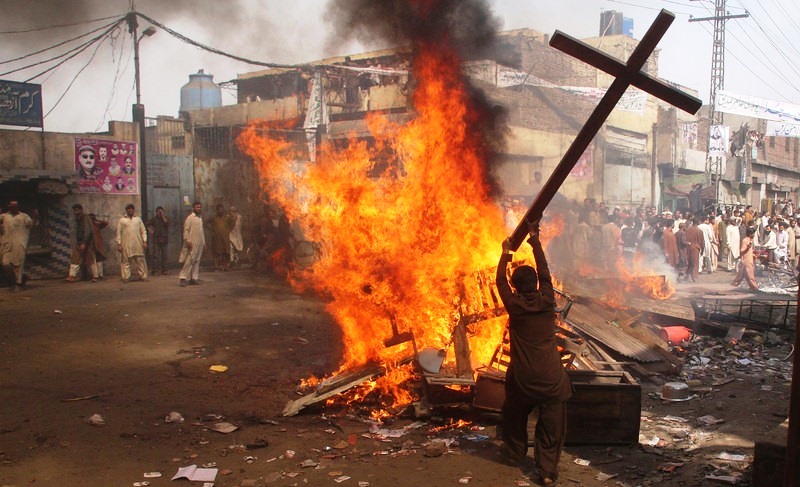
The following are among the murders and abuses Muslims inflicted on Christians throughout the month of February 2026.
The Muslim Slaughter of Christians
Nigeria: According to a Feb. 13 report, more than 100 Christians were killed and more than 90,000 displaced after months of coordinated attacks on rural communities since September 2025. In areas such as Takum, Ussa, and Donga, armed groups have repeatedly raided villages, killing residents, burning homes, churches, and crops, and forcing survivors to flee into the surrounding areas. Entire communities have been obliterated. Many displaced families are unable to return: attackers reportedly seized farmland and target those who try to come back.
A Feb. 10 report detailed that Christian communities, amid ongoing kidnappings and killings, continue to live in fear. In one instance, more than 160 Christians were abducted during church services—particularly in regions of Kaduna state. A Catholic priest, Bobbo Paschal, was released after spending 61 days in captivity after his abduction during an attack in which another church member was killed and others were taken hostage.
On Feb. 6, nine Catholic worshippers were kidnapped in Benue State during a night prayer vigil at a mission station. Armed terrorists stormed the church and abducted them to an unknown location, prompting calls for prayer and urgent rescue efforts from the local diocese.
On Feb. 7, coordinated terror attacks on multiple predominantly Christian villages in Taraba State left some 70 people dead. Homes were burned, food supplies destroyed, and property looted, forcing many residents to flee into nearby bushes or neighboring areas. Community leaders reported that at least 35 churches were vandalized or destroyed; a pastor was among those killed. One person was abducted; many others remain missing.
Survivors said there was no visible security presence during the attack, thereby leaving the community defenseless.
According to a Feb. 6 report, Fulani herdsmen killed a Christian pastor, Rev. Bulus Madaki, along with his daughter and son-in-law during an ambush in Plateau State. Only the 3-month-old granddaughter, despite suffering a severe machete gash, survived, but is an orphan.
On Feb. 1, in Niger State, armed militants carried out coordinated attacks, targeting Christians. The terrorists burned a police station, destroyed homes, kidnapped several residents, and later set fire to an evangelical church belonging to the United Missionary Church of Africa. The violence also extended to Mashegu, where a Catholic convent and nearby clinic were attacked; the nuns managed to escape, but the medical facilities were looted and severely damaged.
Democratic Republic of Congo: On Feb. 6, in the northeastern region, Islamist militants carried out coordinated attacks that killed at least 24 Christians, while burning homes and spreading violence across the North Kivu Province. The Islamic State Central Africa Province (ISCAP) went on to announce the massacre of “21 Christians … praise be to Allah.” They added, “Let the Christians of Africa know there is no security for you except by Islam or jizya.” Since late 2024, ISCAP has reportedly killed many hundreds of Christians in the area, and worsening an already severe humanitarian crisis.
Separately, on Feb. 1, Muslim terrorists of the Allied Democratic Forces (ADF) devastated the village of Mamove and its nearby communities.The terrorists killed at least eight Christians, burned homes, shops, and vehicles, destroyed the local economy and displaced residents. The terror and destruction left communities paralyzed with widespread fear, hunger, and trauma—especially among children who had witnessed the violence. Many Christians lost their only sources of income, and local leaders have expressed anger and frustration at the lack of response from authorities.
Muslim Abduction of Christian Girls
Pakistan: On February 3, Pakistan’s Federal Constitutional Court granted custody of 13-year-old Christian girl, Maria Shahbaz, to a 30-year-old Muslim man accused of kidnapping, forcibly converting, and marrying her. The court rejected her official birth certificate and ignored prior findings that the marriage was illegal, instead accepting her statement that she converted and married voluntarily—despite claims from her family and lawyer that it was made under coercion. Rights advocates and the girl’s family criticized the ruling, pointing to evidence that the marriage certificate was fake and raising concerns about police inaction and possible collusion. They argue the girl had been in the suspect’s custody for months, making any statement unreliable.
Separately, according to a Feb. 20 report, 14-year-old Christian girl Sataish Maryam was abducted from her home in Punjab. Her family says she was forcibly converted to Islam and married to a 26-year-old Muslim man, Ali Haider. Despite the family providing a birth certificate proving she is a minor, a magistrate handed the girl over to Haider. Police reportedly failed to include charges of child marriage, statutory rape, or forgery in the official report. The family is facing armed intimidation from the perpetrators to withdraw their complaint, while their legal team is petitioning the High Court to challenge the “fabricated” conversion and marriage documents.
Egypt: According to a Feb. 16 report, Silvana Atef, a Christian minor from Fayoum, disappeared and later appeared in a video claiming to have converted to Islam. Under Egyptian law, because she is under 18, she lacks the legal capacity to change her religious status. In the video, a woman standing behind Silvana refers to Christians as “kuffar” (infidels). Lawyers argue this constitutes sectarian incitement and points to coercion by an older man allegedly involved in her disappearance. Although the prosecution reportedly ordered her placed in a social care institution, her family found no record of her presence there. The facility reportedly claimed they do not accept Christian residents. The family fears authorities are waiting for Silvana to turn eighteen this coming March, at which point her change of religion would become legally permanent. After staging a silent protest for transparency at the Prosecutor General’s office, several family members, including Silvana’s uncles, were detained by police until the following evening. The family continues to demand why Silvana has not been returned to her legal guardians and why her current location remains undisclosed despite a prosecutorial order. According to some, the incident sends a troubling message to Coptic families: all Coptic girls effectively have no protection from the state.
Muslim Attacks on Christian Freedom: Apostates, Blasphemers, and Evangelists
Uganda: According to a Feb. 19 report, a 62-year-old Muslim, Ahammada, killed his 33-year-old son, Juma, after the son converted to Christianity. The father, after luring his son outside their home, used a panga (long knife) to stab him to death. According to the victim’s wife, Nangobi, the murder appeared premeditated: the father fled immediately and may have had help escaping. The couple had faced ongoing threats from family members after converting from Islam, she said:
“My father-in-law together with other family members have been insulting us… promising to kill all of us for leaving Islam.”
The victim, a father of four young children, died, despite efforts to get him to a hospital. As of the report, police had not conducted an investigation.
Separately, on Feb. 8, a group of masked men violently attacked two pastors, John Michael Okoel and Abraham Omoding, as they returned from a night prayer meeting near Pallisa. The masked men, armed with sticks and knives and dressed in Islamic attire, accused them of blasphemy and trying to convert Muslims before beating them severely, leaving one unconscious and the other with serious injuries, including a fractured arm and lost teeth. In the words of Pastor Okoel,
“They began accusing us of lying about Allah, preaching that Allah has a Son and converting their brothers and sisters. Before I could respond, one of them, Ali Kitaali, slapped me, cut me near my mouth and hit my knee and hand. I fell unconscious.”
The attack only stopped when a passing vehicle approached, causing the Muslims to flee, after which the pastors were taken for medical treatment.
Egypt: On Feb. 23, an Egyptian court rejected the appeal of Coptic Christian Augustinos Semaan and upheld his five-year prison sentence for “contempt of religions” (blasphemy) under Article 98(f) of the Penal Code. Semaan, a scholar of comparative religion with a master’s degree in theology and affiliated with a prominent YouTube channel, was convicted for statements he made defending Christianity and critiquing Islam. The core of the case was his assertion that Islam was spread by force while Christianity was spread by preaching and love. Semaan’s lawyers argued the conviction violated freedom of religion and belief. They stated that his trial fell far short of the minimum standards of justice: defense lawyers were not notified of the referral to trial, nor given copies of the investigation or the initial ruling. The defense also proved the arrest report had been falsified — its date shows it had been written a full week after the arrest. Citing the Egyptian Constitution and Criminal Procedure Code, they challenged the legality of monitoring Semaan’s social media accounts without a warrant. part of his defense team, the Egyptian Initiative for Personal Rights (EPPR), condemned the verdict as unconstitutional: Article 98(f) “undermines the right to equality and non-discrimination, impedes the right to a fair trial and the right to defense, and opens the door to inquiring into citizens’ beliefs.”
In a separate incident, according to a February 16 report, converts to Christianity in Egypt face significant challenges and risks when attending church: official identity cards list religion, and most converts are still registered as Muslim. Since many churches require ID checks for security, this can expose converts or prevent them from entering, thereby forcing them to rely on methods such as attending less strict churches, using personal connections, or informally proving their faith. Many also live in secrecy within their families and communities, as openly converting can lead to social hostility or even violence.
Pakistan: On February 4, a blind Christian man, Nadeem Masih, was denied bail by the Lahore High Court after being charged under Pakistan’s blasphemy laws, which carry the death penalty. He has been in custody since August 2025 after his arrest. Police accused him of making insulting remarks about the Prophet Muhammad. His lawyer argues that the case is built on inconsistent statements, questionable timing, and evidence that contradicts the official police account, including claims that key witnesses reported the incident long after it allegedly took place. Masih’s family maintains that the accusation followed a dispute with local park contractors who had previously harassed and exploited him. They allege that after he was taken into custody, he was beaten and coerced. Despite his disability, education, and role as the sole provider for his family, the court rejected bail on the grounds that he might flee or influence witnesses.
In a separate Feb. 5 report, a court acquitted two Christian nurses, Mariam Lal and Navish Arooj, of blasphemy charges after nearly four years. The women were arrested in 2021 after accusations by a Muslim colleague that they had desecrated an Islamic sticker at a hospital. Although released on bail after five months, they remained in hiding following threats while their case proceeded. The case is notable because lower courts in Pakistan rarely acquit blasphemy cases due to social pressure and security risks. Rights groups state that such laws are often misused to target minorities, sometimes leading to violence, intimidation, or personal exploitation. Despite their acquittal, concerns remain about the women’s safety and ability to rebuild their lives. According to Human Rights Watch,
“Blasphemy accusations are increasingly weaponized to incite mob violence, displace marginalized groups and seize their property with impunity.”
South Sudan: According to a Feb. 24 report, Mosab Haroon Ahmed, a 31-year-old Sudanese refugee at the Gorom Refugee Settlement near Juba, is facing credible death threats after converting from Islam to Christianity. Ahmed’s conversion triggered immediate hostility from Muslim extremists within the camp: “After I believed in Jesus, radical Muslims started to persecute me and other converts,” he said. When his family in Darfur, Sudan, was notified of his change of faith to Christianity, they disowned him and approved his killing in accordance with strict Islamic views on apostasy. “My family wants me dead,” Ahmed said. Fearing an “honor killing” or mob violence, he has since taken refuge inside a church. The local pastor confirmed that as extremists are aware of Ahmed’s whereabouts, he is in constant danger.
In a different episode, on Feb. 19, Pastor Lino Pasquale of the Hai Baraka Pentecostal Church was abducted while fishing. His body was discovered six days later; church leaders said he was “targeted and killed by an unknown gunman.” The incident follows the assassination of Rev. Christopher Maring, a senior leader of the Africa Inland Church, who was shot and killed at his home in a Juba suburb on January 14, 2026. Leaders of the Sudan Pentecostal Church (SPC) expressed heartbreak over the loss of a “faithful shepherd,” calling his murder a “heinous and targeted killing.”
Indonesia: On Feb. 18, a Christian leader and former Muslim, Dedi Saputra, was arrested, based on a TikTok video. Saputra had answered a question about religious conversion by stating that Muhammad had only one wife before becoming a prophet, but a dozen wives afterward. Despite the historical accuracy of the statement (corroborated by a Suara Muhammadiyah magazine article), the Aceh Islamic Sharia Office and several Islamic youth organizations reported him for “religious defamation” and “hate speech,” and claimed that the video “hurt the feelings of Muslims” and “sparked unrest.” Advocates accused the police of favoritism and focusing on “managing citizens’ faith” rather than protecting constitutional religious freedom.
Muslim Attacks on Christian Churches
USA: On Feb. 28, San Francisco police arrested 51-year-old Sadat Mousa for defacing a church with swastikas, antisemitic language, and anti-gay slurs. Damage to the property is estimated to exceed $20,000. While not officially confirmed by police, a social media account matching the suspect’s name and location contains several extremist posts. These include reposts calling for violence against Jewish people, praise for Hamas, and the slogan “Palestine from the river to the sea.” The suspect’s social media presence reportedly includes messages disparaging Christianity, such as “learn from your bloody Jesus,” and assertions that Palestinians “will never share heaven with the devils.”
Syria: On Sunday, Feb. 1, a Muslim man, carrying a Koran and chanting “Allahu akbar,” entered the Melkite Greek Cathedral of Al Zaitoun (the Patriarchate headquarters) before the Sunday Mass.
Two weeks later, on Sunday, Feb. 15, a Muslim man entered the Syriac Catholic Church of Our Lady of Deliverance in Qatana town, where he began to utter “offensive remarks about their faith.”
The intruder also repeatedly recited a verse from the Koran, causing fear and panic among the worshippers present in the church.
Armenia: According to a February 11 report, an Armenian church in Vaghuhas, in the Artsakh region (Nagorno-Karabakh), was vandalized in January 2026. The Church of Saint Mary was reportedly desecrated, with visible damage including a broken khachkar, a traditional carved stone cross, an important symbol of Armenian Christian heritage. The incident reflects ongoing cultural and religious site damage in the region, where tensions have led to repeated destruction of historical and religious landmarks.
Italy: According to a Feb. 22 report, the Church of San Sepolcro in Piacenza is facing nightly “escalations” of vandalism, littering, and property damage. Beyond the accumulation of alcohol bottles and trash, the building itself has been targeted. Vandalism includes cracked structural columns, smashed planters, uprooted cobblestones, and bricks ripped out of the exterior walls. Parish priest Iuri Ursachi attributes the behavior to a specific group of youths, noting a lack of respect for the religious site: “The fault always lies with the same group of boys, mostly North-Africans.” He recounted confronting them by asking, “Do you act like this in your mosque?”
A separate group of teenagers stormed the San Pietro Viminario parish center during an event with local families. The teenagers vandalized the premises, then occupied the cloister garden. For months, the same group has been responsible for property damage, public disturbances (firecrackers and moped racing), and physical harassment—including spitting in the face of a teenage girl.
Finally, on February 2 in Rome, a 35-year-old man was arrested in St. Peter’s Basilica after attempting to enter the church while carrying flammable liquids and ignition devices during a major Mass led by the pope. Security stopped the man before he could enter, thereby preventing a potential catastrophe to the large crowd present. Authorities believe the suspect is linked to earlier arson attacks on churches in Rome, including San Giacomo in via del Corso and San Lorenzo in Lucina.
Nigeria: On Feb. 1, Muslim bandits launched an early-morning raid on Agwara community in Niger State, attacking a police station, burning part of a United Methodist church, and abducting at least five people.
In a separate incident, on Feb. 26, arsonists targeted St. Mary’s Catholic Church in Katchuan Iruan. They set fire to the sacristy and completely destroyed all the church’s historical and religious records. In addition, two vehicles parked on the premises were burned.
Democratic Republic of Congo: On the night of February 15–16, unknown assailants broke into and desecrated a Catholic church in Bule. They tore off the church shutters, forced open the tabernacle, and scattered the consecrated hosts on the floor.
General Muslim Abuse of Christians
Yemen: According to a Feb. 17 report, at least 20 Yemeni Christians were arrested or abducted from their homes or off the street. While some are confirmed in Houthi-run prisons, others have “disappeared” and face potential torture or execution for their faith. Yemen is officially 99-100% Muslim; conversion to Christianity under Yemeni law is punishable by death. The state and various ruling entities do not officially recognize any Christian minority. The current indigenous church grew after the martyrdom of foreign missionaries by Islamic extremists: In 2002, an Islamic jihadist killed three American missionaries at Jibla Baptist Hospital to “cleanse his religion and get closer to God.” In 2012 Al-Qaeda killed an American teacher in Taiz for “spreading Christianity.” In 2016, Islamic State gunmen killed four nuns and 12 others at a home for the elderly in Aden. By 2017, nearly all foreign missionaries had left Yemen, yet various Christian ministries observe and report on the Yemeni situation.
Iran: According to a Feb. 19 report, although fewer Christians were sentenced in 2025 (73) compared to 2024 (96), the sentences became significantly harsher, totaling 280 cumulative years in prison. The state officially labeled many of them as “Mossad mercenaries” and accused them of acting under a “Zionist Christian evangelization movement” trained by the U.S. and Israel. Persecution intensified significantly in 2025: 254 Christians were arrested — nearly double the 139 arrests recorded in 2024. 90% of cases were brought under Article 500, which criminalizes “propaganda contrary to the holy religion of Islam.” The government also increasingly criminalized the possession of imported Bibles. A Christian convert, Aida Najaflou, was sentenced to 17 years for “evangelism, prayer, and celebrating Christmas.” She was charged with “propaganda against the regime” and “acting against national security.” Despite sustaining a spinal fracture in prison, she was reportedly returned to her cell on a stretcher and denied a proper hospital recovery period. Najaflou’s case is one of many. According to the report, Christian prisoners face serious mistreatments, including “denial of healthcare, psychological torture, and even physical abuse.”
Another February 5 report highlights the tightly restricted conditions a small Orthodox Christian community experiences. Services are rare, limited mostly to Holy Week, and must be conducted in Greek to avoid accusations of proselytism. The community cannot freely perform sacraments such as baptisms or marriages, and visits by the clergy are infrequent. Believers are therefore to wait years for full participation in religious life. Priests must move discreetly, wear civilian clothes and limit their movements for safety. Some individuals, officially considered Muslims, practice Christianity in secret, putting themselves at serious risk if discovered. Fr. Nikiforos illustrated the situation:
“On Saturday night, after the end of the Resurrection service, two people of Iranian origin approached me secretly. They begged me to give them Holy Communion after the rest of the faithful had left the church. They lived in Tehran and, to the outside world, they were considered Muslims! The fact that they had received Holy Communion must not become known, because in that case their lives would be in danger. Although officially considered Muslims, they had been baptized as Orthodox Christians during a previous visit to an Orthodox country.”
Philippines: A Feb. 17 report disclosed that Christian settler leaders in the Bangsamoro Autonomous Region in Muslim Mindanao (BARMM) warned the Senate that recent legislation poses an “existential threat” to non-Muslim representation. Parliament Bill No. 419, enacted Jan. 28, voided all sectoral certifications, forcing more than 260 Christian settler groups to re-register within a strict 15-day deadline, thereby erasing “the hard-won legitimacy” of their organizations. Leaders also opposed replacing sector-managed “reserved seats” with region-wide elections, arguing it reduces minority protections to a “popularity contest” and risks a “tyranny of the majority.” They warn disenfranchisement could undermine missionary security, economic rights, and the region’s inclusive “Tri-People” framework.
Netherlands: According to a Feb. 22 report, Elyas, a Lebanese-born evangelist who has lived in the Netherlands for 26 years, was assaulted while preaching in the streets of Utrecht. A group of Muslim men interrupted his preaching, shouting Islamist slogans such as “Allah is one” and “Jesus is a human.” The situation escalated when one of the men, apparently attempting to assert dominance, struck Elyas before bystanders intervened to stop the violence. Police arrived and dispersed the group, although it remains unclear if the attacker was arrested.
Germany: A 35-year-old Afghan man attacked three Jehovah’s Witnesses at Würzburg Central Station, attempting to stab a 68-year-old man and assaulting two others. Bystanders, including an off-duty police officer, subdued him before serious injuries occurred.
Separately, according to a Feb. 27 report, since 2024, a 34-year-old Syrian man named Khaled K. has been terrorizing the Hessian municipality of Kriftel. He has sent to the city administration more than 100 emails filled with anti-Christian insults, hatred toward Germans, and misogyny. At the beginning of 2026, the threats escalated. Khaled explicitly vowed to go on a killing spree—”I will kill everything I see before me, women, children, and everything.” He also insulted Christianity as the “dirtiest religion,” referred to Germany as a “Nazi land,” and insulted Jesus and Mary in the most vulgar terms. Despite numerous criminal complaints for insults, threats, and property damage (such as smashing glass bottles in the town hall parking lot), West Hesse police have only conducted “threat talks” (Gefährderansprachen) but, as no “serious crimes” have been committed, apparently see no legal basis yet for an arrest.
Pakistan: Jameel Masih, a 14-year-old Christian boy, forcibly converted to Islam , is being held in illegal custody by a Muslim landlord, Muhammad Boota Bajwa. Due to extreme poverty, Jameel was sent five years ago. to work at Bajwa’s cattle shed. The family was paid only in grain—roughly 200 kg of wheat annually (worth about $58)—a practice rights activists describe as bonded labor. On February 22, after the family managed to bring Jameel home briefly, Bajwa and two armed men reportedly attacked the parents and forcibly snatched the boy back. The family later saw a TikTok video of Jameel wearing an Islamic cap while Muslim hymns were playing. Local residents confirmed the boy had been converted to Islam. Activist Napolean Qayyum notes that minor children from minorities are often converted to ensure permanent control over them as laborers.
In a different incident, according to a Feb. 18 report, Sadiq Masih, a Christian brick kiln worker in Punjab, was coerced into converting to Islam and changing his name to “Muhammad Sadiq” years ago while indebted to an employer. Although he remains a practicing Christian, the National Database and Registration Authority (NADRA) refuses to correct his records. Because their father is registered as Muslim, NADRA has also been blocking his five children from registering as Christians on their National Identity Cards (CNICs). Without these cards, the children are barred from education, banking, voting, and government assistance. Human rights advocates highlight that the brick kiln sector uses financial advances (debt bondage) to trap illiterate Christian workers, thereby making them vulnerable to forced religious identity changes. The Masih family, living in extreme poverty, lacks the means for the lengthy court battles required to prove “clerical error,” leaving them trapped in a Muslim legal identity they do not profess. Attorney Lazar Allah Rakha notes that while conversion to Islam is processed easily, conversion from Islam (apostasy) is treated with suspicion and effectively blocked by administrative policy. Attempting to renounce a Muslim identity in Pakistan carries severe risks under Section 295-A (outraging religious feelings) and can trigger mob violence or accusations of blasphemy that can result in death.
*Raymond Ibrahim, author of Defenders of the West, Sword and Scimitar, Crucified Again, and The Al Qaeda Reader, is the Distinguished Senior Shillman Fellow at the Gatestone Institute and the Judith Rosen Friedman Fellow at the Middle East Forum.
*About this Series
While not all, or even most, Muslims are involved, persecution of Christians by extremists is growing. The report posits that such persecution is not random but rather systematic, and takes place irrespective of language, ethnicity, or location. It includes incidents that take place during, or are reported on, any given month.
https://www.gatestoneinstitute.org/22627/persecution-of-christians-february
Follow Raymond Ibrahim on X (formerly Twitter) and Facebook
© 2026 Gatestone Institute. All rights reserved. The articles printed here do not necessarily reflect the views of the Editors or of Gatestone Institute.
تقرير من معهد كايتستون من إعداد ريموند إبراهيم/قائمة مفصلة بوقائع اضطهاد المسيحيين خلال شهر شباط 2026/لا آمان لكم دون الإسلام أو الجزية
ترجمة كاملة ودقيقة للتقرير بواسطة مواقع ترجمة ألكترونية
المقدمة والملخص
هاجمت جماعات مسلحة مراراً وتكراراً القرى، مما أسفر عن مقتل سكان، وحرق منازل وكنائس ومحاصيل، وإجبار الناجين على الفرار إلى المناطق المحيطة. لقد طُمست مجتمعات بأكملها. والعديد من العائلات النازحة غير قادرة على العودة، إذ تشير التقارير إلى أن المهاجمين استولوا على الأراضي الزراعية ويستهدفون كل من يحاول العودة. — منظمة التضامن المسيحي الدولية (International Christian Concern)، 13 فبراير 2026، نيجيريا.
منحت المحكمة الدستورية الاتحادية في باكستان حضانة الفتاة المسيحية ماريا شهباز (13 عاماً) لرجل مسلم يبلغ من العمر 30 عاماً متهم باختطافها وإجبارها على اعتناق الإسلام والزواج منها. ورفضت المحكمة شهادة ميلادها الرسمية وتجاهلت النتائج السابقة التي تفيد بأن الزواج غير قانوني، وقبلت بدلاً من ذلك إفادتها بأنها اعتنقت الإسلام وتزوجت طواعية – على الرغم من مزاعم عائلتها ومحاميها بأن الإفادة انتزعت تحت الإكراه. وانتقد مدافعون عن الحقوق وعائلة الفتاة الحكم، مشيرين إلى أدلة على أن عقد الزواج مزور، ومثيرين مخاوف بشأن تقاعس الشرطة واحتمال التواطؤ. ودفعوا بأن الفتاة كانت في حضانة المشتبه به لعدة أشهر، مما يجعل أي إفادة غير موثوقة. — وكالة أنباء ميرنينغ ستار (Morning Star News)، 1 فبراير 2026، باكستان.
رفضت محكمة لاهور العليا الإفراج بكفالة عن رجل مسيحي كفيف يُدعى نديم مسيح، بعد اتهامه بموجب قوانين تجديف المحرمات في باكستان، والتي تصل عقوبتها إلى الإعدام. وهو قيد الاحتجاز منذ اعتقاله في أغسطس 2025. واتهمته الشرطة بالإدلاء بتصريحات مهينة للنبي محمد. ويجادل محاميه بأن القضية مبنية على تصريحات متناقضة وتوقيت مشكوك فيه وأدلة تتعارض مع الرواية الرسمية للشرطة… — وكالة أنباء ميرنينغ ستار، 4 فبراير 2026، باكستان.
«تُستخدم اتهامات التجديف بشكل متزايد كسلاح للتحريض على عنف الغوغاء، وتشريد الجماعات المهمشة والاستيلاء على ممتلكاتهم مع الإفلات من العقاب». — وكالة أنباء ميرنينغ ستار، 4 فبراير 2026، باكستان.
قُبض على القيادي المسيحي والمسلم السابق، ديدي سابوترا، بناءً على مقطع فيديو على منصة تيك توك. وكان سابوترا قد أجاب على سؤال حول تغيير الدين بذكر أن محمداً كان لديه زوجة واحدة قبل البعثة، ولكن تلاها دزينة من الزوجات بعد ذلك. وعلى الرغم من الدقة التاريخية للتصريح (والتي أكدها مقال في مجلة سُعَرة محمدية)، فقد أبلغ مكتب الشريعة الإسلامية في آتشيه والعديد من المنظمات الشبابية الإسلامية عنه بتهمة «ازدراء الأديان» و«خطاب الكراهية»، وزعموا أن الفيديو «جرح مشاعر المسلمين» و«أثار الاضطرابات». — وكالة أنباء ميرنينغ ستار، 27 فبراير 2026، إندونيسيا.
في روما، قُبض على رجل يبلغ من العمر 35 عاماً في كنيسة القديس بطرس بعد محاولته دخول الكنيسة وهو يحمل سوائل قابلة للاشتعال وأجهزة إشعال خلال قداس كبير ترأسه البابا. — مرصد عدم التسامح والتمييز ضد المسيحيين في أوروبا، 3 فبراير 2026، إيطاليا.
اُعتقل أو اختُطف ما لا يقل عن 20 مسيحياً يمنياً من منازلهم أو من الشارع. وفي حين تأكد وجود بعضهم في سجون يديرها الحوثيون، فإن آخرين «اختفوا» ويواجهون احتمال التعذيب أو الإعدام بسبب عقيدتهم. اليمن مسلم رسمياً بنسبة 99-100٪؛ وتحت القانون اليمني يعاقب على التحول إلى المسيحية بالإعدام. — منظمة التضامن المسيحي الدولية، 17 فبراير 2026، اليمن.
التشريع الأخير يشكل «تهديداً وجودياً» للتمثيل غير المسلم. مشروع قانون البرلمان رقم 419، الصادر في 28 يناير، أبطل جميع الشهادات القطاعية… — منظمة التضامن المسيحي الدولية، 17 فبراير 2026، الفلبين.
تعرض مبشر من أصل لبناني… للاعتداء أثناء قيامه بالتبشير في شوارع أوترخت. وقاطعت مجموعة من الرجال المسلمين وعظه، وهتفوا بشعارات إسلامية مثل «الله واحد» و«عيسى بشر». وتصاعد الموقف عندما ضرب أحد الرجال إيليا، في محاولة منه لفرض السيطرة على ما يبدو، قبل أن يتدخل المارة لوقف العنف. — مرصد رهاب المسيحية (L’Observatoire de la Christianophobie)، 22 فبراير 2026، هولندا.
تعهد خالد صراحة بشن حملة قتل – «سأقتل كل ما أراه أمامي، النساء والأطفال وكل شيء». كما أهان المسيحية ووصفها بأنها «أقذر دين»، ويشير إلى ألمانيا بأنها «أرض نازية»…. وعلى الرغم من الشكاوى الجنائية العديدة المتعلقة بالإهانات والتهديدات وإلحاق الضرر بالممتلكات (مثل تحطيم الزجاجات في موقف سيارات دار البلدية)، فإن شرطة غرب هسن لم تجرِ سوى «محادثات تحذيرية من التهديد» (Gefährderansprachen)، ولكن نظراً لعدم ارتكاب «جرائم خطيرة»، يبدو أنها لا ترى أساساً قانونياً للاعتقال بعد. — مرصد رهاب المسيحية، 27 فبراير 2026، ألمانيا.
يحتجز مالك أرض مسلم، يُدعى محمد بوتا باجوا، الصبي المسيحي جميل مسيح (14 عاماً) الذي أُجبر على اعتنق الإسلام، قيد الاحتجاز غير القانوني…. وغالباً ما يُجبر الأطفال القصر من الأقليات على اعتناق الإسلام لضمان السيطرة الدائمة عليهم كعمال. — وكالة أنباء ميرنينغ ستار، 27 فبراير 2026، باكستان.
نظراً لأن والدهم مسجل كمسلم، تمنع الهيئة الوطنية لإدارة البيانات والتسجيل (NADRA) أيضاً أطفاله الخمسة من التسجيل كمسيحيين في بطاقات هوياتهم الوطنية (CNICs). وبدون هذه البطاقات، يُحرم الأطفال من التعليم والخدمات المصرفية والتصويت والمساعدات الحكومية. ويوضح المدافعون عن حقوق الإنسان أن قطاع أفران الطوب يستخدم السلف المالية (عبودية الدين) لمحاصرة العمال المسيحيين الأميين، مما يجعلهم عرضة للتغييرات القسرية في الهوية الدينية. وتفتقر عائلة مسيح، التي تعيش في فقر مدقع، إلى وسائل خوض المعارك القضائية الطويلة المطلوبة… إن محاولة التخلي عن الهوية المسلمة في باكستان تنطوي على مخاطر جسيمة ويمكن أن تؤدي إلى عنف الغوغاء أو اتهامات بالتجديف قد تؤدي إلى الموت. — وكالة أنباء ميرنينغ ستار، 18 فبراير 2026، باكستان.
في 3 فبراير، منحت المحكمة الدستورية الاتحادية في باكستان حضانة الفتاة المسيحية ماريا شهباز (13 عاماً) لرجل مسلم يبلغ من العمر 30 عاماً متهم باختطافها وإجبارها على اعتناق الإسلام والزواج منها. في الصورة: مقر المحكمة الدستورية الباكستانية في إسلام آباد.
وفيما يلي بعض عمليات القتل والانتهاكات التي ألحقها مسلمون بمسيحيين طوال شهر فبراير 2026. مقتل المسيحييننيجيريا: وفقاً لتقرير صدر في 13 فبراير، قُتل أكثر من 100 مسيحي ونزح أكثر من 90,000 آخرين بعد أشهر من الهجمات المنسقة على المجتمعات الريفية منذ سبتمبر 2025. وفي مناطق مثل تاكوم، وأوسا، ودونغا، داهمت جماعات مسلحة مراراً القرى، مما أسفر عن مقتل سكان وحرق منازل وكنائس ومحاصيل، وإجبار الناجين على الفرار إلى المناطق المحيطة. لقد طُمست مجتمعات بأكملها. والعديد من العائلات النازحة غير قادرة على العودة، إذ تشير التقارير إلى أن المهاجمين استولوا على الأراضي الزراعية ويستهدفون كل من يحاول العودة.
وفصّل تقرير صدر في 10 فبراير أن المجتمعات المسيحية، وسط عمليات الاختطاف والقتل المستمرة، لا تزال تعيش في خوف. وفي إحدى الحالات، اختُطف أكثر من 160 مسيحياً أثناء القداس الإلهي – لا سيما في مناطق ولاية كادونا. وأُطلق سراح الكاهن الكاثوليكي، بوبو باشال، بعد أن أمضى 61 يوماً في الأسر عقب اختطافه في هجوم قُتل فيه عضو آخر في الكنيسة واُحتجز آخرون كرهائن.
وفي 6 فبراير، اختُطف تسعة من المصلين الكاثوليك في ولاية بينو خلال سهرة صلاة ليلية في محطة إرسالية. واقتحم إرهابيون مسلحون الكنيسة واختطفوهم إلى وجهة مجهولة، مما دفع الأبرشية المحلية إلى الدعوة للصلاة وجهود الإنقاذ العاجلة.
وفي 7 فبراير، أسفرت هجمات إرهابية منسقة على قرى متعددة ذات أغلبية مسيحية في ولاية تارابا عن مقتل نحو 70 شخصاً. وأُحرقت المنازل ودُمرت الإمدادات الغذائية ونُهبت الممتلكات، مما أجبر العديد من السكان على الفرار إلى الأحراش القريبة أو المناطق المجاورة. وأفاد قادة المجتمع المحلي أن ما لا يقل عن 35 كنيسة تعرضت للتخريب أو التدمير؛ وكان من بين القتلى قس. واُختطف شخص واحد؛ ولا يزال كثيرون آخرون في عداد المفقودين. وذكر الناجون أنه لم يكن هناك وجود أمني مرئي أثناء الهجوم، مما ترك المجتمع بلا دفاع.
ووفقاً لتقرير صدر في 6 فبراير، قتل رعاة من قبائل الفولاني قساً مسيحياً، وهو الوعظ بولس مداكي، إلى جانب ابنته وصهره خلال كمين في ولاية بليتو. ولم ينجُ سوى حفيدته البالغة من العمر 3 أشهر، على الرغم من إصابتها بجرح شديد بساطور، لكنها أصبحت يتيمة.
وفي 1 فبراير، في ولاية النيجر، شن مسلحون هجمات منسقة استهدفت المسيحيين. وأحرق الإرهابيون مركز شرطة، ودمروا منازل، واختطفوا عدداً من السكان، وأضرموا النار لاحقاً في كنيسة إنجيلية تابعة للكنيسة التبشيرية المتحدة لأفريقيا. وامتد العنف أيضاً إلى ماشيجو، حيث تعرض دير كاثوليكي وعيادة مجاورة للهجوم؛ وتمكنت الراهبات من الفرار، لكن المرافق الطبية نُهبت وتعرضت لأضرار بالغة.
جمهورية الكونغو الديمقراطية: في 6 فبراير، في المنطقة الشمالية الشرقية، شن مسلحون إسلاميون هجمات منسقة أسفرت عن مقتل 24 مسيحياً على الأقل، مع إحراق المنازل ونشر العنف في مقاطعة شمال كيفو. وأعلن تنظيم الدولة الإسلامية في ولاية وسط إفريقيا (ISCAP) لاحقاً عن مجزرة طالت «21 مسيحياً… والحمد لله». وأضافوا: «ليعلم مسيحيو إفريقيا أن لا أمن لكم إلا بالإسلام أو الجزية». ومنذ أواخر عام 2024، تشير التقارير إلى أن هذا التنظيم قتل مئات المسيحيين في المنطقة، مما أدى إلى تفاقم الأزمة الإنسانية الشديدة بالفعل.
وفي سياق منفصل، في 1 فبراير، دمر إرهابيون مسلمون من القوات الديمقراطية المتحالفة (ADF) قرية ماموف والمجتمعات المجاورة لها. وقتل الإرهابيون ثمانية مسيحيين على الأقل، وأحرقوا منازل ومتاجر ومركبات، ودمروا الاقتصاد المحلي وشردوا السكان. وترك الرعب والدمار المجتمعات مشلولة بالخوف الشديد والجوع والصدمات – خاصة بين الأطفال الذين شهدوا العنف. وفقد العديد من المسيحيين مصادر دخلهم الوحيدة، وأعرب قادة محليون عن غضبهم وإحباطهم من تقاعس السلطات عن الرد. اختطاف الفتيات المسيحياتباكستان: في 3 فبراير، منحت المحكمة الدستورية الاتحادية في باكستان حضانة الفتاة المسيحية ماريا شهباز (13 عاماً) لرجل مسلم يبلغ من العمر 30 عاماً متهم باختطافها وإجبارها على اعتناق الإسلام والزواج منها. ورفضت المحكمة شهادة ميلادها الرسمية وتجاهلت النتائج السابقة التي تفيد بأن الزواج غير قانوني، وقبلت بدلاً من ذلك إفادتها بأنها اعتنقت الإسلام وتزوجت طواعية – على الرغم من مزاعم عائلتها ومحاميها بأن الإفادة انتزعت تحت الإكراه. وانتقد مدافعون عن الحقوق وعائلة الفتاة الحكم، مشيرين إلى أدلة على أن عقد الزواج مزور، ومثيرين مخاوف بشأن تقاعس الشرطة واحتمال التواطؤ. ودفعوا بأن الفتاة كانت في حضانة المشتبه به لعدة أشهر، مما يجعل أي إفادة غير موثوقة.
وفي سياق منفصل، وفقاً لتقرير صدر في 20 فبراير، اختُطفت الفتاة المسيحية ساتايش مريم (14 عاماً) من منزلها في البنجاب. وتقول عائلتها إنها أُجبرت على اعتناق الإسلام وتزوجت من رجل مسلم يبلغ من العمر 26 عاماً يُدعى علي حيدر. وعلى الرغم من تقديم العائلة لشهادة ميلاد تثبت أنها قاصر، فقد سلم القاضي الفتاة إلى حيدر. وأفادت التقارير أن الشرطة تقاعست عن إدراج تهم زواج الأطفال، أو الاغتصاب القانوني، أو التزوير في التقرير الرسمي. وتواجه العائلة تهديدات مسلحة من الجناة لسحب شكواهم، بينما يلتجئ فريقهم القانوني إلى المحكمة العليا للطعن في وثائق اعتناق الدين والزواج «المفبركة».
مصر: وفقاً لتقرير صدر في 16 فبراير، اختفت سيلفانا عاطف، وهي قاصر مسيحية من الفيوم، وظهرت لاحقاً في مقطع فيديو تزعم فيه أنها اعتنقت الإسلام. وبموجب القانون المصري، نظراً لأنها دون سن 18 عاماً، فإنها تفتقر إلى الأهلية القانونية لتغيير وضعها الديني. وفي الفيديو، تشير امرأة تقف خلف سيلفانا إلى المسيحيين بوصفهم «كفاراً». ويجادل المحامون بأن هذا يشكل تحريضاً طائفياً ويشير إلى الإكراه من جانب رجل أكبر سناً يُزعم تورطه في اختفائها. وعلى الرغم من أن النيابة أمرت بإيداعها إحدى دور الرعاية الاجتماعية، إلا أن عائلتها لم تجد أي سجل لوجودها هناك. وأفادت المنشأة بأنها لا تقبل المقيمين المسيحيين. وتخشى العائلة أن تكون السلطات بانتظار بلوغ سيلفانا سن الثامنة عشرة في مارس المقبل، حيث يصبح تغيير دينها دائماً من الناحية القانونية. وبعد تنظيم وقفة احتجاجية صامتة للمطالبة بالشفافية أمام مكتب النائب العام، احتجزت الشرطة عدة أفراد من العائلة، بمن فيهم أعمام سيلفانا، حتى مساء اليوم التالي. وتواصل العائلة المطالبة بمعرفة سبب عدم إعادة سيلفانا إلى الأوصياء القانونيين عليها وعدم الكشف عن موقعها الحالي رغم وجود أمر قضائي. ووفقاً للبعض، فإن الحادث يرسل رسالة مقلقة للعائلات القبطية تفيد بأن جميع الفتيات القبطيات ليس لديهن أي حماية فعالة من الدولة. الاعتداءات على الحرية المسيحية: المرتدون، والمجدفون، والمبشرونأوغندا: وفقاً لتقرير صدر في 19 فبراير، قتل مسلم يبلغ من العمر 62 عاماً يُدعى حمادة ابنه جمعة (33 عاماً) بعد تحول الابن إلى المسيحية. واستخدم الأب، بعد استدراج ابنه خارج منزلهما، ساطوراً (سكين طويل) لطعنه حتى الموت. ووفقاً لزوجة الضحية، نانغوبي، فإن الجريمة بدت مع سبق الإصرار والترصد، إذ فر الأب على الفور وربما حصل على مساعدة للهروب. وقالت إن الزوجين واجها تهديدات مستمرة من أفراد العائلة بعد تحولهما من الإسلام: «كان حمي مع أفراد آخرين من العائلة يهينوننا… واعدين بقتلنا جميعاً لتركنا الإسلام». وتوفي الضحية، وهو أب لأربعة أطفال صغار، رغم الجهود المبذولة لنقله إلى المستشفى. وحتى وقت صدور التقرير، لم تكن الشرطة قد أجرت تحقيقاً.
وفي سياق منفصل، في 8 فبراير، هاجمت مجموعة من الرجال المقنعين بعنف قسين، هما جون مايكل أوكويل وأبراهام أومودينغ، أثناء عودتهما من اجتماع صلاة ليلى بالقرب من باليسا. واتهمهم الرجال المقنعون، المسلحون بالعصي والسكاكين والذين يرتدون أزياء إسلامية، بالتجديف ومحاولة تحويل المسلمين قبل ضربهم المبرح، مما ترك أحدهم فاقداً للوعي والآخر يعاني من إصابات خطيرة، بما في ذلك كسر في الذراع وفقدان الأسنان. وعلى حد تعبير القس أوكويل: «بدأوا في اتهامنا بالكذب على الله، والتبشير بأن لله ابناً، وتحويل إخوانهم وأخواتهم. وقبل أن أتمكن من الرد، قام أحدهم، وهو علي كيتالي، بصفعي، وجرحني بالقرب من فمي وضرب ركبتي ويدي. فسقطت فاقداً للوعي». ولم يتوقف الهجوم إلا عندما اقتربت سيارة عابرة، مما دفع المهاجمين إلى الفرار، ونُقل القساة بعد ذلك لتلقي العلاج الطبي.
مصر: في 23 فبراير، رفضت محكمة مصرية استئناف المسيحي القبطي أوغسطينوس سمعان وأيدت حكم سجنه لمدة خمس سنوات بتهمة «ازدراء الأديان» بموجب المادة 98(و) من قانون العقوبات. وأُدين سمعان، وهو باحث في الأديان المقارنة ويحمل درجة الماجستير في اللاهوت ومرتبط بقناة بارزة على يوتيوب، بسبب تصريحات أدلى بها يدافع فيها عن المسيحية وينتقد الإسلام. وكان جوهر القضية تأكيده على أن الإسلام انتشر بالقوة بينما انتشرت المسيحية بالوعظ والمحبة. ودفع محامو سمعان بأن الإدانة تنتهك حرية الدين والمعتقد. وذكروا أن محاكمته افتقرت إلى الحد الأدنى من معايير العدالة، فلم يتم إخطار محامي الدفاع بالإحالة إلى المحاكمة، ولم يُمنحوا نسخاً من التحقيق أو الحكم الأولي. كما أثبت الدفاع أن محضر الاعتقال تم تزويره، إذ يظهر تاريخه أنه كُتب بعد أسبوع كامل من الاعتقال. واستناداً إلى الدستور المصري وقانون الإجراءات الجنائية، طعنوا في قانونية مراقبة حسابات سمعان على وسائل التواصل الاجتماعي دون إذن قضائي. وأدانت المبادرة المصرية للحقوق الشخصية (EIPR)، وهي جزء من فريق الدفاع عنه، الحكم ووصفته بأنه غير دستوري، معتبرة أن المادة 98(و) «تقوض الحق في المساواة وعدم التمييز، وتعيق الحق في محاكمة عادلة وحق الدفاع، وتفتح الباب للتفتيش في ضمائر المواطنين».
وفي واقعة منفصلة، وفقاً لتقرير صدر في 16 فبراير، يواجه العابرون إلى المسيحية في مصر تحديات ومخاطر كبيرة عند حضور الكنائس، إذ تدرج بطاقات الهوية الرسمية الديانة، ولا يزال معظم العابرين مسجلين كمسلمين. وبما أن العديد من الكنائس تطلب التحقق من الهوية لدواعي أمنية، فإن هذا قد يكشف أمر العابرين أو يمنعهم من الدخول، مما يجبرهم على الاعتماد على أساليب مثل حضور كنائس أقل تشددداً، أو استخدام العلاقات الشخصية، أو إثبات إيمانهم بشكل غير رسمي. كما يعيش الكثيرون منهم في سرية تامة داخل عائلاتهم ومجتمعاتهم، إذ يمكن أن يؤدي إعلان التحول إلى عداء اجتماعي أو حتى العنف.
باكستان: في 4 فبراير، رفضت محكمة لاهور العليا الإفراج بكفالة عن رجل مسيحي كفيف يُدعى نديم مسيح، بعد اتهامه بموجب قوانين تجديف المحرمات في باكستان، والتي تصل عقوبتها إلى الإعدام. وهو قيد الاحتجاز منذ اعتقاله في أغسطس 2025. واتهمته الشرطة بالإدلاء بتصريحات مهينة للنبي محمد. ويجادل محاميه بأن القضية مبنية على تصريحات متناقضة وتوقيت مشكوك فيه وأدلة تتعارض مع الرواية الرسمية للشرطة، بما في ذلك المزاعم بأن الشهود الرئيسيين أبلغوا عن الحادث بعد فترة طويلة من وقوعه المزعوم. وتصر عائلة مسيح على أن الاتهام جاء في أعقاب نزاع مع متعهدي حدائق محليين كانوا قد ضايقوه واستغلوه في السابق. ويزعمون أنه بعد اتهامه واحتجازه، تعرض للضرب والإكراه. ورغم إعاقته وتعليمه ودوره كمعيل وحيد لعائلته، رفضت المحكمة الإفراج عنه بكفالة بدعوى احتمال فراره أو تأثيره على الشهود.
وفي تقرير منفصل صدر في 5 فبراير، برأت محكمة ممرضتين مسيحيتين، هما مريم لال ونافيش عروج، من تهم التجديف بعد ما يقرب من أربع سنوات. وأُوقفت المرأتان في عام 2021 بعد اتهامات من زميل مسلم بأنهما دنستا ملصقاً إسلامياً في أحد المستشفيات. ورغم إطلاق سراحهما بكفالة بعد خمسة أشهر، إلا أنهما ظلتا متواريتين عن الأنظار إثر تلقيهما تهديدات أثناء سير القضية. وتعد هذه القضية بارزة لأن المحاكم الابتدائية في باكستان نادراً ما تبرئ قضايا التجديف بسبب الضغوط الاجتماعية والمخاطر الأمنية. وتذكر الجماعات الحقوقية أن مثل هذه القوانين غالباً ما يُساء استخدامها لاستهداف الأقليات، مما يؤدي أحياناً إلى العنف أو الترهيب أو الاستغلال الشخصي. ورغم تبرئتهما، لا تزال المخاوف قائمة بشأن سلامة المرأتين وقدرتهما على إعادة بناء حياتهما. ووفقاً لمنظمة هيومن رايتس ووتش: «تُستخدم اتهامات التجديف بشكل متزايد كسلاح للتحريض على عنف الغوغاء، وتشريد الجماعات المهمشة والاستيلاء على ممتلكاتهم مع الإفلات من العقاب».
جنوب السودان: وفقاً لتقرير صدر في 24 فبراير، يواجه مصعب هارون أحمد، وهو لاجئ سوداني يبلغ من العمر 31 عاماً في مستوطنة غوروم للاجئين بالقرب من جوبا، تهديدات حقيقية بالقتل بعد تحوله من الإسلام إلى المسيحية. وأثار تحول أحمد عداءً فورياً من متطرفين مسلمين داخل المخيم، حيث قال: «بعد أن آمنت بيسوع، بدأ المسلمون الراديكاليون في اضطهادي واضطهاد العابرين الآخرين». وعندما تم إخطار عائلته في دارفور بالسودان بتغيير عقيدته إلى المسيحية، تبرأوا منه ووافقوا على قتله وفقاً لآراء متشددة بشأن الردة. وقال أحمد: «عائلتي تريدني ميتاً». وخوفاً من التعرض لـ «جريمة شرف» أو عنف الغوغاء، لجأ منذ ذلك الحين إلى داخل كنيسة. وأكد القس المحلي أنه نظراً لعلم المتطرفين بمكان وجود أحمد، فإنه في خطر دائم.
وفي واقعة أخرى، في 19 فبراير، اختُطف القس لينو باسكوال من كنيسة هاي بركة الخمسينية أثناء قيامه بالصيد. واُكتشفت جثته بعد ستة أيام؛ وقال قادة الكنيسة إنه «استُهدف وقُتل على يد مسلح مجهول». ويأتي هذا الحادث في أعقاب اغتيال الوعظ كريستوفر مارينغ، وهو قيادي بارز في كنيسة إفريقيا الداخلية، والذي قُتل رمياً بالرصاص في منزله في إحدى ضواحي جوبا في 14 يناير 2026. وأعرب قادة الكنيسة الخمسينية السودانية (SPC) عن حزنهم الشديد لخسارة «الراعي الأمين»، واصفين مقتله بأنه «جريمة شنيعة ومستهدفة».
إندونيسيا: في 18 فبراير، قُبض على القيادي المسيحي والمسلم السابق، ديدي سابوترا، بناءً على مقطع فيديو على منصة تيك توك. وكان سابوترا قد أجاب على سؤال حول تغيير الدين بذكر أن محمداً كان لديه زوجة واحدة قبل البعثة، ولكن تلاها دزينة من الزوجات بعد ذلك. وعلى الرغم من الدقة التاريخية للتصريح (والتي أكدها مقال في مجلة سُعَرة محمدية)، فقد أبلغ مكتب الشريعة الإسلامية في آتشيه والعديد من المنظمات الشبابية الإسلامية عنه بتهمة «ازدراء الأديان» و«خطاب الكراهية»، وزعموا أن الفيديو «جرح مشاعر المسلمين» و«أثار الاضطرابات». واتهم المدافعون عن الحقوق الشرطة بالتحيز والتركيز على «إدارة عقائد المواطنين» بدلاً من حماية الحرية الدينية الدستورية. الاعتداءات على الكنائس المسيحيةالولايات المتحدة الأمريكية: في 28 فبراير، ألقت شرطة سان فرانسيسكو القبض على سادات موسى (51 عاماً) بتهمة تشويه كنيسة برسم الصلبان المعقوفة، ولغة معادية للسامية، وشتائم معادية للمثليين. وتُقدر الأضرار التي لحقت بالممتلكات بأكثر من 20,000 دولار. وفي حين لم تؤكد الشرطة ذلك رسمياً، فإن حساباً على وسائل التواصل الاجتماعي يطابق اسم المشتبه به وموقعه يحتوي على العديد من المنشورات المتطرفة. وتشمل هذه المنشورات إعادة نشر دعوات للعنف ضد اليهود، والثناء على حماس، وشعار «فلسطين من النهر إلى البحر». وأفادت التقارير أن حضور المشتبه به على وسائل التواصل الاجتماعي يتضمن رسائل تحط من قدر المسيحية، مثل «تعلموا من يسوعكم الدموي»، وتأكيدات بأن الفلسطينيين «لن يشاركوا الجنة مع الشياطين».
سوريا: في يوم الأحد 1 فبراير، دخل رجل مسلم يحمل مصحفاً ويهتف «الله أكبر» إلى كاتدرائية الزيتون للروم الملكيين الكاثوليك (مقر البطريركية) قبل قداس الأحد. وبعد أسبوعين، في الأحد 15 فبراير، دخل رجل مسلم كنيسة سيدة النجاة للسريان الكاثوليك في بلدة قطنا، حيث بدأ بإطلاق «عبارات مهينة لعقيدتهم». كما تلا الدخيل مراراً وتكراراً آية من القرآن، مما أثار الخوف والذعر بين المصلين الحاضرين في الكنيسة.
أرمينيا: وفقاً لتقرير صدر في 11 فبراير، تعرضت كنيسة أرمينية في فاغوهاس، في منطقة أرتساخ (ناغورنو كاراباخ)، للتخريب في يناير 2026. وأفادت التقارير أن كنيسة القديسة مريم قد دُنست، وشملت الأضرار المرئية كسر «خاتشـكار»، وهو صليب حجري منحوت تقليدي، ويمثل رمزاً مهماً للتراث المسيحي الأرميني. ويعكس الحادث الأضرار المستمرة التي تلحق بالمواقع الثقافية والدينية في المنطقة، حيث أدت التوترات إلى تدمير متكرر للمعالم التاريخية والدينية.
إيطاليا: وفقاً لتقرير صدر في 22 فبراير، تواجه كنيسة سان سيبولكرو في بياتشينزا «تصعيداً» ليلياً لأعمال التخريب وإلقاء القمامة وإلحاق الضرر بالممتلكات. وعلاوة على تراكم زجاجات الكحول والقمامة، تم استهداف المبنى نفسه. ويشمل التخريب تصدع الأعمدة الهيكلية، وتحطيم أحواض النباتات، واقتلاع أحجار الرصف، وانتزاع الطوب من الجدران الخارجية. ويعزو كاهن الرعية، يوري أورساتشي، هذا السلوك إلى مجموعة معينة من الشباب، مشيراً إلى الافتقار للاحترام للموقع الديني: «الخطأ يقع دائماً على عاتق نفس المجموعة من الفتيان، ومعظمهم من شمال إفريقيا». وروى أنه واجههم قائلاً: «هل تتصرفون هكذا في مسجدكم؟»
واقتحمت مجموعة أخرى من المراهقين مركز رعية سان بييترو فيميناريو خلال فعالية مع العائلات المحلية. وخرب المراهقون المبنى، ثم احتلوا حديقة الدير. ولسنوات، كانت المجموعة نفسها مسؤولة عن إلحاق الضرر بالممتلكات، والإخلال بالنظام العام (المفرقعات النارية وسباقات الدراجات النارية)، والمضايقات الجسدية – بما في ذلك البصق في وجه فتاة مراهقة.
وأخيراً، في 2 فبراير في روما، قُبض على رجل يبلغ من العمر 35 عاماً في كنيسة القديس بطرس بعد محاولته دخول الكنيسة وهو يحمل سوائل قابلة للاشتعال وأجهزة إشعال خلال قداس كبير ترأسه البابا. وأوقفت الحراسة الأمنية الرجل قبل أن يتمكن من الدخول، وبذلك منعت كارثة محتملة للحشد الكبير الحاضر. وتعتقد السلطات أن المشتبه به مرتبط بهجمات حرق متعمد سابقة على كنائس في روما، بما في ذلك سان جياكومو في شارع ديل كورسو وسان لورينزو في لوتشينا.
نيجيريا: في 1 فبراير، شن لصوص مسلحون غارة في الصباح الباكر على مجتمع أغوارا في ولاية النيجر، حيث هاجموا مركز شرطة، وأحرقوا جزءاً من كنيسة ميثودية متحدة، واختطفوا خمسة أشخاص على الأقل. وفي حادث منفصل، في 26 فبراير، استهدف مجهولون كنيسة القديسة مريم الكاثوليكية في كاتشوان إيروان بالحرق العمد. وأضرموا النار في غرفة الملابس ودمروا بالكامل جميع السجلات التاريخية والدينية للكنيسة. بالإضافة إلى ذلك، أُحرقت سيارتان كانتا متوقفتين في المبنى.
جمهورية الكونغو الديمقراطية: في ليلة 15-16 فبراير، اقتحم مهاجمون مجهولون كنيسة كاثوليكية في بولي ودنسوها. وانتزعوا النوافذ، وفتحوا بيت القربان عنوة، ونثروا القربان المقدس على الأرض. الانتهاكات العامة ضد المسيحييناليمن: وفقاً لتقرير صدر في 17 فبراير، اُعتقل أو اختُطف ما لا يقل عن 20 مسيحياً يمنياً من منازلهم أو من الشارع. وفي حين تأكد وجود بعضهم في سجون يديرها الحوثيون، فإن آخرين «اختفوا» ويواجهون احتمال التعذيب أو الإعدام بسبب عقيدتهم. اليمن مسلم رسمياً بنسبة 99-100٪؛ وتحت القانون اليمني يعاقب على التحول إلى المسيحية بالإعدام. ولا تعترف الدولة ومختلف الكيانات الحاكمة رسمياً بأي أقلية مسيحية. ونمت الكنيسة المحلية الحالية بعد استشهاد مبشرين أجانب على أيدي متطرفين إسلاميين: ففي عام 2002، قتل جهادي إسلامي ثلاثة مبشرين أمريكيين في مستشفى جبلة للمعمدانيين بهدف «تطهير دينه والتقرب إلى الله». وفي عام 2012، قتل تنظيم القاعدة معلماً أمريكياً في تعز بتهمة «نشر المسيحية». وفي عام 2016، قتل مسلحو تنظيم الدولة الإسلامية أربع راهبات و12 آخرين في دار للمسنين في عدن. وبحلول عام 2017، غادر جميع المبشرين الأجانب تقريباً اليمن، ومع ذلك ترصد هيئات مسيحية مختلفة الوضع اليمني وتكتب تقارير عنه.
إيران: وفقاً لتقرير صدر في 19 فبراير، على الرغم من صدور أحكام بحق عدد أقل من المسيحيين في عام 2025 (73) مقارنة بعام 2024 (96)، فإن الأحكام أصبحت أكثر قسوة بشكل ملحوظ، حيث بلغ مجموعها 280 عاماً تراكمياً في السجن. ووصفهم النظام رسمياً بأنهم «مرتزقة للموساد» واتهمهم بالعمل تحت مظلة «حركة تبشيرية مسيحية صهيونية» مدربة من قبل الولايات المتحدة وإسرائيل. وتكثف الاضطهاد بشكل كبير في عام 2025: حيث قُبض على 254 مسيحياً – وهو ما يقرب من ضعف الاعتقالات المسجلة في عام 2024 والتي بلغت 139 اعتقالاً. ووُجهت 90٪ من القضايا بموجب المادة 500، التي تجرم «الدعاية المخالفة لشرع الإسلام الحنيف». كما جرمت الحكومة بشكل متزايد حيازة الأناجيل المستوردة. وحُكم على عابرة مسيحية، تُدعى عايدة نجفلو، بالسجن 17 عاماً بتهمة «التبشير والصلاة والاحتفال بعيد الميلاد». ووُجهت إليها تهمتا «الدعاية ضد النظام» و«العمل ضد الأمن القومي». ورغم إصابتها بكسر في العمود الفقري في السجن، أفادت التقارير بأنها أُعيدت إلى زنزانتها على محفة وحُرمت من فترة تعافي مناسبة في المستشفى. وقضية نجفلو هي واحدة من قضايا كثيرة. ووفقاً للتقرير، يواجه السجناء المسيحيون انتهاكات جسيمة، بما في ذلك «الحرمان من الرعاية الصحية، والتعذيب النفسي، وحتى الاعتداء الجسدي».
ويشير تقرير آخر صدر في 5 فبراير إلى الظروف المقيدة بصرامة التي تعيشها طائفة مسيحية أرثوذكسية صغيرة. فالصلوات نادرة، وتقتصر في الغالب على أسبوع الآلام، ويجب أن تُقام باللغة اليونانية لتجنب اتهامات التبشير. ولا يمكن للطائفة ممارسة الأسرار بحرية مثل المعمودية أو الزواج، وزيارات رجال الدين غير متكررة. وبالتالي يتعين على المؤمنين الانتظار لسنوات للمشاركة الكاملة في الحياة الدينية. ويجب على الكهنة التنقل بحذر، وارتداء ملابس مدنية والحد من تحركاتهم حفاظاً على السلامة. ويمارس بعض الأفراد، الذين يُعتبرون مسلمين رسمياً، المسيحية في سرية، مما يعرض أنفسهم لخطر جسيم في حال اكتشاف أمرهم. وأوضح الأب نيكيفوروس الوضع قائلاً: «في ليلة السبت، بعد انتهاء صلاة القيامة، اقترب مني شخصان من أصل إيراني سراً. وتوسلا إليّ أن أمنحهما المناولة المقدسة بعد أن غادر بقية المؤمنين الكنيسة. كانا يعيشان في طهران، وأمام العالم الخارجي، كانا يُعتبران مسلمين! إن حقيقة تلقيهما المناولة المقدسة يجب ألا تُعرف، لأن حياتهما في هذه الحالة ستكون في خطر. ورغم أنهما يُعتبران مسلمين رسمياً، إلا أنهما عُمدا كمسيحيين أرثوذكس خلال زيارة سابقة لبلد أرثوذكسي».
الفلبين: كشف تقرير صدر في 17 فبراير أن قادة المستوطنين المسيحيين في منطقة بانجسامورو ذاتية الحكم في مسلمي مينداناو (BARMM) حذروا مجلس الشيوخ من أن التشريع الأخير يشكل «تهديداً وجودياً» للتمثيل غير المسلم. مشروع قانون البرلمان رقم 419، الصادر في 28 يناير، أبطل جميع الشهادات القطاعية، مما أجبر أكثر من 260 مجموعة من المستوطنين المسيحيين على إعادة التسجيل خلال مهلة صارمة مدتها 15 يوماً، وبذلك شطب «الشرعية التي تم الحصول عليها بشق الأنفس» لمنظماتهم. كما عارض القادة استبدال «المقاعد المحجوزة» التي تديرها القطاعات بانتخابات على مستوى المنطقة، جاعلين الحجة أن ذلك يقلل من حماية الأقليات ويحولها إلى «مسابقة شعبية» ويخاطر بـ «استبداد الأغلبية». ويحذرون من أن الحرمان من الحقوق قد يقوض أمن المبشرين، والحقوق الاقتصادية، وإطار «الشعوب الثلاثة» الشامل في المنطقة.
هولندا: وفقاً لتقرير صدر في 22 فبراير، تعرض إيليا، وهو مبشر من أصل لبناني يعيش في هولندا منذ 26 عاماً، للاعتداء أثناء قيامه بالتبشير في شوارع أوترخت. وقاطعت مجموعة من الرجال المسلمين وعظه، وهتفوا بشعارات إسلامية مثل «الله واحد» و«عيسى بشر». وتصاعد الموقف عندما ضرب أحد الرجال إيليا، في محاولة منه لفرض السيطرة على ما يبدو، قبل أن يتدخل المارة لوقف العنف. ووصلت الشرطة وفرقت المجموعة، على الرغم من أنه لا يزال غير واضح ما إذا كان قد تم اعتقال المهاجم.
ألمانيا: هاجم رجل أفغاني يبلغ من العمر 35 عاماً ثلاثة من شهود يهوه في محطة قطار فورتسبورغ المركزية، محاولاً طعن رجل يبلغ من العمر 68 عاماً والاعتداء على اثنين آخرين. وتمكن المارة، ومن بينهم ضابط شرطة كان خارج الخدمة، من السيطرة عليه قبل وقوع إصابات خطيرة.
وفي سياق منفصل، وفقاً لتقرير صدر في 27 فبراير، يقوم رجل سوري يبلغ من العمر 34 عاماً ويُدعى خالد ك. بترويع بلدية كريفتل في هسن منذ عام 2024. وقد أرسل إلى إدارة المدينة أكثر من 100 بريد إلكتروني مليء بالإهانات المعادية للمسيحية، والكراهية تجاه الألمان، وكراهية النساء. وفي بداية عام 2026، تصاعدت التهديدات. وتعهد خالد صراحة بشن حملة قتل – «سأقتل كل ما أراه أمامي، النساء والأطفال وكل شيء». كما أهان المسيحية ووصفها بأنها «أقذر دين»، وأشار إلى ألمانيا بأنها «أرض نازية»، وأهان يسوع ومريم بأكثر العبارات بذاءة. وعلى الرغم من الشكاوى الجنائية العديدة المتعلقة بالإهانات والتهديدات وإلحاق الضرر بالممتلكات (مثل تحطيم الزجاجات في موقف سيارات دار البلدية)، فإن شرطة غرب هسن لم تجرِ سوى «محادثات تحذيرية من التهديد» (Gefährderansprachen)، ولكن نظراً لعدم ارتكاب «جرائم خطيرة»، يبدو أنها لا ترى أساساً قانونياً للاعتقال بعد.
باكستان: يحتجز مالك أرض مسلم، يُدعى محمد بوتا باجوا، الصبي المسيحي جميل مسيح (14 عاماً) الذي أُجبر على اعتنق الإسلام، قيد الاحتجاز غير القانوني. وبسبب الفقر المدقع، تم إرسال جميل قبل خمس سنوات للعمل في حظيرة مواشي باجوا. ولم تكن العائلة تتقاضى أجرها إلا بالحبوب – نحو 200 كيلوغرام من القمح سنوياً (بقيمة نحو 58 دولاراً) – وهو إجراء يصفه ناشطون حقوقيون بأنه عمل سخرة. وفي 22 فبراير، بعد أن تمكنت العائلة من إحضار جميل إلى المنزل لفترة وجيزة، ورد أن باجوا ورجلين مسلحين هاجموا الوالدين وانتزعوا الصبي قسراً. وشاهدت العائلة لاحقاً مقطع فيديو لجميل على تيك توك وهو يرتدي قبعة إسلامية بينما تعزف أناشيد إسلامية. وأكد سكان محليون أن الصبي تم إجباره على اعتناق الإسلام. ويرى الناشط نابليون قيوم أن الأطفال القصر من الأقليات غالباً ما يُجبرون على اعتناق الإسلام لضمان السيطرة الدائمة عليهم كعمال.
وفي حادثة أخرى، وفقاً لتقرير صدر في 18 فبراير، أُكره صادق مسيح، وهو عامل مسيحي في فرن طوب بإقليم البنجاب، على اعتناق الإسلام وتغيير اسمه إلى «محمد صادق» منذ سنوات مضت عندما كان مديناً لصاحب العمل. ورغم أنه لا يزال مسيحياً ممارساً، فإن الهيئة الوطنية لإدارة البيانات والتسجيل (NADRA) ترفض تصحيح سجلاته. ونظراً لأن والدهم مسجل كمسلم، تمنع الهيئة أيضاً أطفاله الخمسة من التسجيل كمسيحيين في بطاقات هوياتهم الوطنية (CNICs). وبدون هذه البطاقات، يُحرم الأطفال من التعليم، والخدمات المصرفية، والتصويت، والمساعدات الحكومية. ويشير مدافعون عن حقوق الإنسان إلى أن قطاع أفران الطوب يستخدم السلف المالية (عبودية الدين) لمحاصرة العمال المسيحيين الأميين، مما يجعلهم عرضة للتغييرات القسرية في الهوية الدينية. وتفتقر عائلة مسيح، التي تعيش في فقر مدقع، إلى الوسائل اللازمة لخوض المعارك القضائية الطويلة المطلوبة لإثبات وجود «خطأ كتابي»، مما يتركهم محاصرين في هوية قانونية مسلمة لا يدينون بها. ويشير المحامي لعازر الله رخا إلى أنه في حين يتم إجراء التحول إلى الإسلام بسهولة، فإن التحول عن الإسلام (الردة) يُعامل بريبة ويتم حظره فعلياً بموجب السياسة الإدارية. إن محاولة التخلي عن الهوية المسلمة في باكستان تنطوي على مخاطر جسيمة بموجب المادة 295-أ (إهانة المشاعر الدينية) ويمكن أن تؤدي إلى عنف الغوغاء أو اتهامات بالتجديف قد تؤدي إلى الموت.
نبذة عن الكاتب والسلسلة
* ريموند إبراهيم، مؤلف كتب «مدافعو الغرب»، و«السيف والخرسانة»، و«المصلوبون من جديد»، و«قارئ تنظيم القاعدة»، هو زميل شيلمان أقدم متميز في معهد غيتستون، وزميل جوديث روزين فريدمان في منتدى الشرق الأوسط.
حول هذه السلسلة:
رغم أن هذا الاضطهاد لا ينخرط فيه جميع المسلمين، ولا حتى غالبيتهم، إلا أن اضطهاد المتطرفين للمسيحيين في تزايد مستمر. ويطرح التقرير أن هذا الاضطهاد ليس عشوائياً بل هو أمر ممنهج، ويحدث بغض النظر عن اللغة أو العرق أو الموقع الجغرافي. ويتضمن التقرير الحوادث التي تقع خلال أي شهر محدد، أو التي يتم الإبلاغ عنها فيه.
رابط التقرير: [https://www.gatestoneinstitute.org/22627/persecution-of-christians-february]
تابِع ريموند إبراهيم على منصة X (تويتر سابقاً) وفيسبوك.
حقوق الطبع والنشر © 2026 معهد غيتستون. جميع الحقوق محفوظة. المقالات المنشورة هنا لا تعكس بالضرورة آراء المحررين أو معهد غيتستون.