هل يتعرض ترامب للخداع؟: عملياً إرهابيو تنظيم الدولة الإسلامية وبفضل دعمه لنظام الشرع يهددون بالعودة إلى سوريا لدعم نظامها الإصولي
كون كوفلين/موقع غايتستون/01 شباط/ 2026
(ترجمة من الإنكليزية بحرية بالإستعانة بمواقع ترجمة ألكترونية)
Is Trump Being Bamboozled?: Islamic State Terrorists Threaten Comeback Thanks to His Support for Syria’s Islamist Leader
Con Coughlin/Gatestone Institute/February 01/2026
Trump’s attempts to improve ties with both Turkey and Saudi Arabia brought about the US lending its endorsement to al-Sharaa’s Islamist regime in Damascus. The result is that al-Sharaa has now set about, at the very least, failing to prevent (here, here and here) wholesale attempts, apparently by his own government’s security forces, to slaughter Syria’s religious and ethnic minorities: Druze, Alawites and Kurds, including America’s presumed allies, the Kurdish Syrian Democratic Forces Army (SDF), who courageously defeated Syria’s Islamic State terrorists.
Syria’s Christians may well be the al-Sharaa government’s next target. Trump’s willingness to give his backing to al-Sharaa is said to be the result of his attempts to deepen ties with Middle East states such as Qatar, Turkey and Saudi Arabia which, for different reasons, appear keen to see an Islamist government in power in Damascus — as elsewhere. For Qatar and Turkey, supporting al-Sharaa fits in with their long-established policy of backing radical Islamist groups, such as the Muslim Brotherhood, while the Saudis’ backing for the new Syrian regime is based on their desire to prevent Iran’s ayatollahs from re-establishing a foothold in a country, Syria, that was once Tehran’s closest regional ally.
If the US ever does pull its troops from Syria, the vacuum will most assuredly be filled instantly by Turkey and other Jihadists, as well as by Russia again and possibly China.The US president could find himself facing an extremely difficult predicament, especially during midterm elections, if, as a result of his support for Syria’s Islamist leader, more Americans and others are killed or suffer serious injury at the hands of al-Sharaa’s government, IS terrorists who have escaped from Syrian prisons, as well as al-Sharaa’s apparent commitment to ethnically cleanse, then Islamise, Syria.
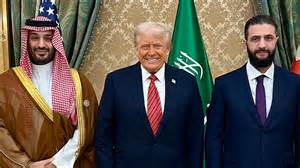
US President Donald Trump’s campaign to prevent Islamic State (IS) terrorists from staging a comeback is in serious danger of being undermined because of his support for Syria’s Islamist “interim” president, Ahmed al-Sharaa. Pictured: Trump hosts al-Sharaa at the White House on November 10, 2025. (Image source: Donald Trump/Truth Social/Wikimedia Commons)
US President Donald Trump’s campaign to prevent Islamic State (IS) terrorists from staging a comeback is in serious danger of being undermined because of his support for Syria’s Islamist “interim” president, Ahmed al-Sharaa. It was not that long ago that al-Sharaa had a $10 million bounty on his head after Washington designated him a terrorist for his close links to al-Qaeda in both Iraq and Syria. The bounty was subsequently lifted after al-Sharaa, with significant military backing from Turkey, succeeded in overthrowing the Baathist dictatorship of Syrian President Bashar al-Assad in late 2024.
Trump’s attempts to improve ties with both Turkey and Saudi Arabia brought about the US lending its endorsement to al-Sharaa’s Islamist regime in Damascus. The result is that al-Sharaa has now set about, at the very least, failing to prevent (here, here and here) wholesale attempts, apparently by his own government’s security forces, to slaughter Syria’s religious and ethnic minorities: Druze, Alawites and Kurds, including America’s presumed allies, the Kurdish Syrian Democratic Forces Army (SDF), who courageously defeated Syria’s Islamic State terrorists.
Syria’s Christians may well be the al-Sharaa government’s next target.
Al-Sharaa’s meeting with Trump at the White House in November 2025 ended with US officials announcing that the new Syrian regime had been invited to join Trump’s international coalition to combat the threat posed by IS terrorists — a remarkable turnaround in al-Sharaa’s fortunes, given his previous close association with Islamist terrorist organizations. The Trump administration has become increasingly concerned at the prospect of IS staging a comeback after suffering a catastrophic defeat at the hands of US coalition forces in 2017, which succeeded in destroying the so-called caliphate that IS had established in the Syrian city of Raqqa.
The prominent role played by the Kurdish-led SDF proved crucial to the eventual outcome of that US-led offensive.
Trump’s decision, therefore, to invite a known Islamist such as al-Sharaa to join the latest US effort to crush IS understandably raised many eyebrows in Washington, with critics questioning whether the new Syrian leader could be trusted to take a firm stand against IS terrorists.
Following his White House meeting with al-Sharaa, Trump appeared impervious to such concerns. He claimed that his main priority was “to see Syria become a country that’s very successful. And I think this leader can do it. I really do.”
Al-Sharaa, for his part, assured Fox News that his visit to the White House represented a “new era” in which the country would cooperate with the US.Trump’s willingness to give his backing to al-Sharaa is said to be the result of his attempts to deepen ties with Middle East states such as Qatar, Turkey and Saudi Arabia which, for different reasons, appear keen to see an Islamist government in power in Damascus — as elsewhere. For Qatar and Turkey, supporting al-Sharaa fits in with their long-established policy of backing radical Islamist groups, such as the Muslim Brotherhood, while the Saudis’ backing for the new Syrian regime is based on their desire to prevent Iran’s ayatollahs from re-establishing a foothold in a country, Syria, that was once Tehran’s closest regional ally.Trump’s backing for al-Sharaa, at a time when he has repeatedly declared his determination to prevent IS terrorists from staging a comeback, now faces the very real prospect of backfiring spectacularly after recent events in Syria, where al-Sharaa’s attacks against Kurdish strongholds in the north of the country have resulted in hundreds of IS terrorists escaping from Kurdish-run prison camps.Al-Sharaa’s forces earlier this month launched a series of assaults, ostensibly with Trump’s backing, against Kurdish-controlled regions of northern Syria as part of his efforts to assert his control over the entire country.The Kurds established their own autonomous zone while fighting alongside US forces during Syria’s long-running civil war, and around 1,500 US troops still remain in the area, partly to protect the Kurds, as well as to help maintain security for the estimated 50,000 IS terrorists and their dependents that were taken prisoner following the fall of Raqqa.Trump has made no secret of his desire to end America’s military involvement in Syria. At the end of his first term in office, he tried to withdraw the remaining US forces, but had to abandon the plan after being accused of betraying the Kurds, who had proved themselves to be such valued allies during the war against IS.Since returning to office last year, Trump has renewed his efforts to end US military involvement in Syria – a move said to be one of the reasons behind his decision to back al-Sharaa’s Islamist regime.
If the US ever does pull its troops from Syria, the vacuum will most assuredly be filled instantly by Turkey and other Jihadists, as well as by Russia again and possibly China.Trump’s support for Al-Sharaa has, in addition, raised concerns about the fate of the IS prisoners still being held in Kurdish-controlled territory, after reports that significant numbers managed to escape during recent fighting between government forces and the Kurdish-led SDF. There have even been reports of IS raising its flag again in Raqqa after al-Sharaa’s forces seized control of the city from the Kurds.Certainly, any development that results in IS terrorists re-establishing a foothold in Syria could prove more than embarrassing for the Trump administration after the president personally pledged his commitment to maintain the US military effort to prevent the terrorist group from regrouping. The White House recently authorised strikes against IS bases in both Syria and Nigeria after three US military personnel were killed in an IS ambush in December, prompting Trump to promise that his administration would undertake “very serious retaliation” against those responsible for the killings. The US president could find himself facing an extremely difficult predicament, especially during midterm elections, if, as a result of his support for Syria’s Islamist leader, more Americans and others are killed or suffer serious injury at the hands of al-Sharaa’s government, IS terrorists who have escaped from Syrian prisons, as well as al-Sharaa’s apparent commitment to ethnically cleanse, then Islamise, Syria.
*Con Coughlin is the Telegraph’s Defence and Foreign Affairs Editor and a Distinguished Senior Fellow at Gatestone Institute.
https://www.gatestoneinstitute.org/22240/trump-sharaa-syria-islamic-state
© 2026 Gatestone Institute. All rights reserved. The articles printed here do not necessarily reflect the views of the Editors or of Gatestone Institute.
هل يتعرض ترامب للخداع؟: عملياً إرهابيو تنظيم الدولة الإسلامية وبفضل دعمه لنظام الشرع يهددون بالعودة إلى سوريا لدعم نظامها الإصولي
كون كوفلين/موقع غايتستون/01 شباط/ 2026
(ترجمة من الإنكليزية بحرية بالإستعانة بمواقع ترجمة ألكترونية)
أدت محاولات ترامب لتحسين العلاقات مع كل من تركيا والمملكة العربية السعودية إلى تقديم الولايات المتحدة تأييدها لنظام “أحمد الشرع” الإسلامي في دمشق. والنتيجة هي أن الشرع قد بدأ الآن، على أقل تقدير، في الفشل في منع محاولات إبادة جماعية واسعة النطاق (كما ورد هنا وهنا وهنا)، يبدو أنها نابعة من قوات الأمن التابعة لحكومته، لقتل الأقليات الدينية والعرقية في سوريا: الدروز، والعلويين، والأكراد، بما في ذلك حلفاء أمريكا المفترضون، “جيش قوات سوريا الديمقراطية” (قسد)، الذين هزموا إرهابيي تنظيم الدولة الإسلامية في سوريا بشجاعة.
وقد يكون مسيحيون سوريا هم الهدف التالي لحكومة الشرع. ويُقال إن رغبة ترامب في تقديم الدعم للشرع هي نتيجة لمحاولاته تعميق العلاقات مع دول الشرق الأوسط مثل قطر وتركيا والمملكة العربية السعودية، والتي تبدو حريصة —لأسباب مختلفة— على رؤية حكومة إسلامية في السلطة في دمشق، كما هو الحال في أماكن أخرى. بالنسبة لقطر وتركيا، فإن دعم الشرع يتماشى مع سياستهما الراسخة في دعم الجماعات الإسلامية الراديكالية، مثل جماعة الإخوان المسلمين، بينما يعتمد دعم السعوديين للنظام السوري الجديد على رغبتهم في منع آيات الله في إيران من إعادة ترسيخ موطئ قدم لهم في بلد، سوريا، كان يمثل يوماً ما أقرب حليف إقليمي لطهران.
وإذا قامت الولايات المتحدة بسحب قواتها من سوريا، فإن الفراغ سيمتلئ بالتأكيد وعلى الفور من قبل تركيا وجهاديين آخرين، بالإضافة إلى روسيا مرة أخرى وربما الصين. قد يجد الرئيس الأمريكي نفسه يواجه مأزقاً صعباً للغاية، خاصة خلال انتخابات التجديد النصفي، إذا قُتل أو أُصيب المزيد من الأمريكيين وغيرهم نتيجة دعمه للزعيم الإسلامي في سوريا، أو على يد إرهابيي تنظيم الدولة الذين فروا من السجون السورية، فضلاً عن التزام الشرع الواضح بالتطهير العرقي ومن ثم “أسلمة” سوريا.
إن حملة الرئيس الأمريكي دونالد ترامب لمنع إرهابيي تنظيم الدولة الإسلامية (داعش) من العودة، معرضة لخطر شديد للتقويض بسبب دعمه للرئيس السوري الإسلامي “المؤقت” أحمد الشرع. (في الصورة: ترامب يستضيف الشرع في البيت الأبيض في 10 نوفمبر 2025). لم يكن ذلك منذ زمن بعيد عندما كان هناك مكافأة قدرها 10 ملايين دولار على رأس الشرع بعد أن صنفته واشنطن إرهابياً لارتباطه الوثيق بتنظيم القاعدة في كل من العراق وسوريا. وقد تم رفع المكافأة لاحقاً بعد أن نجح الشرع، بدعم عسكري كبير من تركيا، في الإطاحة بالديكتاتورية البعثية للرئيس السوري بشار الأسد في أواخر عام 2024.
أدت محاولات ترامب لتحسين العلاقات مع كل من تركيا والمملكة العربية السعودية إلى تقديم الولايات المتحدة تأييدها لنظام الشرع الإسلامي في دمشق. والنتيجة هي أن الشرع بدأ الآن، على أقل تقدير، في الفشل في منع محاولات إبادة جماعية، يبدو أنها من تدبير قوات أمن حكومته، لقتل الأقليات الدينية والعرقية في سوريا: الدروز، والعلويين، والأكراد، بما في ذلك حلفاء أمريكا المفترضون، “جيش قوات سوريا الديمقراطية” (قسد)، الذين هزموا إرهابيي تنظيم الدولة الإسلامية في سوريا بشجاعة. وقد يكون مسيحيون سوريا هم الهدف التالي لحكومة الشرع.
انتهى اجتماع الشرع مع ترامب في البيت الأبيض في نوفمبر 2025 بإعلان المسؤولين الأمريكيين أن النظام السوري الجديد قد دُعي للانضمام إلى تحالف ترامب الدولي لمكافحة التهديد الذي يشكله إرهابيو تنظيم الدولة الإسلامية — وهو تحول لافت في حظوظ الشرع، نظراً لارتباطه الوثيق السابق بالمنظمات الإرهابية الإسلامية. وقد أصبحت إدارة ترامب قلقة بشكل متزايد من احتمال عودة تنظيم الدولة بعد تعرضه لهزيمة كارثية على يد قوات التحالف الأمريكي في عام 2017، والتي نجحت في تدمير ما يسمى بـ “الخلافة” التي أقامها التنظيم في مدينة الرقة السورية.
وقد ثبت أن الدور البارز الذي لعبته “قوات سوريا الديمقراطية” بقيادة الأكراد كان حاسماً في النتيجة النهائية لذلك الهجوم الذي قادته الولايات المتحدة. لذلك، فإن قرار ترامب بدعوة إسلامي معروف مثل الشرع للانضمام إلى أحدث الجهود الأمريكية لسحق تنظيم الدولة قد أثار دهشة الكثيرين في واشنطن، حيث تساءل النقاد عما إذا كان يمكن الوثوق بالزعيم السوري الجديد لاتخاذ موقف حازم ضد إرهابيي التنظيم.
وعقب اجتماعه في البيت الأبيض مع الشرع، بدا ترامب غير مبالٍ بهذه المخاوف، حيث زعم أن أولويته الرئيسية هي “رؤية سوريا تصبح دولة ناجحة للغاية. وأعتقد أن هذا القائد يمكنه فعل ذلك. أنا أعتقد ذلك حقاً”. من جانبه، أكد الشرع لقناة “فوكس نيوز” أن زيارته للبيت الأبيض تمثل “عهداً جديداً” ستتعاون فيه البلاد مع الولايات المتحدة.
ويُقال إن رغبة ترامب في تقديم الدعم للشرع هي نتيجة لمحاولاته تعميق العلاقات مع دول الشرق الأوسط مثل قطر وتركيا والسعودية، والتي تبدو حريصة على رؤية حكومة إسلامية في السلطة في دمشق. فبالنسبة لقطر وتركيا، يتماشى دعم الشرع مع سياساتهما القديمة في دعم الجماعات الإسلامية الراديكالية مثل الإخوان المسلمين، بينما يعتمد دعم السعوديين للنظام السوري الجديد على رغبتهم في منع آيات الله في إيران من استعادة نفوذهم في سوريا.
إن دعم ترامب للشرع يواجه الآن احتمالاً حقيقياً للفشل الذريع بعد الأحداث الأخيرة في سوريا، حيث أدت هجمات الشرع ضد المعاقل الكردية في شمال البلاد إلى هروب مئات الإرهابيين من تنظيم الدولة من معسكرات السجون التي يديرها الأكراد. شنت قوات الشرع في وقت سابق من هذا الشهر سلسلة من الاعتداءات، ظاهرياً بدعم من ترامب، ضد المناطق التي يسيطر عليها الأكراد في شمال سوريا كجزء من جهوده لفرض سيطرته على البلاد بأكملها.
لقد أنشأ الأكراد منطقتهم ذاتية الحكم أثناء قتالهم إلى جانب القوات الأمريكية خلال الحرب الأهلية الطويلة في سوريا، ولا يزال هناك حوالي 1500 جندي أمريكي في المنطقة، جزئياً لحماية الأكراد، وكذلك للمساعدة في الحفاظ على أمن ما يقدر بنحو 50 ألفاً من إرهابيي تنظيم الدولة وعائلاتهم الذين أُسروا بعد سقوط الرقة. ولم يخفِ ترامب رغبته في إنهاء التدخل العسكري الأمريكي في سوريا؛ ففي نهاية ولايته الأولى، حاول سحب القوات المتبقية لكنه اضطر للتخلي عن الخطة بعد اتهامه بخيانة الأكراد. ومنذ عودته إلى منصبه العام الماضي، جدد ترامب جهوده لإنهاء التدخل العسكري، وهي خطوة يُقال إنها أحد الأسباب وراء قراره بدعم نظام الشرع الإسلامي.
وإذا انسحبت القوات الأمريكية، فإن الفراغ سيمتلئ على الفور بتركيا وجهاديين آخرين، وروسيا، وربما الصين. كما أثار دعم ترامب للشرع مخاوف بشأن مصير أسرى تنظيم الدولة في المناطق الكردية بعد تقارير عن فرار أعداد كبيرة خلال القتال الأخير. بل وردت تقارير عن رفع تنظيم الدولة لعلمه مجدداً في الرقة بعد سيطرة قوات الشرع عليها.
إن أي تطور يؤدي إلى إعادة ترسيخ موطئ قدم لتنظيم الدولة في سوريا قد يكون أكثر من محرج لإدارة ترامب. وقد سمح البيت الأبيض مؤخراً بشن ضربات ضد قواعد التنظيم في سوريا ونيجيريا بعد مقتل ثلاثة عسكريين أمريكيين في كمين نصبه التنظيم في ديسمبر، مما دفع ترامب للتعهد بأن إدارته ستقوم “برد انتقامي خطير للغاية”. وقد يجد الرئيس الأمريكي نفسه في مأزق عصيب، خاصة خلال الانتخابات النصفية، إذا أدى دعمه للشرع إلى مقتل المزيد من الأمريكيين أو التسبب في عمليات تطهير عرقي وأسلمة قسرية في سوريا.