حروب حتمية أم دبلوماسية لإنهاء الصراع
د. شارل شرتوني/إيسي بيروت/ 02 تشرين الثاني/ 2026
(ترجمة من الفر نسية بواسطة الذكاء الإصطناعي)
Inevitable Wars or End-of-Conflict Diplomacy
Dr. Charles Chartouni /Ici Beyrouth /November 02, 2026
(Translated from French by AI)
Guerres inévitables ou diplomatie de fin de conflit
Dr. Charles Chartouni/ICI Beytouth/November 02/2026
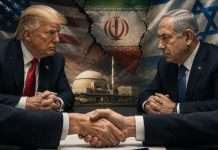
Quel que soit l’épilogue des élections en Amérique et en Israël, les enjeux géostratégiques demeurent et les protagonistes sont sommés d’y répondre. Les alternatives diplomatique ou de guerre sont à prendre ou à laisser et le rétrécissement du champ de manœuvre s’impose de manière contraignante. L’intermède électoral vient à sa fin alors que les questions de sécurité stratégique sont plus que jamais en attente de réponse et les esquives se voient reléguées. Les Israéliens doivent mettre en forme une coalition suffisamment cohérente afin de sanctuariser leurs acquis politico-stratégiques, contenir ou défaire la menace iranienne et sceller la nouvelle configuration géostratégique qu’ils ont imposée au sein d’un ordre régional en éclats.
Les États-Unis opèrent sur la base d’un continuum géostratégique où la politique étrangère et les modulations de la scène politique interne se font écho. Les résultats électoraux ne seraient pas de nature à questionner les grands enjeux stratégiques et leurs incidences sur l’échiquier politique domestique. Le conflit multidimensionnel avec l’Iran est incontournable tant pour Israël que pour les États-Unis qui doivent conjointement donner réponse aux défis qu’il pose. Le pari iranien sur des retournements spectaculaires dans les positions des deux némésis relève du fantasme plutôt que d’une évaluation objective de la donne géostratégique.
Les divergences politiques en Israël sont loin de déteindre sur les questions de sécurité nationale et des menaces existentielles qui leur sont rattachées. Alors qu’aux États-Unis la vie politique intérieure se voit rattachée de manière subreptice à la nouvelle cartographie des conflits mondiaux et à leurs répercussions sur la géopolitique d’une Amérique mutante. La relation éminemment sécuritaire et stratégique entre les États-Unis et Israël est plus que jamais nécessaire en vue de réussir la restructuration géopolitique d’un Moyen-Orient désorienté et en quête de nouveaux équilibres.
Il ne s’agit plus de reclasser des priorités plutôt que de définir les coordonnées d’une architecture sécuritaire où les interdépendances et les mutations définissent les dynamiques en cours. La coalition islamo-gauchiste qui prévaut au sein d’un parti démocratique éclaté peut difficilement remettre en question les grandes orientations stratégiques qu’ils entendent instrumentaliser dans leur plan de conquête du pouvoir.
La réunion qui a regroupé à Téhéran les partenaires du pacte de la Mecque et les apartés entre l’Iran et la Russie sont des stratagèmes de contournement que l’Iran manipule de manière continue en vue de déjouer son isolement et de protéger sa latitude manœuvrière dans un champ stratégique verrouillé. Le président iranien M. Pezeshkian y voit une porte de sortie salutaire afin d’asseoir un régime sécuritaire régional soustrait à l’arbitrage américain, avant de se faire rattraper par les règles de jeu de la nouvelle guerre froide. Somme toute, l’affrontement se maintient et les paramètres et les protagonistes sont reconduits. La tente mecquoise est lardée de contradictions et pourrait servir dans le meilleur des cas d’entremetteur erratique ou d’amortisseur de chocs.
Les différends stratégiques et idéologiques de l’alliance sunnite sont solidement ancrés dans les structures étatiques des protagonistes et entravent la création de consensus stratégiques durables. L’aparté russo-iranien, lui, n’est qu’un expédient occasionnel tenté par deux dictatures meurtrières aux abois. Le régime iranien est un monstre aux hybridations multiples qu’il faudrait démanteler de manière progressive.
Il faudrait mettre fin le cas échéant aux élucubrations d’une diplomatie manœuvrière dont le but est de gagner du temps, de différer des échéances et de restituer le statu quo ante tant sur le plan régional que domestique. La manœuvre diplomatique iranienne vise à restaurer sa latitude après la destruction de la stratégie des plateformes opérationnelles intégrées au niveau régional, le retour en force de ses mandataires régionaux, le contrôle des détroits du Bab al-Mandeb et d’Hormuz, la militarisation du nucléaire et la poursuite de la politique de répression au sein de l’Iran.
La diplomatie iranienne s’inscrit dans une démarche de diversion alors que les visées impériales sous-jacentes poursuivent leur cours et structurent l’ensemble du processus politique. Il serait vain d’imaginer un autre scénario où la diplomatie sert de relais à une volonté de normalisation et de démocratisation. Le pouvoir iranien mise sur les méandres de l’alternance démocratique et sur la poursuite de la politique de sabotage sur l’ensemble du canevas stratégique moyen-oriental, et tout le reste n’est que théâtre d’ombres. La navigation s’effectue dans des eaux troubles où la nature des enjeux géopolitiques reste incertaine et difficile à scruter. La prudence s’impose.
Inevitable Wars or End-of-Conflict Diplomacy
Dr. Charles Chartouni /Ici Beyrouth /November 02, 2026
(Translated from French by AI)
Whatever the outcome of the elections in America and Israel, the geostrategic stakes remain, and the protagonists are summoned to respond to them. The alternatives of diplomacy or war are take-it-or-leave-it options, and the narrowing of the room for maneuver is imposing itself in a constraining manner. The electoral interlude is coming to an end while strategic security questions are more than ever awaiting answers, and evasions are being relegated. The Israelis must form a sufficiently coherent coalition in order to secure their politico-strategic gains, contain or defeat the Iranian threat, and seal the new geostrategic configuration they have imposed within a shattered regional order.
The United States operates on the basis of a geostrategic continuum in which foreign policy and the modulations of the domestic political scene echo one another. Electoral results would not be of a nature to call into question the major strategic stakes and their repercussions on the domestic political chessboard. The multidimensional conflict with Iran is inescapable for both Israel and the United States, which must jointly respond to the challenges it poses. The Iranian wager on spectacular reversals in the positions of its two nemeses belongs to the realm of fantasy rather than to an objective assessment of the geostrategic situation.
Political divergences in Israel are far from spilling over onto questions of national security and the existential threats attached to them. Whereas in the United States, domestic political life is surreptitiously tied to the new mapping of global conflicts and to their repercussions on the geopolitics of a mutating America. The eminently security-related and strategic relationship between the United States and Israel is more necessary than ever in order to succeed in the geopolitical restructuring of a disoriented Middle East in search of new balances.
It is no longer a matter of reordering priorities, but rather of defining the coordinates of a security architecture in which interdependencies and mutations define the dynamics underway. The Islamo-leftist coalition that prevails within a fractured Democratic Party can hardly call into question the major strategic orientations that they intend to instrumentalize in their plan to conquer power.
The meeting that brought together in Tehran the partners of the Mecca Pact and the private discussions between Iran and Russia are circumvention stratagems that Iran continuously manipulates in order to thwart its isolation and protect its room for maneuver in a locked strategic field. Iranian President Mr. Pezeshkian sees in this a salutary way out in order to establish a regional security regime removed from American arbitration, before being caught up by the rules of the game of the new Cold War. All in all, the confrontation continues, and the parameters and protagonists are being carried forward. The Meccan tent is riddled with contradictions and could serve, at best, as an erratic intermediary or a shock absorber.
The strategic and ideological differences of the Sunni alliance are solidly anchored in the state structures of the protagonists and hinder the creation of lasting strategic consensus. The Russo-Iranian private discussion, for its part, is merely an occasional expedient attempted by two murderous dictatorships that are at bay. The Iranian regime is a monster of multiple hybridizations that must be dismantled progressively.
It is necessary, as the case may be, to put an end to the wild imaginings of a maneuvering diplomacy whose aim is to gain time, to defer deadlines, and to restore the status quo ante both regionally and domestically. The Iranian diplomatic maneuver aims to restore its latitude after the destruction of the strategy of integrated operational platforms at the regional level, the return in force of its regional proxies, control of the Bab al-Mandeb and Hormuz straits, the militarization of the nuclear program, and the continuation of the policy of repression inside Iran.
Iranian diplomacy is inscribed in a diversionary approach while the underlying imperial aims pursue their course and structure the entire political process. It would be vain to imagine another scenario in which diplomacy serves as a relay for a will toward normalization and democratization. The Iranian power is betting on the meanders of democratic alternation and on the pursuit of the policy of sabotage across the entire Middle Eastern strategic canvas, and everything else is merely a shadow play. Navigation is taking place in troubled waters where the nature of the geopolitical stakes remains uncertain and difficult to scrutinize. Prudence is required.
حروب حتمية أم دبلوماسية لإنهاء الصراع
د. شارل شرتوني/إيسي بيروت/ 02 تشرين الثاني/ 2026
(ترجمة من الفر نسية بواسطة الذكاء الإصطناعي)
أياً كان خاتمة الانتخابات في أمريكا وإسرائيل، فإن الرهانات الجيوستراتيجية تبقى قائمة، ويُطالب الأطراف المعنيون بالرد عليها. فالبدائل الدبلوماسية أو الحربية هي خيارات «خذها أو اتركها»، ويتقلص هامش المناورة بشكل مُلزم. ينتهي الفاصل الانتخابي في وقت لا تزال فيه قضايا الأمن الاستراتيجي بانتظار الإجابات أكثر من أي وقت مضى، وتُقصى المناورات التهربية. على الإسرائيليين أن يشكلوا ائتلافاً متماسكاً بما يكفي لتأمين مكاسبهم السياسية-الاستراتيجية، واحتواء التهديد الإيراني أو هزيمته، وختم التكوين الجيوستراتيجي الجديد الذي فرضوه داخل نظام إقليمي مُفتت.
تعمل الولايات المتحدة على أساس استمرارية جيوستراتيجية تتناغم فيها السياسة الخارجية مع تقلبات المشهد السياسي الداخلي. ولن تكون نتائج الانتخابات من النوع الذي يشكك في الرهانات الاستراتيجية الكبرى وتأثيراتها على رقعة الشطرنج السياسية الداخلية. فالصراع متعدد الأبعاد مع إيران لا مفر منه بالنسبة لإسرائيل والولايات المتحدة على حد سواء، اللتين يتعين عليهما معاً الرد على التحديات التي يطرحها. أما الرهان الإيراني على انقلابات مذهلة في مواقف الخصمين اللدودين، فهو أقرب إلى الخيال منه إلى تقييم موضوعي للواقع الجيوستراتيجي.
الخلافات السياسية في إسرائيل بعيدة كل البعد عن التأثير على قضايا الأمن القومي والتهديدات الوجودية المرتبطة بها. في حين أن الحياة السياسية الداخلية في الولايات المتحدة ترتبط بشكل خفي بالخريطة الجديدة للصراعات العالمية وانعكاساتها على جيوسياسية أمريكا المتغيرة. والعلاقة الأمنية والاستراتيجية البارزة بين الولايات المتحدة وإسرائيل أصبحت ضرورية أكثر من أي وقت مضى من أجل إنجاح إعادة الهيكلة الجيوسياسية لشرق أوسط تائه يبحث عن توازنات جديدة.
لم يعد الأمر يتعلق بإعادة ترتيب الأولويات، بل بتعريف إحداثيات معمارية أمنية تحدد فيها التبعيات المتبادلة والتحولات الديناميات الجارية. والائتلاف الإسلامي-اليساري المهيمن داخل حزب ديمقراطي مُفتت يصعب عليه أن يشكك في التوجهات الاستراتيجية الكبرى التي ينوي توظيفها في خطة الاستيلاء على السلطة.
إن الاجتماع الذي جمع في طهران شركاء «ميثاق مكة» والمباحثات الجانبية بين إيران وروسيا هي حيل التفاف تُستخدمها إيران باستمرار لفك عزلتها وحماية هامش مناورتها في ميدان استراتيجي مُغلق. ويرى الرئيس الإيراني مسعود بزشكيان في ذلك مخرجاً مُنقذاً لترسيخ نظام أمني إقليمي خارج التحكيم الأمريكي، قبل أن تدركه قواعد اللعبة في الحرب الباردة الجديدة. وفي المحصلة، يستمر المواجهة، وتُعاد المعايير والأطراف المعنية. فخيمة مكة مليئة بالتناقضات وقد تخدم في أحسن الأحوال كوسيط متقلب أو كمخفف للصدمات.
إن الخلافات الاستراتيجية والأيديولوجية في التحالف السني متجذرة بقوة في البنى الدولاتية للأطراف المعنية، وتعيق خلق إجماعات استراتيجية دائمة. أما المباحثة الروسية-الإيرانية الجانبية، فهي ليست سوى تدبير ظرفي يحاوله ديكتاتوريتان قتاليتان في حالة يأس. والنظام الإيراني وحش متعدد الهجن يجب تفكيكه تدريجياً.
ويجب، عند الاقتضاء، وضع حد لأوهام دبلوماسية مناوراتية هدفها كسب الوقت، وتأجيل المواعيد، وإعادة الوضع الراهن السابق على الصعيدين الإقليمي والمحلي. فالمناورة الدبلوماسية الإيرانية تهدف إلى استعادة هامش حركتها بعد تدمير استراتيجية المنصات العملياتية المتكاملة على المستوى الإقليمي، وعودة وكلائها الإقليميين بقوة، والسيطرة على مضيقَي باب المندب وهرمز، وعسكرة البرنامج النووي، ومواصلة سياسة القمع داخل إيران.
تندرج الدبلوماسية الإيرانية ضمن نهج تحويلي، بينما تواصل الأهداف الإمبراطورية الكامنة مسارها وتُهيكل العملية السياسية برمتها. ومن العبث تصور سيناريو آخر تكون فيه الدبلوماسية ناقلاً لإرادة التطبيع والدمقرطة. فالسلطة الإيرانية تراهن على تعرجات التناوب الديمقراطي وعلى مواصلة سياسة التخريب على كامل اللوحة الاستراتيجية الشرق أوسطية، وكل ما عدا ذلك ليس سوى مسرح ظلال. والملاحة تجري في مياه عكرة تبقى فيها طبيعة الرهانات الجيوسياسية غير مؤكدة وصعبة الاستقصاء. والحذر واجب.