Katherine Bauer and Patrick Clawson/The Washington Insitute: How Much Would Iran Gain Financially from Returning to the JCPOA?/كاثرين باور وباتريك كلاوسون/معهد واشنطن : كم ستكسب إيران مالياً من العودة إلى الإتفاق النووي؟
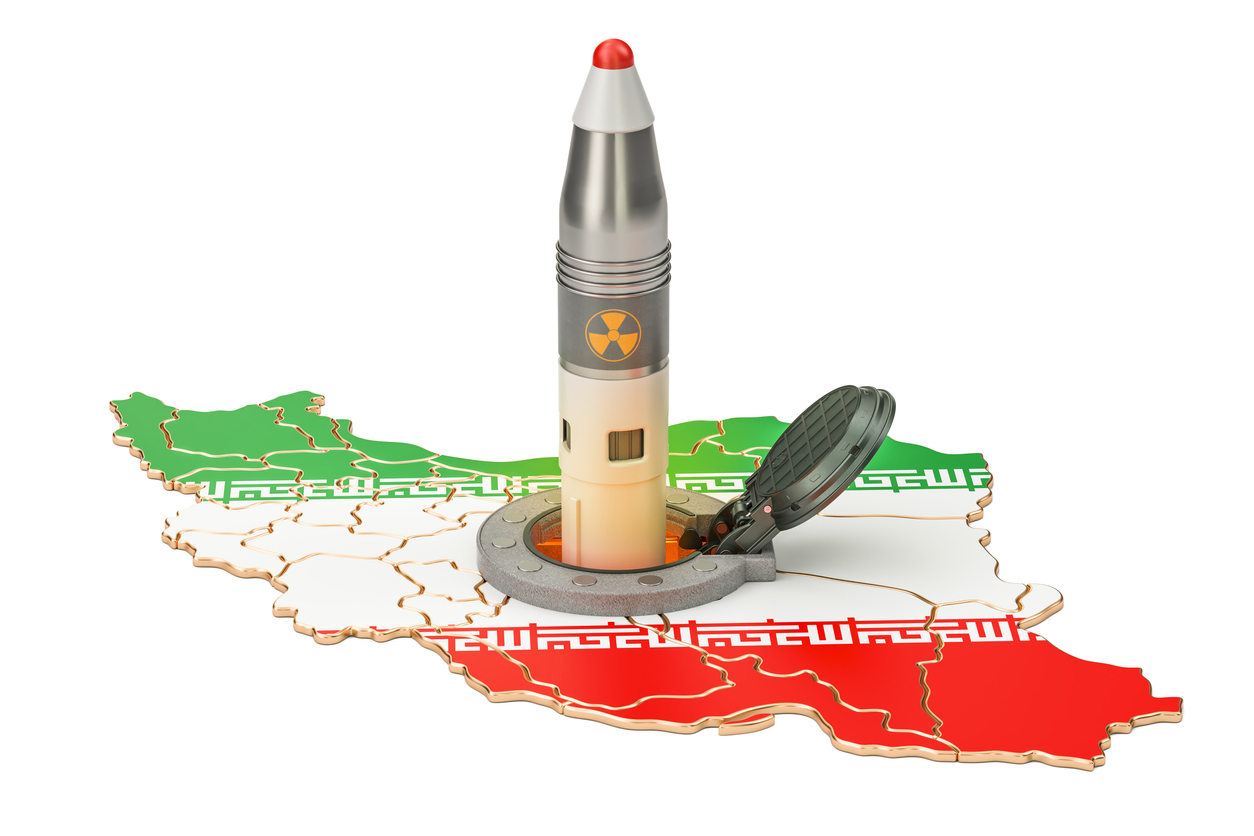
Iranian missile launches from its underground silo launch facility, 3D rendering
كاثرين باور وباتريك كلاوسون/معهد واشنطن : كم ستكسب إيران مالياً من العودة إلى الإتفاق النووي؟ How Much Would Iran Gain Financially from Returning to the JCPOA? Katherine Bauer and Patrick Clawson/The Washington Insitute/March 17/2022
A closer look at what funds would actually be accessible and what impact they would have on Iran’s economy.
With negotiations to reactivate the 2015 Joint Comprehensive Plan of Action (JCPOA) wavering between collapse and fruition in recent days, it is worth assessing what the outcome could mean for Iran financially. For the purposes of this analysis, the assumption is that a renewed deal will allow for full resumption of sanctions relief similar to what was implemented in early 2016, with Trump-era counterterrorism sanctions on key economic actors either lifted, suspended, or waived under licenses. Under these circumstances, Iran would gain some ability to tap “frozen” assets, access the international financial system, sell oil, and use the resultant revenue. The key question is how much?
“Frozen” Assets
Regarding the large sums of Iranian reserves that are currently inaccessible for various reasons, the regime would not necessarily be able to use them in their entirety. The amounts involved are staggering. In its latest regional economic outlook, the IMF noted that Iran’s usable reserves are $12.2 billion compared to reported reserves of $115.4 billion. A footnote explained that the IMF defines reserves as assets that are “readily available and controlled by monetary authorities” for balance of payment purposes.
A revived nuclear deal would unlock only some of those funds. First, some of Iran’s foreign exchange reserves are apparently illiquid on their own terms, not “frozen” by sanctions. Before the JCPOA, when these foreign reserves were estimated to be over $100 billion, Iranian Central Bank officials stated that a nuclear deal would make only $29 billion accessible. According to them, most of the remainder was either (1) money held in Chinese banks as project finance collateral for Chinese trade and investment activities in Iran ($22 billion), (2) illiquid Central Bank investment in the National Iranian Oil Company’s Swiss subsidiary Naftiran Intertrade Company ($25 billion), or (3) Central Bank assets held in Iranian banks ($10 billion). When the Trump administration left the JCPOA and reapplied various U.S. sanctions in 2018, Iranian media reported that roughly $40 billion in assets were blocked, close to the sum total of funds reportedly held up in China ($20 billion), South Korea ($7 billion), India ($7 billion), Iraq ($6 billion), Japan ($3 billion), and Europe ($3-5 billion). Current balances may even be lower—for example, Iran reportedly drew down funds in India against imports of rice, sugar, and tea, invoking a sanctions exemption for trade in agricultural commodities.
Second is the issue of convertibility. Most of the assets blocked due to sanctions are likely denominated in local currencies. When the United States permitted certain countries to buy Iranian oil, it required them to deposit Tehran’s revenue from the sales into escrow accounts in local currency that could only be used to finance bilateral trade. In subsequent years, the oil that Iran exported was worth more than its imports from these countries, so significant balances accrued in the escrow accounts. Yet during the period of JCPOA-related sanctions relief, when countries were free to release those balances, Iran struggled to move the funds. Most international markets for converting funds use U.S. dollars at least as an intermediary step, which U.S. regulations prohibited in this case. Avoiding the dollar required difficult workarounds, typically by making only small transactions.
Access to the International Financial System
To fully access unfrozen assets or oil revenue, Iran would need to reestablish the banking ties and other financial plumbing that enable countries to readily move such funds. Yet Tehran struggled to do so after the JCPOA was first implemented, despite U.S. efforts to provide clarity on sanctions and facilitate the reestablishment of banking relationships. Many banks were wary of the remaining non-nuclear sanctions, and the environment may be similar under a renewed deal—even if Washington lifts the Trump administration’s non-nuclear sanctions (e.g., designation of the Islamic Revolutionary Guard Corps as a Foreign Terrorist Organization), banks may be unwilling to navigate ongoing sanctions related to terrorism, human rights, and missile issues. Similarly, the IRGC could remain designated under other sanctions authorities even if the FTO label is removed.
Financial institutions and other commercial partners have also been wary of many Iranian risks beyond sanctions, such as the government’s lack of transparency, its failure to bring the financial sector in line with international regulatory standards, and its longstanding reliance on deceptive practices to conduct licit and illicit financial activity. Such problems have spurred numerous stern warnings from the Financial Action Task Force over the years. Iran has also been lax with regard to the U.S. Foreign Account Tax Compliance Act and similar laws from other countries, which make foreign banks liable if Iran’s hundreds of thousands of dual nationals do not pay their foreign tax bills. Moreover, international banks face increasing restrictions on dealings with financial institutions that are as undercapitalized and opaque as nearly all Iranian banks—an approach that aligns with the wider de-risking trend embraced by many Western firms in recent years.
Any company deciding whether to incur the substantial costs of figuring out how to do business with Iran will also have to weigh the possibility of a Republican president returning to the White House in 2025, which could result in the reimposition of far-reaching financial sanctions. And in the unlikely event that Iran is granted access to the U.S. financial system, one must keep in mind that victims have won billions of dollars in judgments against Tehran for its material support of terrorism, so their lawyers would no doubt go after any money that moves through U.S. banks.
Selling Oil and Using the Revenue
Iran has already experienced considerable growth in its oil exports over the past year. The U.S. Energy Information Administration estimated its 2020 exports (including condensates) at 0.4 million barrels per day, while a February 22 Reuters report cited estimates of 1.0-1.2 million b/d for December 2021. Most of these exports are reportedly going to China.
At least as important for Iran, its traders appear to have figured out more ways to access the revenue from these sales, including oil-for-goods transactions facilitated by the Central Bank’s single-window system—essentially a bartering arrangement. Thanks to tight conditions in world oil markets, access to this revenue seems likely to improve further this year no matter what happens with the JCPOA. Traders eager to acquire oil are more likely to pay a good price and work around Iran’s problems with accessing funds.
In the event the JCPOA talks succeed, Iran would be well positioned to nearly double its oil export volume, and quickly. As of February, Kpler estimated that it had 87 million barrels stored at sea, while FGE gauged its land storage at 85 million barrels, including 25 million in China (though other estimates were lower). These stocks would enable Iran to increase exports within weeks of a deal. And in the ensuing months, it would likely be able to expand even faster than in 2016, when output rose by 300,000 b/d within about three months and a further 700,000 b/d within a year or less. S&P Global predicts that exports would rise by 1.5 million b/d within nine months of a deal, though that is at the high end of estimates. Given this combination of higher volumes and much higher effective prices (due to lower discounts and higher world market prices), Iran would be set to triple its daily oil income compared to 2021 levels, which were already well above 2020 levels.
Conclusion
Despite Tehran’s disappointment about the limited economic gains it reaped directly from the JCPOA, it stuck to the deal until after the 2018 U.S. withdrawal (though it has since violated many JCPOA provisions). This precedent suggests that even limited economic benefits may be sufficient to keep a renewed deal together—or, alternatively, that Iran perceives benefits beyond the economic impact.
No matter what happens with the JCPOA, Iran’s economy is poised for solid, if not spectacular, growth in the coming months. Before the recent changes in world oil conditions, the IMF forecasted its GDP growth for 2022 at 2%. Combined with an average of 3% growth over the previous two years, this would put Tehran at 95% of where it was before the Trump administration’s “maximum pressure” induced a recession in 2018-19, shrinking the Iranian economy 12.4%. This year’s growth estimate would presumably increase with higher oil income—though any sustained growth beyond 3% would likely be constrained without access to global markets. Either way, President Ebrahim Raisi looks well poised to preside over faster real GDP growth during his current term (2021-24) than the annual average of 1.2% seen under his predecessor. Former president Hassan Rouhani’s tenure (2013-21) started and ended with sharp sanctions-induced recessions, largely offsetting the 13.8% growth spurt that occurred in the Iranian year 2016/17 after the JCPOA came into effect.
In light of this data, it seems unlikely that Iran’s hardliners will attribute the coming growth to a renewed nuclear deal—and it may be difficult to persuade Iranian citizens that the hardliners are wrong. Moreover, the difficulties the public has experienced with making purchases from abroad and paying higher prices for limited foreign goods are unlikely to change much as long as the country’s access to the international financial system remains restricted. Rouhani gained domestic political traction in 2015 by arguing that Iran’s central problem was the hardliners’ nuclear stance, which brought sanctions that left the country poor. Iranians who want better relations with the West can still be heard today, but they will now find it more difficult to present the JCPOA as evidence that cooperation reaps more economic benefits than confrontation.
*Katherine Bauer is the Blumenstein-Katz Family Fellow at The Washington Institute and a former Treasury Department official. *Patrick Clawson is the Institute’s Morningstar Senior Fellow and director of research.