سوريا: ساحة المعركة الجديدة لتركيا ضد إسرائيل
كون كوغْلين/معهد غاتستون/28 آب/أغسطس 2026
(ترجمة الذكاء الإصطناعي من الإنكليزية)
Syria: Turkey’s New Battleground Against Israel
Con Coughlin/Gatestone Institute/August 28, 2026
Turkey’s continued financial support for Hamas and its provision of safe haven to Hamas terrorists only adds to Israel’s view of Turkey as a hostile actor, an attitude that is not helped by Erdogan’s constant use of anti-Israel rhetoric in political campaigning and official communications. In June, for example, Turkey’s interior minister called for the “liberation of Jerusalem.”Israel’s intelligence establishment, though, presented the US with evidence that Erdogan has other ambitions, which include expanding and solidifying Turkey’s military presence at Syrian bases previously used by the Assad regime’s Iranian and Russian allies. In addition, Erdogan has stated that “Jerusalem is ours,” and as recently as March 30, 2025, “May the Lord make Zionist Israel destroyed and devastated.”Erdogan published a 758-page document that outlines his long-term phased plan to take over “Israel, the Middle East and the Free world.”
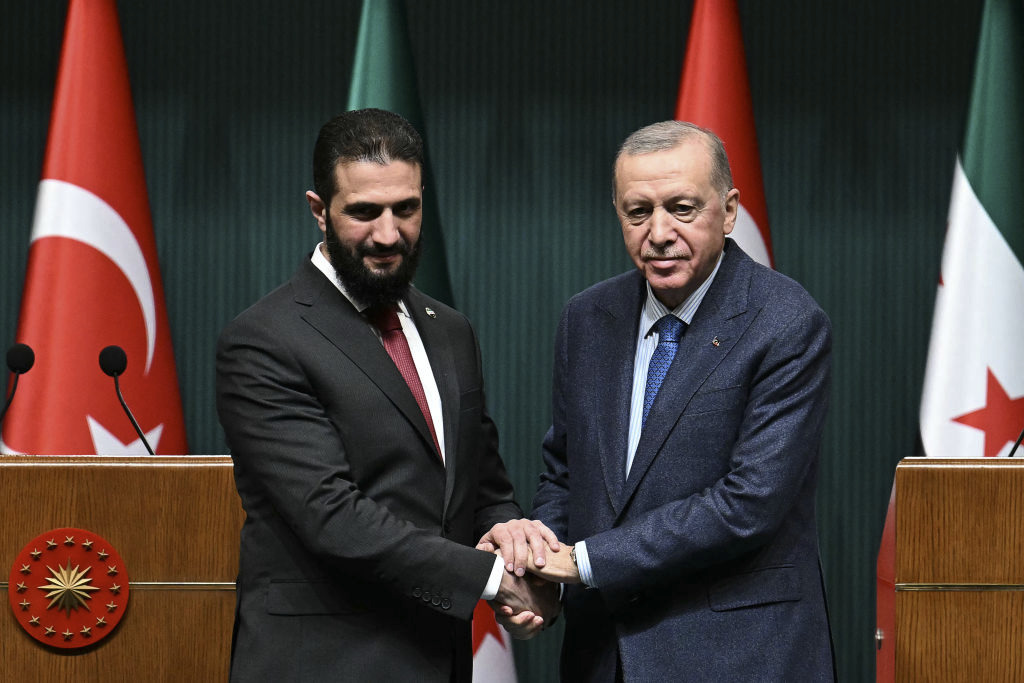
Amichai Chikli, Israel’s Minister of Diaspora Affairs, said, “Ahmed al-Sharaa’s military is Erdoğan’s military. Al-Sharaa’s ideology is Erdoğan’s ideology. Erdoğan and al-Sharaa’s ideology is Al Qaeda and ISIS ideology,” and cited what he described as their barbaric treatment of non-Muslim minorities in the region. [I]t is vital that Erdogan not be allowed to pursue his expansionist aims in Syria and certainly not to have F-35 stealth fighter jets. Israel has become increasingly concerned about Turkish President Recep Tayyip Erdogan’s attempts to expand his influence in neighbouring Syria, where he played a key role in helping the country’s Islamist president, Ahmed al-Sharaa, to overthrow the Assad regime and seize power in December 2024. Pictured: Amid deepening tensions between Turkey and Israel over Turkish President Recep Tayyip Erdogan’s attempts to extend his influence over Syria, Israel’s decision to strike a Syrian air base on the outskirts of Idlib is designed to send a clear signal to the Turkish leader to rein in his ambitions.
Since the overthrow of Syrian dictator Bashar al-Assad in December 2024, Syria has increasingly become the focus of the deepening hostility between Israel and Turkey.
In particular, Israel has become increasingly concerned about Erdogan’s attempts to expand his influence in neighbouring Syria, where he played a key role in helping the country’s new Islamist president, Ahmed al-Sharaa, to overthrow the Assad regime and seize power in December 2024. Despite repeated Israeli warnings, Erdogan has taken little notice of Israel’s concerns, and has continued to expand Turkey’s presence into northern Syria, ostensibly to counter the efforts of Kurdish separatists to establish their own autonomous state. Israel’s intelligence establishment, though, presented the US with evidence that Erdogan has other ambitions, which include expanding and solidifying Turkey’s military presence at Syrian bases previously used by the Assad regime’s Iranian and Russian allies. It is significant, therefore, that the Israeli airstrikes launched against a Syrian air base in the northern city of Idlib on August 18 took place just hours after a visit by a Turkish delegation to the base. The Turkish officials appear to have been undertaking a reconnaissance mission of the base to assess its suitability for use by the Turkish military. Syria’s state-run Ekhbariya television, citing a military source, reported that Israel had carried out eight air strikes on the runway and storage facilities at the Abu al-Duhur base in northwest Syria.The attacks, which were seen as a warning sign to Turkey to stop its military expansion in Syria, drew a sharp response from the Trump administration, which has emerged as a surprise supporter of the new jihadist Syrian regime, and criticised what it called an “unnecessary escalation.”A statement subsequently issued by Israeli Prime Minister Benjamin Netanyahu said the aim of the attack was to stop Turkish military forces from deploying at the base. The statement said Israel and Syria had “agreed to a status quo in security matters” but that Damascus was “on the verge of breaching” the agreement by allowing Turkish troops to deploy at the airbase.Israel had “repeatedly warned Syria” of the risk, the statement said, but “Syria chose to ignore these warnings.”
Turkey dismissed the allegations as “frivolous”.
The airstrikes nevertheless highlight the mounting concern within Israeli intelligence circles over Erdogan’s expansionist designs in Syria. Erdogan is one of the Middle East’s most enthusiastic supporters of the extreme Islamist Muslim Brotherhood movement, as well as Islamist terror groups such as Hamas, among others. The Turkish leader was instrumental in helping Syria’s jihadist Hayat Tahrir al-Sham organisation seize power in Damascus under the leadership of al-Sharaa, who previously had close affiliations with Osama bin Laden’s al-Qaeda organisation. After al-Sharaa was installed as Syria’s new president — a move backed by US President Donald J. Trump as well as other Western leaders — Israel’s intelligence establishment has become increasingly concerned about Turkey’s growing influence in Syria, which Israel regards as posing a direct threat to its security. Israeli officials increasingly regard Erdogan’s aggressive posture, both domestically and across the region, as a matter of concern, as they do his constant efforts to reclaim the legacy of the Ottoman Empire.Turkey’s continued financial support for Hamas and its provision of safe haven to Hamas terrorists only adds to Israel’s view of Turkey as a hostile actor, an attitude that is not helped by Erdogan’s constant use of anti-Israel rhetoric in political campaigning and official communications. In June, for example, Turkey’s interior minister called for the “liberation of Jerusalem.”In addition, Erdogan has stated that “Jerusalem is ours,” and as recently as March 30, 2025, “May the Lord make Zionist Israel destroyed and devastated.”
Erdogan published a 758-page document that outlines his long-term phased plan to take over “Israel, the Middle East and the Free world.”Amichai Chikli, Israel’s Minister of Diaspora Affairs, said, “Ahmed al-Sharaa’s military is Erdoğan’s military. Al-Sharaa’s ideology is Erdoğan’s ideology. Erdoğan and al-Sharaa’s ideology is Al Qaeda and ISIS ideology,” and cited what he described as their barbaric treatment of non-Muslim minorities in the region. Also increasingly questioned is the neutrality of Tom Barrack, US Ambassador to Turkey and Special Envoy to Syria (here, here and here), amid announcements of his departure. It is to be hoped that he will not be granted a “key role” managing US policy in Syria and Iraq. In an attempt to defuse tensions between Jerusalem and Ankara on the Syria issue, Israel and Turkey conducted talks in Azerbaijan in 2025 intended to agree on an understanding about the two countries’ priorities in post-Assad Syria.While details of the meeting were not made public, the two countries reached broad agreement on a status quo, the essence of which was to respect full Syrian sovereignty over its territory. Despite this arrangement, Israeli intelligence officials have become increasingly uneasy about Erdogan’s plans to expand and entrench Turkey’s presence in the country.
Turkish forces currently occupy about 5,000 square kilometres of territory in northern Syria. Turkey has also reportedly taken control of Syrian military and naval bases previously used by Iran and Russia under the Assad regime, at a time when Moscow and Tehran were close allies of Damascus.
There are also concerns about Turkey’s wider role in the region after it emerged that Erdogan personally intervened with Trump to block a proposed US-Israel operation whereby thousands of Kurdish fighters, supported by American air cover, would invade Iran with the aim of overthrowing the mullah regime, a plan many Israeli officials believe had a good chance of success had it not been for Erdogan’s intervention. Another potential threat that Syria could pose to Israel’s long-term security concerns is the recent discovery of an undeclared nuclear base by the International Atomic Energy Agency (IAEA), where inspectors found several tons of nuclear material which Rafael Grossi, the IAEA’s head, said “could be put to bad use.”These are among the many reasons that Israeli security officials are becoming so concerned about Turkey’s deepening involvement in post-Assad Syria. They are increasingly of the view that, if Israel is to safeguard the future security of its people, it is vital that Erdogan not be allowed to pursue his expansionist aims in Syria and certainly not to have F-35 stealth fighter jets.
**Con Coughlin is the Telegraph’s Defence and Foreign Affairs Editor and a Distinguished Senior Fellow at Gatestone Institute.
https://www.gatestoneinstitute.org/22815/syria-turkey-israel
© 2026 Gatestone Institute. All rights reserved. The articles printed here do not necessarily reflect the views of the Editors or of Gatestone Institute. No part of the Gatestone website or any of its contents may be reproduced, copied or modified, without the prior written consent of Gatestone Institute.
سوريا: ساحة المعركة الجديدة لتركيا ضد إسرائيل
كون كوغْلين/معهد غاتستون/28 آب/أغسطس 2026
(ترجمة الذكاء الإصطناعي من الإنكليزية)
إن استمرار تركيا في تقديم الدعم المالي لحماس، وتوفيرها ملاذاً آمناً لإرهابيي حماس، لا يؤدي إلا إلى تعزيز نظرة إسرائيل إلى تركيا باعتبارها جهة معادية، وهو موقف لا يساعد فيه الاستخدام المستمر من جانب أردوغان للخطاب المعادي لإسرائيل في حملاته السياسية واتصالاته الرسمية. ففي حزيران/يونيو، على سبيل المثال، دعا وزير الداخلية التركي إلى “تحرير القدس”.
غير أن المؤسسة الاستخباراتية الإسرائيلية قدمت للولايات المتحدة أدلة على أن لأردوغان طموحات أخرى، من بينها توسيع وترسيخ الوجود العسكري التركي في القواعد السورية التي كان يستخدمها سابقاً حلفاء نظام الأسد الإيرانيون والروس.
إضافة إلى ذلك، صرّح أردوغان بأن “القدس لنا”، وفي 30 آذار/مارس 2025، أي قبل وقت ليس ببعيد، قال: “عسى أن يجعل الرب إسرائيل الصهيونية مدمرة ومدمّرة بالكامل.”
وقد نشر أردوغان وثيقة من 758 صفحة تحدد خطته طويلة الأمد والمتدرجة للسيطرة على “إسرائيل والشرق الأوسط والعالم الحر”.
وقال عميحاي شيكلي، وزير شؤون الشتات الإسرائيلي: “جيش أحمد الشرع هو جيش أردوغان. أيديولوجية الشرع هي أيديولوجية أردوغان. أيديولوجية أردوغان والشرع هي أيديولوجية القاعدة وداعش”، مستشهداً بما وصفه بالمعاملة الهمجية للأقليات غير المسلمة في المنطقة.
ومن الحيوي ألا يُسمح لأردوغان بمواصلة تحقيق أهدافه التوسعية في سوريا، وبالتأكيد ألا يُسمح له بامتلاك مقاتلات F-35 الشبحية.
أصبحت إسرائيل قلقة بصورة متزايدة من محاولات الرئيس التركي رجب طيب أردوغان توسيع نفوذه في سوريا المجاورة، حيث لعب دوراً رئيسياً في مساعدة الرئيس الإسلامي للبلاد، أحمد الشرع، على الإطاحة بنظام الأسد والاستيلاء على السلطة في كانون الأول/ديسمبر 2024.
الصورة: وسط تصاعد التوترات بين تركيا وإسرائيل بشأن محاولات الرئيس التركي رجب طيب أردوغان توسيع نفوذه في سوريا، صُمم قرار إسرائيل بضرب قاعدة جوية سورية على أطراف إدلب لإرسال إشارة واضحة إلى الزعيم التركي لكبح جماح طموحاته.
منذ الإطاحة بالديكتاتور السوري بشار الأسد في كانون الأول/ديسمبر 2024، أصبحت سوريا بصورة متزايدة محور العداء المتعمق بين إسرائيل وتركيا.
وعلى وجه الخصوص، أصبحت إسرائيل قلقة بصورة متزايدة من محاولات أردوغان توسيع نفوذه في سوريا المجاورة، حيث لعب دوراً رئيسياً في مساعدة الرئيس الإسلامي الجديد للبلاد، أحمد الشرع، على الإطاحة بنظام الأسد والاستيلاء على السلطة في كانون الأول/ديسمبر 2024.
وعلى الرغم من التحذيرات الإسرائيلية المتكررة، لم يُعر أردوغان اهتماماً كبيراً لمخاوف إسرائيل، واستمر في توسيع الوجود التركي داخل شمال سوريا، ظاهرياً لمواجهة جهود الانفصاليين الأكراد الرامية إلى إقامة دولتهم المستقلة.
غير أن المؤسسة الاستخباراتية الإسرائيلية قدمت للولايات المتحدة أدلة على أن لأردوغان طموحات أخرى، من بينها توسيع وترسيخ الوجود العسكري التركي في القواعد السورية التي كان يستخدمها سابقاً حلفاء نظام الأسد الإيرانيون والروس.
ومن المهم، بالتالي، أن الغارات الجوية الإسرائيلية التي شُنّت على قاعدة جوية سورية في مدينة إدلب الشمالية في 18 آب/أغسطس وقعت بعد ساعات فقط من زيارة وفد تركي للقاعدة. ويبدو أن المسؤولين الأتراك كانوا ينفذون مهمة استطلاعية للقاعدة لتقييم مدى ملاءمتها لاستخدام الجيش التركي.
وأفادت قناة الإخبارية التلفزيونية السورية الرسمية، نقلاً عن مصدر عسكري، بأن إسرائيل نفذت ثماني غارات جوية على المدرج ومنشآت التخزين في قاعدة أبو الظهور في شمال غرب سوريا.
وأثارت الهجمات، التي اعتُبرت بمثابة تحذير لتركيا بوقف توسعها العسكري في سوريا، رداً حاداً من إدارة ترامب، التي برزت بصورة مفاجئة كداعم للنظام السوري الجهادي الجديد، وانتقدت ما وصفته بأنه “تصعيد غير ضروري”.
وقال بيان أصدره لاحقاً رئيس الوزراء الإسرائيلي بنيامين نتنياهو إن هدف الهجوم كان منع القوات العسكرية التركية من الانتشار في القاعدة. وأضاف البيان أن إسرائيل وسوريا “اتفقتا على الوضع القائم في المسائل الأمنية”، لكن دمشق كانت “على وشك خرق” الاتفاق من خلال السماح للقوات التركية بالانتشار في القاعدة الجوية.
وقال البيان إن إسرائيل “حذرت سوريا مراراً وتكراراً” من الخطر، لكن “سوريا اختارت تجاهل هذه التحذيرات”.
ورفضت تركيا هذه الاتهامات ووصفتها بأنها “تافهة”.
ومع ذلك، تسلط الغارات الجوية الضوء على القلق المتزايد داخل دوائر الاستخبارات الإسرائيلية بشأن المخططات التوسعية لأردوغان في سوريا.
ويُعد أردوغان أحد أكثر الداعمين حماساً في الشرق الأوسط لحركة الإخوان المسلمين الإسلامية المتطرفة، وكذلك للجماعات الإرهابية الإسلامية، مثل حماس، وغيرها.
وكان الزعيم التركي فعالاً في مساعدة منظمة هيئة تحرير الشام الجهادية السورية على الاستيلاء على السلطة في دمشق تحت قيادة الشرع، الذي كانت له في السابق صلات وثيقة بتنظيم القاعدة التابع لأسامة بن لادن.
وبعد تنصيب الشرع رئيساً جديداً لسوريا، وهي الخطوة التي دعمها الرئيس الأميركي دونالد ج. ترامب، وكذلك قادة غربيون آخرون، أصبحت المؤسسة الاستخباراتية الإسرائيلية قلقة بصورة متزايدة من النفوذ التركي المتنامي في سوريا، والذي تعتبره إسرائيل تهديداً مباشراً لأمنها.
ويرى المسؤولون الإسرائيليون بصورة متزايدة أن الموقف العدواني لأردوغان، سواء داخل البلاد أو في مختلف أنحاء المنطقة، يشكل مصدر قلق، كما هو الحال مع جهوده المستمرة لاستعادة إرث الإمبراطورية العثمانية.
إن استمرار تركيا في تقديم الدعم المالي لحماس، وتوفيرها ملاذاً آمناً لإرهابيي حماس، لا يؤدي إلا إلى تعزيز نظرة إسرائيل إلى تركيا باعتبارها جهة معادية، وهو موقف لا يساعد فيه الاستخدام المستمر من جانب أردوغان للخطاب المعادي لإسرائيل في حملاته السياسية واتصالاته الرسمية. ففي حزيران/يونيو، على سبيل المثال، دعا وزير الداخلية التركي إلى “تحرير القدس”.
إضافة إلى ذلك، صرّح أردوغان بأن “القدس لنا”، وفي 30 آذار/مارس 2025، أي قبل وقت ليس ببعيد، قال: “عسى أن يجعل الرب إسرائيل الصهيونية مدمرة ومدمّرة بالكامل.”
وقد نشر أردوغان وثيقة من 758 صفحة تحدد خطته طويلة الأمد والمتدرجة للسيطرة على “إسرائيل والشرق الأوسط والعالم الحر”.
وقال عميحاي شيكلي، وزير شؤون الشتات الإسرائيلي: “جيش أحمد الشرع هو جيش أردوغان. أيديولوجية الشرع هي أيديولوجية أردوغان. أيديولوجية أردوغان والشرع هي أيديولوجية القاعدة وداعش”، مستشهداً بما وصفه بالمعاملة الهمجية للأقليات غير المسلمة في المنطقة.
كما يتزايد التشكيك في حياد توم باراك، السفير الأميركي لدى تركيا والمبعوث الخاص إلى سوريا (هنا، وهنا، وهنا)، وسط إعلانات عن رحيله. ومن المأمول ألا يُمنح “دوراً رئيسياً” في إدارة السياسة الأميركية في سوريا والعراق.
وفي محاولة لتهدئة التوترات بين القدس وأنقرة بشأن القضية السورية، أجرت إسرائيل وتركيا محادثات في أذربيجان عام 2025، بهدف التوصل إلى تفاهم بشأن أولويات البلدين في سوريا ما بعد الأسد.
وعلى الرغم من أن تفاصيل الاجتماع لم تُعلن، توصل البلدان إلى اتفاق واسع حول الوضع القائم، وكان جوهره احترام السيادة السورية الكاملة على أراضيها.
وعلى الرغم من هذا الترتيب، أصبح مسؤولو الاستخبارات الإسرائيلية يشعرون بقلق متزايد إزاء خطط أردوغان لتوسيع وترسيخ الوجود التركي في البلاد.
تحتل القوات التركية حالياً نحو 5,000 كيلومتر مربع من الأراضي في شمال سوريا. كما أفادت تقارير بأن تركيا سيطرت على قواعد عسكرية وبحرية سورية كانت تستخدمها إيران وروسيا في عهد نظام الأسد، في وقت كانت فيه موسكو وطهران حليفتين مقربتين لدمشق.
وهناك أيضاً مخاوف بشأن الدور الأوسع لتركيا في المنطقة، بعدما تبيّن أن أردوغان تدخل شخصياً لدى ترامب لعرقلة عملية أميركية ـ إسرائيلية مقترحة، كان من شأنها أن يقوم بموجبها آلاف المقاتلين الأكراد، بدعم من غطاء جوي أميركي، بغزو إيران بهدف الإطاحة بنظام الملالي، وهي خطة يعتقد العديد من المسؤولين الإسرائيليين أنها كانت تتمتع بفرصة جيدة للنجاح لولا تدخل أردوغان.
ومن التهديدات المحتملة الأخرى التي قد تشكلها سوريا على الأمن الإسرائيلي على المدى الطويل، الاكتشاف الأخير لقاعدة نووية غير معلنة من جانب الوكالة الدولية للطاقة الذرية (IAEA)، حيث عثر المفتشون على عدة أطنان من المواد النووية، قال رافائيل غروسي، رئيس الوكالة الدولية للطاقة الذرية، إنها “يمكن أن تُساءَ استخدامها”.
وهذه بعض الأسباب العديدة التي تجعل المسؤولين الأمنيين الإسرائيليين يشعرون بقلق بالغ إزاء انخراط تركيا المتزايد في سوريا ما بعد الأسد.
وهم يرون بصورة متزايدة أنه، إذا كانت إسرائيل تريد حماية الأمن المستقبلي لشعبها، فمن الحيوي ألا يُسمح لأردوغان بمواصلة تحقيق أهدافه التوسعية في سوريا، وبالتأكيد ألا يُسمح له بامتلاك مقاتلات F-35 الشبحية.
كون كوغْلين هو محرر شؤون الدفاع والشؤون الخارجية في صحيفة التلغراف وزميل أول متميز في معهد غاتستون.
© 2026 معهد غاتستون. جميع الحقوق محفوظة. المقالات المنشورة هنا لا تعكس بالضرورة آراء المحررين أو معهد غاتستون. ولا يجوز إعادة إنتاج أو نسخ أو تعديل أي جزء من موقع غاتستون أو أي من محتوياته من دون الحصول على موافقة خطية مسبقة من معهد غاتستون.