The Lebanon Sideshow Could Be Worse Than the Iranian Main Event
Alberto M. Fernandez/National Catholic Registery/March 19/ 2026
COMMENTARY: Israel’s vigorous response, with Christians in the crossfire, could rid the Lebanese host of the Hezbollah parasite, or destroy both.
The Iran War has generated two “sideshows,” additional conflicts in Iraq and Lebanon. In both cases, it is entirely Iran’s doing, seeking to widen the war.
In Iraq, there is the bizarre situation of Iranian-directed Iraqi militias, which are funded by the Iraqi government, lobbing missiles and drones at Iraqi government facilities, including bases and oil installations.
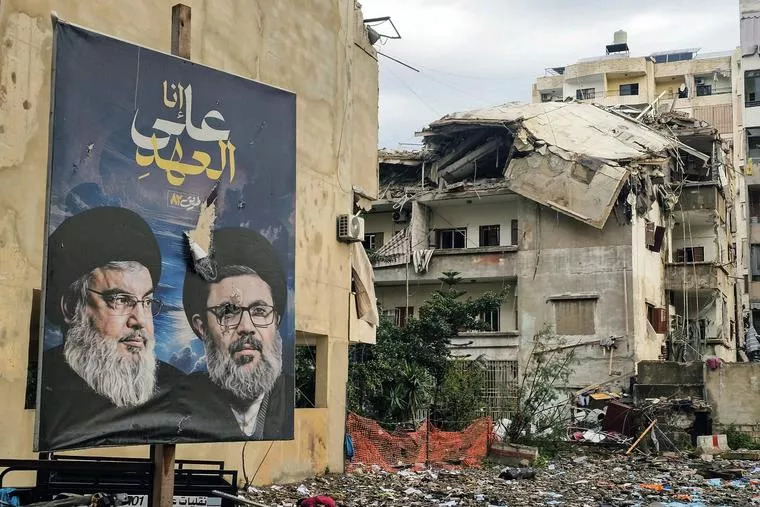
But the situation in Lebanon is the “sideshow” that could turn out to be more catastrophic than the main event. The terrorist group Hezbollah decided to enter the war against Israel despite the fact that Lebanon’s population is war-weary, overwhelmingly opposed to more conflict, and the country was already in deep economic crisis even before Hezbollah plunged the country into the last war in October 2023.
Hezbollah’s plan in entering this war was to distract some Israeli fire away from its masters in Tehran. Israel’s response is to try to destroy Hezbollah once and for all, by putting unprecedented pressure on the group and on Lebanon. Israel’s “harsh medicine” could rid the Lebanese host of the Hezbollah parasite, or destroy both.
Unlike Iraq, Lebanon’s Christians are very much in the crossfire. At least six Christians were killed in their border villages; many have tried to remain in their ancestral places while others have been displaced. Hezbollah tries to attack Israel from Christian areas, firing and fleeing while Israeli return fire falls on the locals. When Israeli shelling killed a Maronite priest in a border village, Lebanese Christian leaders blamed Hezbollah for putting the village in jeopardy.
Archbishop Paolo Borgia, the apostolic nuncio to Beirut, has been active on the ground in supporting the Christian communities in South Lebanon.
Meanwhile, 1 million people, 20% of the country’s population, are mostly Shiite Muslims who tend to be Hezbollah’s main supporters. They have been displaced by the war as Israel has declared large swaths of the country combat zones. Other non-Shiites in the south, Druze and Sunni Muslims, have tried to remain in their villages.
Many Lebanese contend that “this is not our war.” Lebanon’s weak government, which promised but was unable to disarm Hezbollah after the last (December 2024) ceasefire with Israel, tries to distance itself from Hezbollah and now calls for its total disarmament.
And yet not only does Hezbollah threaten the government with impunity, but the group is actually intertwined with the state. The head of the Lebanese parliament and the sitting ministers of finance, health and labor are all key Hezbollah collaborators. The Lebanese Armed Forces (LAF), a supposed counterweight to Hezbollah, is paralyzed and fearful of taking action against the group, and is actually becoming increasingly Shiite Muslim in its lower ranks.
The Israeli military operation is ambitious and could be another bold stroke, but it could also turn into an ineffective quagmire. The plan seems to be to mostly depopulate (that is why Christians are trying to remain in place) Lebanon south of the Litani River in order to create a buffer zone so that Hezbollah cannot rain fire on Israeli civilians in the north of the country.
Creating that buffer zone — assuming that it is successful — also pushes Hezbollah and the displaced Shiite Muslims north into Druze, Christian and Sunni Muslim areas, increasing already high political and sectarian tensions within Lebanon. The Lebanese government would then be faced with terrible choices: Do nothing (which is what the government usually prefers) or confront Hezbollah. Israel is hoping that the solution to stopping Hezbollah could be to push the rest of Lebanon, as reluctant as it is, to finally take punitive action against Hezbollah, even if this triggers civil war.
From a Christian perspective, there seem to be no good options. Hezbollah has constantly chosen war and terrorism; it is also hostile to Lebanese Christians.
A recent investigative report from Lebanon detailed how agents connected to the group are trying to steal Christian land, including Maronite Church property, in the South. Hezbollah has intentionally involved Lebanon in its war with Israel. This is obviously unacceptable to Israel, but it has been disastrous for Lebanon. The group boasted, before 2023, that Israel was ready to fall and “weaker than a spider’s web.”
For Israel, after the 2023-2025 Hamas War, this seems like a golden opportunity to finally settle accounts with a wounded but still dangerous adversary. Eliminating Hezbollah would remove what had become historically the most accomplished of Iran’s network of proxy militias and terrorist organizations. It would eliminate a major threat on the northern border — when Hamas attacked Israel in October 2023, it implemented a strategy that was basically a copy of Hezbollah’s own plan for the Galilee. But will Israeli strategy actually work or merely wreck Lebanon more than it is already wrecked? How does this war, apart from the Iran conflict, end?
Pope Leo XIV has called for “paths of dialogue that can support the country’s authorities in implementing lasting solutions to the serious crisis underway,” but the Americans and the Israelis have been talking to the Lebanese government for more than a year, warning of the danger of another outbreak, even as the Lebanese failed to implement their own timeline in disarming the group.
The worst-case scenario is that Israel’s operations damage more of Lebanon, cause great suffering, and in the end still leave Hezbollah intact to slowly continue to strangle Lebanon — the parasite consuming the host — while steadily replacing the country’s Christian population until the next round of war.
Pushing, or more diplomatically, “encouraging” the weak Lebanese state and reluctant Lebanese military to take action against Hezbollah, not just in the security field but also in dismantling the group’s financial empire, will require a level of diplomacy, support and finesse by both Americans and Israelis, that we have not yet seen in this war.
https://www.ncregister.com/commentaries/fernandez-lebanon-sideshow
**Alberto M. Fernandez Alberto M. Fernandez is a former U.S. diplomat and a contributor at EWTN News.