ما الذي يخطط له الإخوان المسلمون لك إذا تم انتخابهم
محمد سعد خير الله/معهد غايتستون/01 تشرين الثاني/2026
(ترجمة من الإنكليزية بواسطة الذكاء الإصطناعي)
What the Muslim Brotherhood Plans for You if It Is Elected
Mohamed Saad Khairalla/Gatestone Institute/November 01/2026
How did a group carrying an ideological project that extended beyond the boundaries of the nation manage to convince all these people that it was merely a natural partner in building a democratic state? How did the smiling face that it chose succeed in concealing the true nature of its political project?
Egypt’s military council did not seem unaware of the Brotherhood’s political vision. Rather, it appeared to see the group as an instrument that could be used to reproduce the very system that the Egyptian people had just brought to an end.
[T]he Muslim Brotherhood… regards loyalty to itself as the most important criterion and views the state as political spoils whose institutions must be brought under its control.
Before long… [t]he smiling face gradually disappeared, and the Brotherhood’s political objectives — which it had avoided mentioning — appeared everywhere. These included “Mastery of the World” and “The Caliphate State.” Signs on the walls of every public office stated, “Islam is the solution.” The question now was no longer whether the Brotherhood would govern the state but how far it would seek to reshape the state in its own image.
What we wanted was a state ruled neither by a military general “protecting the nation” nor by a Supreme Guide “protecting the religion.” We wanted a state in which sovereignty belonged to a constitution, power to the citizens, public positions to those with ability and rights to everyone — without discrimination on the basis of religious belief or political allegiance.
At the time, however, we did not realize that overthrowing the Brotherhood’s government would pave the way for the restoration of the military regime against which we had originally revolted.
The Egyptian experience [during the 2011-2013 “Arab Spring”] revealed how a revolution against authoritarianism can become another form of authoritarianism and how an organization that raises the banner of democracy can embody the adversaries of democracy.
What happens to democracy when power is entrusted to an organization that does not place democratic values and principles above its ideological project?
The fall of the Ottoman Empire was part of the views at the time in which al-Banna’s project took shape. There was a desire to revive the Islamic nation and restore Islam to a central position in organizing society and the state. Consequently, treating the Brotherhood as an ordinary political party that differs from other parties only in its religion means overlooking the most important question: Is participation in elections the ultimate goal of the project, or is it one of the means that can be employed to achieve objectives that extend beyond the boundaries of the nation-state and liberal democracy?
The real question is not whether the Brotherhood accepts the ballot box as a means of reaching power, but whether it accepts the constraints imposed by the constitution, the peaceful transfer of power, judicial independence, freedom of religion and expression, and full equality in citizenship even when these principles conflict with its ideological convictions — or whether it seeks to set about changing them to promote its vision of how it believes the world ought to be.
The difference between rhetoric that reassures the public of moderation on one side, and an ideology that defines the organization’s ultimate objectives on the other, may not become clear until the demands of democratic governance come into conflict with the requirements of the ideological project.
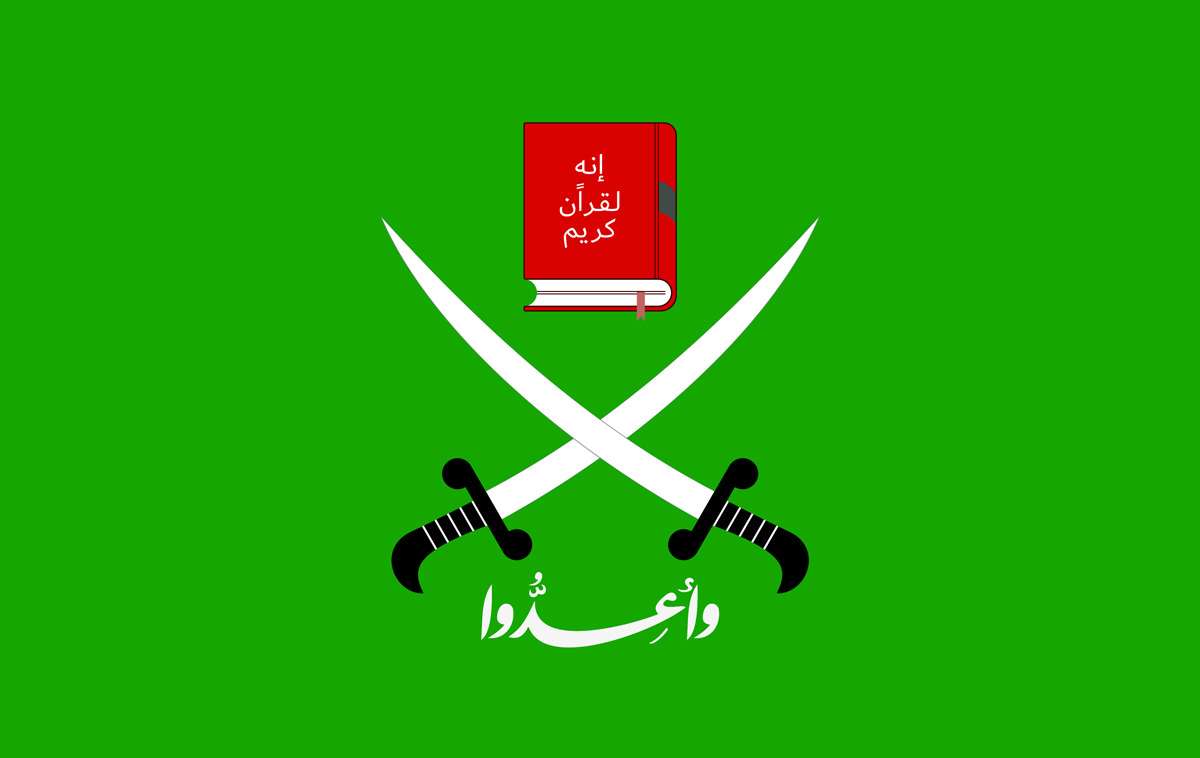
The Muslim Brotherhood’s emblem features two crossed swords, a Qur’an, and the word “Wa-a’iddu” (“And prepare”), which refers to verse 60 of Surah Al-Anfal: “And prepare against them whatever you are able of power and of steeds of war by which you may terrify the enemy of Allah and your enemy and others besides them whom you do not know [but] whom Allah knows. And whatever you spend in the cause of Allah will be fully repaid to you, and you will not be wronged.” — (Quran,8:60, Sahih International Translation)
They mean it.
What if the Muslim Brotherhood came to power in this country or that? What would happen to the state and its institutions, to society and its freedoms, and to the democracy that enabled the Brotherhood to reach power? Pictured: The logo of the Muslim Brotherhood.
What if the Muslim Brotherhood came to power in this country or that? What would happen to the state and its institutions, to society and its freedoms, and to the democracy that enabled the Brotherhood to reach power?
I lived through the experience — and paid a price. The journey began with the dream of establishing a democratic civil state in Egypt and ended in exile, after confronting two competing projects vying for power that shared a hostility toward the civil state: the project of religious rule and the project of military rule.
Many of us called for the departure of Egyptian President Hosni Mubarak after he had ruled the country for nearly three decades. Years before his departure, when we took to the streets to collect signatures for the Declaration of Change, one thing continued to be astonishing: the comfort with which the opposition leaders dealt with the Muslim Brotherhood, They treated it as merely another political faction that shared their demands for freedom and change.
How did a group carrying an ideological project that extended beyond the boundaries of the nation manage to convince all these people that it was merely a natural partner in building a democratic state? How did the smiling face that it chose succeed in concealing the true nature of its political project?
As soon as Mubarak stepped down on February 11, 2011, the Brotherhood began making deals with the Supreme Council of the Armed Forces, which had assumed control of the country. Egypt’s military council did not seem unaware of the Brotherhood’s political vision. Rather, it appeared to see the group as an instrument that could be used to reproduce the very system that the Egyptian people had just brought to an end.
The parliamentary elections for the People’s Assembly and the Shura Council granted the Muslim Brotherhood and the religious current an overwhelming majority. As a candidate on the lists of “The Revolution Continues,” I filed a complaint concerning electoral irregularities, but it was not given serious consideration. Reports circulated about money flowing from certain Gulf states to support the Brotherhood, but mainly silence prevailed. The euphoria of getting rid of Mubarak overshadowed the need to scrutinize what was unfolding before our eyes.
On February 21, 2012, before the Brotherhood achieved the presidency, the Egyptian newspaper Al-Shorouk published an interview with journalist Ahmed Mahrous, in which I tried to warn that “Ikhwanization is coming” (“Ikhwan” is the Arabic name for the Muslim Brotherhood). When the journalist asked what that meant, I explained that it referred to giving Brotherhood members preferential treatment in appointments to public positions at the expense of competence and merit. It was hardly a supernatural prophecy; it was just an assessment of the nature of an organization, in the instance, the Muslim Brotherhood, which regards loyalty to itself as the most important criterion and views the state as political spoils whose institutions must be brought under its control.
Before long, those signs began to appear one after another. The smiling face gradually disappeared, and the Brotherhood’s political objectives — which it had avoided mentioning — appeared everywhere. These included “Mastery of the World” and “The Caliphate State.” Signs on the walls of every public office stated, “Islam is the solution.” The question now was no longer whether the Brotherhood would govern the state but how far it would seek to reshape the state in its own image.
The Brotherhood put forward Mohamed Morsi as its candidate in the presidential election; he faced General Ahmed Shafik in the runoff. Accounts continue to circulate among prominent political figures claiming that Shafik was the actual winner but that the military council allowed Morsi to assume the presidency out of fear that the situation might “explode.” The more likely reason is that Egypt’s military council probably saw that the Brotherhood’s rise to power might ultimately create the conditions for the military regime to return in a new form.
Morsi assumed the presidency on June 30, 2012. Two months later, on August 30, a group of us joined a number of colleagues in establishing the “Popular Front Against the Ikhwanization of Egypt.” Within a few months, the Front expanded its presence, thousands of Egyptians joined it, and the Brotherhood’s political mistakes helped spread our message. We opposed turning state institutions into extensions of the Brotherhood. We aspired to a democratic civil state, not the replacement of religious rule with military rule. At the time, however, we did not realize that overthrowing the Brotherhood’s government would pave the way for the restoration of the military regime against which we had originally revolted.
On November 22, 2012, Morsi issued his “Constitutional Declaration.” The Declaration shielded his decisions from judicial review and granted him exceptional powers that placed him above accountability. This Declaration marked a decisive turning point. The dispute was no longer about the Brotherhood’s competence to govern but about its willingness to respect the constitutional limits of power. At that moment began the end of the Brotherhood’s rule over Egypt.
On June 30, 2013, huge crowds of Egyptians took to the streets to protest the Brotherhood’s rule. Morsi’s presidency ended after just one year.
The Brotherhood’s fall was not a victory for the democracy we had dreamed of. The greatest beneficiary of the conflict was the military regime that took over the Egyptian government after Morsi and reasserted its control over the country under the presidency of General Abdel Fattah el-Sisi. After a bloody confrontation with the new government, I left Egypt on April 1, 2018, to save my life and seek refuge in exile.
What we wanted was a state ruled neither by a military general “protecting the nation” nor by a Supreme Guide “protecting the religion.” We wanted a state in which sovereignty belonged to a constitution, power to the citizens, public positions to those with ability and rights to everyone — without discrimination on the basis of religious belief or political allegiance.
The Egyptian experience revealed how a revolution against authoritarianism can become another form of authoritarianism and how an organization that raises the banner of democracy can embody the adversaries of democracy.
The Egyptian experience is not an isolated exception. The Brotherhood’s discourse on democracy seems more appealing when it is outside government than when it is trying to govern.
The Brotherhood, or forces associated with its ideological and organizational school, failed in other places as well. In Sudan, the Islamist project that helped establish Omar al-Bashir’s regime culminated in a state exhausted by authoritarianism and conflict. In Tunisia, the Islamic Ennahda party, during its years in government, could not prevent its own collapse. In Morocco, the Justice and Development Party ended in a crushing electoral defeat in 2021. In Jordan, the Brotherhood, despite decades of participation in some governments, failed to transform its project into a model of governance capable of overthrowing the king.
What happens to democracy when power is entrusted to an organization that does not place democratic values and principles above its ideological project?
To understand what may await you if the Muslim Brotherhood comes to power, it is important to return to the ideological roots of its project, and the objectives of its founder, Hassan al-Banna, as well as Sayyid Qutb, author of Milestones and In the Shade of the Qur’an, and one of the Brotherhood’s most influential figures decades before the Brotherhood reached the ballot box.
In March 1928, four years after the official abolition of the Ottoman Empire Caliphate, the Muslim Brotherhood was founded in Ismailia, Egypt. The fall of the Ottoman Empire was part of the views at the time in which al-Banna’s project took shape. There was a desire to revive the Islamic nation and restore Islam to a central position in organizing society and the state. Consequently, treating the Brotherhood as an ordinary political party that differs from other parties only in its religion means overlooking the most important question: Is participation in elections the ultimate goal of the project, or is it one of the means that can be employed to achieve objectives that extend beyond the boundaries of the nation-state and liberal democracy?
The Brotherhood’s motto is: “Allah is our objective, the Qur’an is our constitution, the Prophet is our leader, jihad is our way, and death for the sake of Allah is our loftiest aspiration.” This is not merely a mobilizing formula intended to stir religious emotions. It is a gateway to understanding an integrated system of ideas about power, society, and the world. Al-Banna placed “Mastery of the World” at the end of his point-by-point vision for an Islamic revival. It would require the reform of the individual, the family, society, the government and the state, with the broader pursuit of restoring the Caliphate.
The real question is not whether the Brotherhood accepts the ballot box as a means of reaching power, but whether it accepts the constraints imposed by the constitution, the peaceful transfer of power, judicial independence, freedom of religion and expression, and full equality in citizenship even when these principles conflict with its ideological convictions — or whether it seeks to set about changing them to promote its vision of how it believes the world ought to be.
What follows when a project moves from slogans to legislation and governance? What does the implementation of Sharia mean in a state whose citizens differ in religion and belief? What place does a woman occupy in a system in which rights and roles are determined based on binding religious interpretations? How are Jews, Christians and other non-Muslims viewed and treated, and how is a citizen who rejects political Islam or calls for the separation of religion and state regarded? What role does the concept of jihad occupy in the Brotherhood’s thought and the justification of violence?
The difference between rhetoric that reassures the public of moderation on one side, and an ideology that defines the organization’s ultimate objectives on the other, may not become clear until the demands of democratic governance come into conflict with the requirements of the ideological project.
The question every voter should confront is not merely, “What does the Muslim Brotherhood promise to do if you elect it?” It is also: “What do the Brotherhood’s texts say about the state it wants to build and the rights it regards as inviolable?”
Hassan al-Banna’s six epistles, along with Sayyid Qutb’s two books, are essential to understand the Brotherhood’s its conceptions of the state, society, divine sovereignty, jihad, and relations with non-Muslims, and how it moved from religious preaching to pursuing the imposition of an all-encompassing political project.
In the Brotherhood’s Fifth Conference Epistle of 1939, al-Banna presented his view of Islam as an all-encompassing, comprehensive whole that is not limited to faith and worship but extends to every aspect of life:
“Thus, the Brotherhood connected themselves with the Book of Allah, drew inspiration and guidance from it, and became convinced that Islam is this all-encompassing, comprehensive meaning; that it must exercise authority over every aspect of life; that all aspects of life must be imbued with it and governed by its rulings; and that they must conform to its principles and teachings and derive from them, so long as the nation wishes to be genuinely Muslim.”
In the Twenty Principles for Understanding Islam, he states:
“Islam is a comprehensive system that encompasses all aspects of life. It is a state and a homeland, or a government and a nation. It is morality and strength, or mercy and justice. It is culture and law, or knowledge and the judiciary. It is material life, or earning and wealth. It is jihad and a call, or an army and an idea, just as it is a sincere creed and sound worship in equal measure.”
We are not talking merely about a group that merely engages in religious activities or calls on people to adhere to their faith. We are talking about an organization that, according to its founder’s own texts, believes that Islam should exercise total authority over every aspect of life, and that all these aspects should be subject to its teachings, principles and rulings.
Consequently, the Brotherhood’s project does not stop at gaining power through elections. It encompasses the nature of the state it seeks to establish, the rules to which it wants society to be subjected, and the extent to which it is prepared to accept a civil state founded on equal citizenship, freedom of belief, political pluralism, and the independence of institutions from the authority of a religious organization.
The Muslim Brotherhood’s emblem features two crossed swords, a Qur’an, and the word “Wa-a’iddu” (“And prepare”), which refers to verse 60 of Surah Al-Anfal:
“And prepare against them whatever you are able of power and of steeds of war by which you may terrify the enemy of Allah and your enemy and others besides them whom you do not know [but] whom Allah knows. And whatever you spend in the cause of Allah will be fully repaid to you, and you will not be wronged.”
— (Quran,8:60, Sahih International Translation)
They mean it.
Mohamed Saad Khiralla is a political commentator on Middle East Affairs and Islamist Movements. He is currently a Research Fellow at the Ideological Defense Institute (IDI).
https://www.gatestoneinstitute.org/22959/muslim-brotherhood-plans-for-you
© 2026 Gatestone Institute. All rights reserved. The articles printed here do not necessarily reflect the views of the Editors or of Gatestone Institute.
ما الذي يخطط له الإخوان المسلمون لك إذا تم انتخابهم
محمد سعد خير الله/معهد غايتستون/01 تشرين الثاني/2026
(ترجمة من الإنكليزية بواسطة الذكاء الإصطناعي)
كيف استطاعت جماعة تحمل مشروعاً أيديولوجياً يتجاوز حدود الدولة أن تقنع كل هؤلاء الناس بأنها مجرد شريك طبيعي في بناء دولة ديمقراطية؟ كيف نجح الوجه المبتسم الذي اختارته في إخفاء الطبيعة الحقيقية لمشروعها السياسي؟
لم يبد أن المجلس العسكري في مصر كان غافلاً عن الرؤية السياسية للإخوان. بل بدا أنه ينظر إلى الجماعة كأداة يمكن استخدامها لإعادة إنتاج نفس النظام الذي أسقطه الشعب المصري للتو.
الإخوان المسلمون… يعتبرون الولاء لها هو أهم معيار وينظرون إلى الدولة كغنيمة سياسية يجب إخضاع مؤسساتها لسيطرتها.
وما لبث… أن اختفى الوجه المبتسم تدريجياً، وظهرت الأهداف السياسية للإخوان – التي كانت تتجنب ذكرها – في كل مكان. ومنها “أستاذية العالم” و “دولة الخلافة”. وعلقت لافتات على جدران كل مكتب حكومي تقول “الإسلام هو الحل”. لم يعد السؤال هو ما إذا كان الإخوان سيحكمون الدولة، بل إلى أي مدى سيسعون لإعادة تشكيل الدولة على صورتهم.
ما كنا نريده هو دولة لا يحكمها جنرال عسكري “يحمي الوطن” ولا مرشد أعلى “يحمي الدين”. كنا نريد دولة تكون السيادة فيها للدستور، والسلطة للمواطنين، والمناصب العامة لأصحاب الكفاءة، والحقوق للجميع – دون تمييز على أساس المعتقد الديني أو الولاء السياسي.
لكننا في ذلك الوقت لم ندرك أن إسقاط حكومة الإخوان سيمهد الطريق لعودة النظام العسكري الذي ثرنا ضده في الأصل.
كشفت التجربة المصرية [خلال “الربيع العربي” 2011-2013] كيف يمكن لثورة ضد الاستبداد أن تتحول إلى شكل آخر من أشكال الاستبداد وكيف يمكن لمنظمة ترفع راية الديمقراطية أن تجسد أعداء الديمقراطية.
ماذا يحدث للديمقراطية عندما يُعهد بالسلطة إلى منظمة لا تضع القيم والمبادئ الديمقراطية فوق مشروعها الأيديولوجي؟
كان سقوط الإمبراطورية العثمانية جزءاً من الآراء السائدة في الوقت الذي تشكل فيه مشروع البنا. كانت هناك رغبة في إحياء الأمة الإسلامية وإعادة الإسلام إلى مكانة مركزية في تنظيم المجتمع والدولة. وبالتالي، فإن التعامل مع الإخوان كحزب سياسي عادي يختلف عن الأحزاب الأخرى في دينه فقط يعني إغفال أهم سؤال: هل المشاركة في الانتخابات هي الهدف النهائي للمشروع، أم أنها إحدى الوسائل التي يمكن توظيفها لتحقيق أهداف تتجاوز حدود الدولة القومية والديمقراطية الليبرالية؟
السؤال الحقيقي ليس ما إذا كان الإخوان يقبلون صندوق الاقتراع كوسيلة للوصول إلى السلطة، بل ما إذا كانوا يقبلون القيود التي يفرضها الدستور، والتداول السلمي للسلطة، واستقلال القضاء، وحرية الدين والتعبير، والمساواة الكاملة في المواطنة حتى عندما تتعارض هذه المبادئ مع قناعاتهم الأيديولوجية – أم أنهم يسعون إلى تغييرها لتعزيز رؤيتهم لكيف يعتقدون أن العالم يجب أن يكون.
قد لا يتضح الفرق بين الخطاب الذي يطمئن الجمهور بالاعتدال من جهة، والأيديولوجيا التي تحدد الأهداف النهائية للمنظمة من جهة أخرى، إلا عندما تتصادم متطلبات الحكم الديمقراطي مع متطلبات المشروع الأيديولوجي.
شعار الإخوان المسلمين يحمل سيفين متقاطعين، وقرآناً، وكلمة “وأعدوا”، والتي تشير إلى الآية 60 من سورة الأنفال: “وَأَعِدُّوا لَهُم مَّا اسْتَطَعْتُم مِّن قُوَّةٍ وَمِن رِّبَاطِ الْخَيْلِ تُرْهِبُونَ بِهِ عَدُوَّ اللَّهِ وَعَدُوَّكُمْ وَآخَرِينَ مِن دُونِهِمْ لَا تَعْلَمُونَهُمُ اللَّهُ يَعْلَمُهُمْ ۚ وَمَا تُنفِقُوا مِن شَيْءٍ فِي سَبِيلِ اللَّهِ يُوَفَّ إِلَيْكُمْ وَأَنتُمْ لَا تُظْلَمُونَ” – (القرآن، 8:60، ترجمة صحيح الدولية)
إنهم يعنون ذلك.
ماذا لو وصل الإخوان المسلمون إلى السلطة في هذا البلد أو ذاك؟ ماذا سيحدث للدولة ومؤسساتها، وللمجتمع وحرياته، وللديمقراطية التي مكنت الإخوان من الوصول إلى السلطة؟ في الصورة: شعار جماعة الإخوان المسلمين.
ماذا لو وصل الإخوان المسلمون إلى السلطة في هذا البلد أو ذاك؟ ماذا سيحدث للدولة ومؤسساتها، وللمجتمع وحرياته، وللديمقراطية التي مكنت الإخوان من الوصول إلى السلطة؟
لقد عشت التجربة – ودفعت الثمن. بدأت الرحلة بحلم إقامة دولة مدنية ديمقراطية في مصر وانتهت في المنفى، بعد مواجهة مشروعين متنافسين على السلطة يشتركان في العداء للدولة المدنية: مشروع الحكم الديني ومشروع الحكم العسكري.
لقد طالب كثير منا برحيل الرئيس المصري حسني مبارك بعد أن حكم البلاد لما يقرب من ثلاثة عقود. قبل سنوات من رحيله، عندما نزلنا إلى الشوارع لجمع توقيعات لإعلان التغيير، ظل شيء واحد مثيراً للدهشة: الراحة التي تعامل بها قادة المعارضة مع الإخوان المسلمين، فقد تعاملوا معها كمجرد فصيل سياسي آخر يشاركهم مطالب الحرية والتغيير.
كيف استطاعت جماعة تحمل مشروعاً أيديولوجياً يتجاوز حدود الدولة أن تقنع كل هؤلاء الناس بأنها مجرد شريك طبيعي في بناء دولة ديمقراطية؟ كيف نجح الوجه المبتسم الذي اختارته في إخفاء الطبيعة الحقيقية لمشروعها السياسي؟
بمجرد تنحي مبارك في 11 فبراير 2011، بدأ الإخوان في عقد صفقات مع المجلس الأعلى للقوات المسلحة، الذي تولى السيطرة على البلاد. لم يبد أن المجلس العسكري في مصر كان غافلاً عن الرؤية السياسية للإخوان. بل بدا أنه ينظر إلى الجماعة كأداة يمكن استخدامها لإعادة إنتاج نفس النظام الذي أسقطه الشعب المصري للتو.
منحت الانتخابات البرلمانية لمجلس الشعب ومجلس الشورى الإخوان المسلمين والتيار الديني أغلبية ساحقة. وبصفتي مرشحاً على قوائم “الثورة مستمرة”، تقدمت بشكوى بشأن مخالفات انتخابية، لكنها لم تؤخذ بعين الاعتبار بجدية. ترددت تقارير عن تدفق أموال من بعض دول الخليج لدعم الإخوان، لكن الصمت ساد في الغالب. لقد طغت نشوة التخلص من مبارك على الحاجة إلى التدقيق فيما كان يتكشف أمام أعيننا.
في 21 فبراير 2012، وقبل وصول الإخوان إلى الرئاسة، نشرت صحيفة الشروق المصرية مقابلة مع الصحفي أحمد محروس، حاولت فيها التحذير من أن “الأخونة قادمة” (“إخوان” هو الاسم العربي للإخوان المسلمين). وعندما سأل الصحفي ماذا يعني ذلك، أوضحت أن ذلك يشير إلى إعطاء أعضاء الإخوان معاملة تفضيلية في التعيينات في المناصب العامة على حساب الكفاءة والجدارة. لم تكن نبوءة خارقة للطبيعة؛ كانت مجرد تقييم لطبيعة منظمة، في هذه الحالة، الإخوان المسلمين، التي تعتبر الولاء لها هو أهم معيار وتنظر إلى الدولة كغنيمة سياسية يجب إخضاع مؤسساتها لسيطرتها.
وما لبثت تلك العلامات أن بدأت تظهر واحدة تلو الأخرى. اختفى الوجه المبتسم تدريجياً، وظهرت الأهداف السياسية للإخوان – التي كانت تتجنب ذكرها – في كل مكان. ومنها “أستاذية العالم” و “دولة الخلافة”. وعلقت لافتات على جدران كل مكتب حكومي تقول “الإسلام هو الحل”. لم يعد السؤال هو ما إذا كان الإخوان سيحكمون الدولة، بل إلى أي مدى سيسعون لإعادة تشكيل الدولة على صورتهم.
قدم الإخوان محمد مرسي كمرشحهم في الانتخابات الرئاسية؛ وواجه الجنرال أحمد شفيق في جولة الإعادة. ولا تزال روايات تتردد بين شخصيات سياسية بارزة تزعم أن شفيق كان هو الفائز الفعلي لكن المجلس العسكري سمح لمرسي بتولي الرئاسة خوفاً من أن “ينفجر” الوضع. والسبب الأرجح هو أن المجلس العسكري في مصر رأى على الأرجح أن صعود الإخوان إلى السلطة قد يخلق في النهاية الظروف لعودة النظام العسكري في شكل جديد.
تولى مرسي الرئاسة في 30 يونيو 2012. وبعد شهرين، في 30 أغسطس، انضممنا نحن مجموعة من الزملاء إلى عدد من الزملاء في تأسيس “الجبهة الشعبية ضد أخونة مصر”. وفي غضون بضعة أشهر، وسعت الجبهة وجودها، وانضم إليها آلاف المصريين، وساعدت الأخطاء السياسية للإخوان على نشر رسالتنا. كنا نعارض تحويل مؤسسات الدولة إلى امتدادات للإخوان. كنا نطمح إلى دولة مدنية ديمقراطية، وليس استبدال الحكم الديني بالحكم العسكري. لكننا في ذلك الوقت لم ندرك أن إسقاط حكومة الإخوان سيمهد الطريق لعودة النظام العسكري الذي ثرنا ضده في الأصل.
في 22 نوفمبر 2012، أصدر مرسي “إعلانه الدستوري”. حصّن الإعلان قراراته من المراجعة القضائية ومنحه سلطات استثنائية وضعته فوق المساءلة. شكّل هذا الإعلان نقطة تحول حاسمة. لم يعد الخلاف حول كفاءة الإخوان في الحكم بل حول استعدادهم لاحترام الحدود الدستورية للسلطة. في تلك اللحظة بدأت نهاية حكم الإخوان لمصر.
في 30 يونيو 2013، نزلت حشود ضخمة من المصريين إلى الشوارع للاحتجاج على حكم الإخوان. انتهت رئاسة مرسي بعد عام واحد فقط.
لم يكن سقوط الإخوان انتصاراً للديمقراطية التي حلمنا بها. كان المستفيد الأكبر من الصراع هو النظام العسكري الذي تولى الحكومة المصرية بعد مرسي وأعاد فرض سيطرته على البلاد تحت رئاسة الجنرال عبد الفتاح السيسي. وبعد مواجهة دموية مع الحكومة الجديدة، غادرت مصر في 1 أبريل 2018 لإنقاذ حياتي والبحث عن ملجأ في المنفى.
ما كنا نريده هو دولة لا يحكمها جنرال عسكري “يحمي الوطن” ولا مرشد أعلى “يحمي الدين”. كنا نريد دولة تكون السيادة فيها للدستور، والسلطة للمواطنين، والمناصب العامة لأصحاب الكفاءة، والحقوق للجميع – دون تمييز على أساس المعتقد الديني أو الولاء السياسي.
كشفت التجربة المصرية كيف يمكن لثورة ضد الاستبداد أن تتحول إلى شكل آخر من أشكال الاستبداد وكيف يمكن لمنظمة ترفع راية الديمقراطية أن تجسد أعداء الديمقراطية.
التجربة المصرية ليست استثناءً معزولاً. يبدو خطاب الإخوان حول الديمقراطية أكثر جاذبية عندما تكون خارج الحكومة مما هو عليه عندما تحاول الحكم.
لقد فشل الإخوان، أو القوى المرتبطة بمدرسته الأيديولوجية والتنظيمية، في أماكن أخرى أيضاً. ففي السودان، انتهى المشروع الإسلامي الذي ساعد في تأسيس نظام عمر البشير إلى دولة منهكة بالاستبداد والصراع. وفي تونس، لم يستطع حزب النهضة الإسلامي، خلال سنواته في الحكومة، منع انهياره. وفي المغرب، انتهى حزب العدالة والتنمية بهزيمة انتخابية ساحقة في عام 2021. وفي الأردن، فشل الإخوان، رغم عقود من المشاركة في بعض الحكومات، في تحويل مشروعه إلى نموذج حكم قادر على الإطاحة بالملك.
ماذا يحدث للديمقراطية عندما يُعهد بالسلطة إلى منظمة لا تضع القيم والمبادئ الديمقراطية فوق مشروعها الأيديولوجي؟
لفهم ما قد ينتظرك إذا وصل الإخوان المسلمون إلى السلطة، من المهم العودة إلى الجذور الأيديولوجية لمشروعهم، وأهداف مؤسسه حسن البنا، وكذلك سيد قطب، مؤلف معالم في الطريق وفي ظلال القرآن، وأحد أكثر الشخصيات تأثيراً في الإخوان قبل عقود من وصول الإخوان إلى صناديق الاقتراع.
في مارس 1928، بعد أربع سنوات من الإلغاء الرسمي لخلافة الإمبراطورية العثمانية، تأسست جماعة الإخوان المسلمين في الإسماعيلية بمصر. كان سقوط الإمبراطورية العثمانية جزءاً من الآراء السائدة في الوقت الذي تشكل فيه مشروع البنا. كانت هناك رغبة في إحياء الأمة الإسلامية وإعادة الإسلام إلى مكانة مركزية في تنظيم المجتمع والدولة. وبالتالي، فإن التعامل مع الإخوان كحزب سياسي عادي يختلف عن الأحزاب الأخرى في دينه فقط يعني إغفال أهم سؤال: هل المشاركة في الانتخابات هي الهدف النهائي للمشروع، أم أنها إحدى الوسائل التي يمكن توظيفها لتحقيق أهداف تتجاوز حدود الدولة القومية والديمقراطية الليبرالية؟
شعار الإخوان هو: “الله غايتنا، والقرآن دستورنا، والرسول زعيمنا، والجهاد سبيلنا، والموت في سبيل الله أسمى أمانينا”. هذه ليست مجرد صيغة تعبوية تهدف إلى إثارة المشاعر الدينية. إنها بوابة لفهم منظومة متكاملة من الأفكار حول السلطة والمجتمع والعالم. وضع البنا “أستاذية العالم” في نهاية رؤيته التفصيلية للنهضة الإسلامية. وهي تتطلب إصلاح الفرد والأسرة والمجتمع والحكومة والدولة، مع السعي الأوسع لاستعادة الخلافة.
السؤال الحقيقي ليس ما إذا كان الإخوان يقبلون صندوق الاقتراع كوسيلة للوصول إلى السلطة، بل ما إذا كانوا يقبلون القيود التي يفرضها الدستور، والتداول السلمي للسلطة، واستقلال القضاء، وحرية الدين والتعبير، والمساواة الكاملة في المواطنة حتى عندما تتعارض هذه المبادئ مع قناعاتهم الأيديولوجية – أم أنهم يسعون إلى تغييرها لتعزيز رؤيتهم لكيف يعتقدون أن العالم يجب أن يكون.
ماذا يتبع عندما ينتقل مشروع من الشعارات إلى التشريع والحكم؟ ماذا يعني تطبيق الشريعة في دولة يختلف مواطنوها في الدين والمعتقد؟ ما هي مكانة المرأة في نظام تحدد فيه الحقوق والأدوار بناءً على تفسيرات دينية ملزمة؟ كيف يُنظر إلى اليهود والمسيحيين وغير المسلمين الآخرين وكيف يُعاملون، وكيف يُنظر إلى المواطن الذي يرفض الإسلام السياسي أو يدعو إلى فصل الدين عن الدولة؟ ما هو الدور الذي يحتله مفهوم الجهاد في فكر الإخوان وتبرير العنف؟
قد لا يتضح الفرق بين الخطاب الذي يطمئن الجمهور بالاعتدال من جهة، والأيديولوجيا التي تحدد الأهداف النهائية للمنظمة من جهة أخرى، إلا عندما تتصادم متطلبات الحكم الديمقراطي مع متطلبات المشروع الأيديولوجي.
السؤال الذي يجب على كل ناخب أن يواجهه ليس فقط، “ماذا يعد الإخوان المسلمون بفعله إذا انتخبتهم؟” بل أيضاً: “ماذا تقول نصوص الإخوان عن الدولة التي تريد بناءها والحقوق التي تعتبرها مصونة؟”
إن رسائل حسن البنا الست، إلى جانب كتابي سيد قطب، ضرورية لفهم تصورات الإخوان للدولة والمجتمع والسيادة الإلهية والجهاد والعلاقات مع غير المسلمين، وكيف انتقلت من الدعوة الدينية إلى السعي لفرض مشروع سياسي شامل.
في رسالة المؤتمر الخامس للإخوان عام 1939، قدم البنا رؤيته للإسلام ككل شامل متكامل لا يقتصر على العقيدة والعبادة بل يمتد إلى كل جانب من جوانب الحياة:
“وهكذا ارتبط الإخوان بكتاب الله، واستمدوا منه الإلهام والهداية، واقتنعوا بأن الإسلام هو هذا المعنى الشامل المتكامل؛ وأنه يجب أن يهيمن على كل جانب من جوانب الحياة؛ وأن جميع جوانب الحياة يجب أن تصطبغ به وتحكم بأحكامه؛ وأنها يجب أن تتوافق مع مبادئه وتعاليمه وتستمد منها، ما دامت الأمة تريد أن تكون مسلمة حقاً.”
وفي الأصول العشرين لفهم الإسلام، يقول:
“الإسلام نظام شامل يتناول مظاهر الحياة جميعاً. فهو دولة ووطن أو حكومة وأمة. وهو خلق وقوة أو رحمة وعدالة. وهو ثقافة وقانون أو علم وقضاء. وهو مادة وثروة أو كسب وغنى. وهو جهاد ودعوة أو جيش وفكرة، كما هو عقيدة صادقة وعبادة صحيحة سواء بسواء.”
نحن لا نتحدث فقط عن جماعة تمارس أنشطة دينية فحسب أو تدعو الناس إلى الالتزام بدينهم. نحن نتحدث عن منظمة، وفقاً لنصوص مؤسسها نفسه، تعتقد أن الإسلام يجب أن يمارس سلطة كاملة على كل جانب من جوانب الحياة، وأن كل هذه الجوانب يجب أن تخضع لتعاليمه ومبادئه وأحكامه.
وبالتالي، فإن مشروع الإخوان لا يتوقف عند كسب السلطة من خلال الانتخابات. إنه يشمل طبيعة الدولة التي يسعى إلى إقامتها، والقواعد التي يريد إخضاع المجتمع لها، ومدى استعداده لقبول دولة مدنية قائمة على المواطنة المتساوية، وحرية المعتقد، والتعددية السياسية، واستقلال المؤسسات عن سلطة منظمة دينية.
شعار الإخوان المسلمين يحمل سيفين متقاطعين، وقرآناً، وكلمة “وأعدوا”، والتي تشير إلى الآية 60 من سورة الأنفال:
“وَأَعِدُّوا لَهُم مَّا اسْتَطَعْتُم مِّن قُوَّةٍ وَمِن رِّبَاطِ الْخَيْلِ تُرْهِبُونَ بِهِ عَدُوَّ اللَّهِ وَعَدُوَّكُمْ وَآخَرِينَ مِن دُونِهِمْ لَا تَعْلَمُونَهُمُ اللَّهُ يَعْلَمُهُمْ ۚ وَمَا تُنفِقُوا مِن شَيْءٍ فِي سَبِيلِ اللَّهِ يُوَفَّ إِلَيْكُمْ وَأَنتُمْ لَا تُظْلَمُونَ” (القرآن، 8:60، ترجمة صحيح الدولية) إنهم يعنون ذلك.
**محمد سعد خير الله هو معلق سياسي في شؤون الشرق الأوسط والحركات الإسلامية. وهو حالياً زميل باحث في معهد الدفاع الأيديولوجي (IDI).
https://www.gatestoneinstitute.org/22959/muslim-brotherhood-plans-for-you
© 2026 معهد غايتستون. جميع الحقوق محفوظة. المقالات المطبوعة هنا لا تعكس بالضرورة آراء المحررين أو معهد غايتستون.