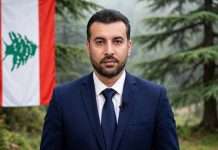
رابط فيديو ونص تصريح السفير الأميركي ميشال عيسى بعد لقائه شيخ العقل لطائفة الموحدين الدروز سامي أبي المنى ونص الحوار الذي جرى بينه وبين الصحافيين 27 آب/2026
السفير الأميركي في لبنان يلمح لتأثر التفاوض مع إسرائيل بإيران الرياض – العربية.نت/27 آب/2026
فيما يرتقب أن تعقد في روما خلال الفترة القادمة جولة جديدة من المحادثات بين لبنان وإسرائيل، ألمح السفير الأميركي في لبنان ميشال عيسى إلى تأثير ما يجري مع الجانب الإيراني على هذا الملف.وقال عيسى في تصريحات صحافية، اليوم الخميس، إن ما يجري في المنطقة بين إيران وأميركا يؤثر بشكل كبير على المحادثات اللبنانية الإسرائيلية. وأردف قائلاً: “لا يمكن أن تتقدم المفاوضات قبل أن نعرف ما سيجري في المنطقة”. كما أضاف أن “حزب الله معلق بالقيادات في طهران.. على الرغم من محاولاتنا فك هذين الملفين”، وفق تعبيره. إلى ذلك، قال السفير الأميركي عقب لقائه شيخ عقل طائفة الموحدين الدروز سامي أبي المنى في دار طائفة الموحدين الدروز في بيروت، إن “اللبنانيّين متّفقون على تسليم سلاح حزب الله، وكلّ شخص يريده بطريقة معيّنة، لكن من الضروري أن يسلّم سلاحه للدولة”. كما أعرب عن اعتقاده بأن “هناك تواصلًا بين رئيس الجمهورية جوزيف عون وحزب الله سواء بشكل مباشر أو غير مباشر”. وأردف أن “حزب الله لا يريد أن يتكلّم لا مع الدولة اللبنانيّة ولا مع أميركا ولا مع إسرائيل، ولا يأخذ أوامره سوى من إيران.. ونريده أن يسلّم سلاحه”. كما لفت إلى أن واشنطن “تطلب دوماً من إسرائيل وقف وتخفيف ضرباتها، لكن حزب الله في المقابل لا يقدّم أي خطوة”.أتت تلك التصريحات فيما كثفت إسرائيل في وقت سابق اليوم غاراتها على الجنوب اللبناني، من ضمنها منطقة علي الطاهر، حيث زعمت أن حزب الله أطلق مسيرتين من تلك التلال نحو قواتها. وقصفت أيضا النبطية الفوقا، فضلاً عن بلدة ميس الجبل ومشاع المنصوري ومجدل زون، وغيرها. كما جاء هذا الموقف الأميركي بينما لا يزال المسار الدبلوماسي بين واشنطن وطهران يراوح مكانه، رغم تكثيف مساعي الوسطاء.وكانت السلطات اللبنانية رفضت قبل أشهر ربط الملف اللبناني والتفاوض مع الجانب الإسرائيلي بما يجري بين إيران وأميركا.فيما زعمت طهران حينها أن مذكرة التفاهم التي وقعت في يونيو الماضي مع الجانب الأميركي نصت على وقف إطلاق النار في لبنان أيضاً. إلا أن الغارات الإسرائيلية استمرت على الجنوب، والبقاع شرقي لبنان، بعد الإعلان الأول عن وقف إطلاق النار بين إسرائيل ولبنان في 16 أبريل الماضي وبعد تمديده في 23 لمدة 3 أسابيع، ثم تمديده من جديد في 15 مايو الماضي لمدة 45 يوماً. إلى أن أعلن في 20 يونيو الماضي عن وقف لإطلاق النار، انخفضت بعده وتيرة الاستهدافات الإسرائيلية للجنوب، دون أن تتوقف.
السفير الأميركي في لبنان يلمح لتأثر التفاوض مع إسرائيل بإيران الرياض – العربية.نت/27 آب/2026
فيما يرتقب أن تعقد في روما خلال الفترة القادمة جولة جديدة من المحادثات بين لبنان وإسرائيل، ألمح السفير الأميركي في لبنان ميشال عيسى إلى تأثير ما يجري مع الجانب الإيراني على هذا الملف.وقال عيسى في تصريحات صحافية، اليوم الخميس، إن ما يجري في المنطقة بين إيران وأميركا يؤثر بشكل كبير على المحادثات اللبنانية الإسرائيلية. وأردف قائلاً: “لا يمكن أن تتقدم المفاوضات قبل أن نعرف ما سيجري في المنطقة”. كما أضاف أن “حزب الله معلق بالقيادات في طهران.. على الرغم من محاولاتنا فك هذين الملفين”، وفق تعبيره. إلى ذلك، قال السفير الأميركي عقب لقائه شيخ عقل طائفة الموحدين الدروز سامي أبي المنى في دار طائفة الموحدين الدروز في بيروت، إن “اللبنانيّين متّفقون على تسليم سلاح حزب الله، وكلّ شخص يريده بطريقة معيّنة، لكن من الضروري أن يسلّم سلاحه للدولة”. كما أعرب عن اعتقاده بأن “هناك تواصلًا بين رئيس الجمهورية جوزيف عون وحزب الله سواء بشكل مباشر أو غير مباشر”. وأردف أن “حزب الله لا يريد أن يتكلّم لا مع الدولة اللبنانيّة ولا مع أميركا ولا مع إسرائيل، ولا يأخذ أوامره سوى من إيران.. ونريده أن يسلّم سلاحه”. كما لفت إلى أن واشنطن “تطلب دوماً من إسرائيل وقف وتخفيف ضرباتها، لكن حزب الله في المقابل لا يقدّم أي خطوة”.أتت تلك التصريحات فيما كثفت إسرائيل في وقت سابق اليوم غاراتها على الجنوب اللبناني، من ضمنها منطقة علي الطاهر، حيث زعمت أن حزب الله أطلق مسيرتين من تلك التلال نحو قواتها. وقصفت أيضا النبطية الفوقا، فضلاً عن بلدة ميس الجبل ومشاع المنصوري ومجدل زون، وغيرها. كما جاء هذا الموقف الأميركي بينما لا يزال المسار الدبلوماسي بين واشنطن وطهران يراوح مكانه، رغم تكثيف مساعي الوسطاء.وكانت السلطات اللبنانية رفضت قبل أشهر ربط الملف اللبناني والتفاوض مع الجانب الإسرائيلي بما يجري بين إيران وأميركا.فيما زعمت طهران حينها أن مذكرة التفاهم التي وقعت في يونيو الماضي مع الجانب الأميركي نصت على وقف إطلاق النار في لبنان أيضاً. إلا أن الغارات الإسرائيلية استمرت على الجنوب، والبقاع شرقي لبنان، بعد الإعلان الأول عن وقف إطلاق النار بين إسرائيل ولبنان في 16 أبريل الماضي وبعد تمديده في 23 لمدة 3 أسابيع، ثم تمديده من جديد في 15 مايو الماضي لمدة 45 يوماً. إلى أن أعلن في 20 يونيو الماضي عن وقف لإطلاق النار، انخفضت بعده وتيرة الاستهدافات الإسرائيلية للجنوب، دون أن تتوقف.
US Ambassador to Lebanon Hints at Iranian Influence on Negotiations with Israel Riyadh – Al-Arabiya.net/August 27, 2026 (Google translation from Arabic)
Al-Markazia – Since the launch of the first round of Lebanese-Israeli negotiations under American aus
As a new round of talks between Lebanon and Israel is expected to be held in Rome in the coming period, US Ambassador to Lebanon, Michel Issa, hinted at the influence of developments with Iran on this issue. Issa stated in press remarks on Thursday that the regional situation between Iran and the US is significantly impacting the Lebanese-Israeli talks. He added, “The negotiations cannot progress before we know what will happen in the region.” He also added that “Hezbollah is beholden to the leadership in Tehran… despite our attempts to resolve these two issues,” as he put it. Furthermore, following his meeting with Sheikh Aql of the Druze community, Sami Abi Muna, at the Druze Community Center in Beirut, the US Ambassador said, “The Lebanese are in agreement on the need for Hezbollah to surrender its weapons. Everyone wants them in a particular way, but it is essential that they surrender their weapons to the state.” He also expressed his belief that “there is communication between President Joseph Aoun and Hezbollah, whether directly or indirectly.” He added that “Hezbollah doesn’t want to talk to the Lebanese state, nor to America, nor to Israel, and takes its orders only from Iran… and we want it to surrender its weapons.” He also pointed out that Washington “constantly asks Israel to stop and reduce its attacks, but Hezbollah, in turn, doesn’t take any steps.” These statements came as Israel intensified its airstrikes earlier today on southern Lebanon, including the Ali al-Taher area, where it claimed that Hezbollah launched two drones from those hills towards its forces. It also bombed Nabatieh al-Fawqa, as well as the towns of Mays al-Jabal, Mashaa al-Mansouri, Majdal Zoun, and others. This American stance came as the diplomatic track between Washington and Tehran remained stalled, despite intensified mediation efforts. Months earlier, Lebanese authorities had rejected linking the Lebanese situation and negotiations with Israel to the ongoing tensions between Iran and the United States. Tehran claimed at the time that the memorandum of understanding signed last June with the US stipulated a ceasefire in Lebanon as well. However, Israeli airstrikes continued in southern Lebanon and the Bekaa Valley after the initial ceasefire announcement on April 16, which was extended on April 23 for three weeks, and then again on May 15 for 45 days. A ceasefire was finally declared on June 20, after which the frequency of Israeli attacks on southern Lebanon decreased, though not ceased entirely.
US Ambassador to Lebanon, Michael Issa, Visits the Druze Sheikh Aql: “We Want Hezbollah to Surrender Its Weapons, and We Don’t Want Anything More From Them” Al-Markazia/August 27, 2026 (Google translation from Arabic)
The Sheikh Aql of the Druze community, Sheikh Sami Abi Muna, received US Ambassador to Lebanon, Michael Issa, at the Druze community center in Verdun today. During the meeting, they discussed the general situation in Lebanon and the region, as well as current political and security developments. Also present were Judge Sheikh Ghazi Makarem, Secretary of the Religious Council Raed Najjar, and Advisor to the Sheikh Aql Sheikh Ramzi Sari El-Din. During the meeting, the Sheikh Aql welcomed Ambassador Issa, emphasizing “the constants of the community, its unifying and inclusive role, and its approach of openness, dialogue, and coexistence, in order to strengthen Lebanon and its unique civilization and mission.” He called on the international community, especially the influential United States, to “support Lebanon on its path to recovery and to back its demands, particularly those related to its sovereignty over its territory.” The Druze spiritual leader stated, “The identity of the Druze is firmly rooted in its Arab and Islamic heritage. They live the national experience in all its dimensions, partners in building the state and coexisting, and sacrificers for the independence and sovereignty of the homeland.”
He added, “What happened in Suwaida was not a coincidence; it was a premeditated, bloody project. There were those who planned it and those who carried it out. It is a malicious attempt to change the face of the mountain and the Druze, and to replace their spiritual and national identity. Someone sowed discord, while the state has not yet held anyone accountable, nor has it properly engaged the people of the mountain.” He called for vigilance to prevent a recurrence of what happened in Suwaida, so that the Druze do not once again pay the price for regional rivalries. He continued, “According to the course of history, the Israeli plan is based on hegemony, encroachment, and expansion. Peace cannot be achieved by disregarding international resolutions, violating sovereignty, and occupying land, airspace, and waters. We have serious doubts and concerns. Israel will not withdraw except under pressure and coercion, and its destruction and burning do not indicate good faith.” But if the framework agreement is amended to include a binding timetable for withdrawal, things might be better.” He concluded: “We place our hopes on a firm and decisive American role in achieving stability. Stability and economic integration in the region cannot be achieved through coercion, the dominance of weapons, and systematic destruction. It is also essential to strengthen the capabilities of the army and security forces to impose security in the south, within the country, and on the borders, ensuring they alone possess the legitimate authority under the umbrella of the nation.” After the meeting, Ambassador Issa stated: “I was honored to meet His Eminence the Sheikh al-Aql, and it is my duty to see him. We spoke yesterday, and today we can clarify some points.” When asked about the degree of convergence in viewpoints during the negotiations regarding the south and the Ali al-Zahir area, Ambassador Issa replied: “All Lebanese agree on one point: the disarmament of Hezbollah. Everyone has their own idea about how to accomplish this, but the single message is that Hezbollah must surrender its weapons, and the state alone must hold authority.” As for guarantees, they are that sovereignty and defense remain the sole prerogative of the state. Since the state possesses authority, sovereignty, and international relations, there is no problem; it can contact other countries for assistance. When asked how this would be achieved given the breakdown in communication between the President and Hezbollah, and the proposal put forward by Speaker Nabih Berri, he replied: “I don’t know where you got this information that there is no communication between the President and Hezbollah. I believe that communication is always ongoing, directly or indirectly. We discussed the Ali Taher issue yesterday. As you know, the matter is not limited to Lebanon; there are also Iran and the United States involved. The problems that arise greatly affect the discussions here, and we cannot proceed until we know what will happen in the region there as well.” The issue isn’t directly between Lebanon and Iran, but rather it affects the situation in Lebanon, as long as Hezbollah remains beholden to Iranian decisions. We’ve tried to bring the Lebanese state and Israel together so they can decide their own fate. Regarding the ambassador’s remarks about negotiations with Hezbollah potentially contradicting the role of the Lebanese state, and whether Hezbollah has a new policy on this matter, he replied: “Perhaps you misunderstood. I said yesterday: if Hezbollah has something to offer, we are ready to discuss it. We don’t want more from them than the surrender of their weapons. What I meant was, if the party decides to talk to us, they should talk to the Lebanese state, with whom we are already in contact, and tell them we are ready to surrender our weapons. In that case, we would contribute to bridging the gaps and talk to Hezbollah through the Lebanese state via negotiations. Hezbollah, so far, doesn’t want to talk to the state, to us, or to Israel, because they only take orders from Iran.” He was asked: And if Hezbollah absolutely refuses to surrender its weapons, what is the solution?
He replied, “We’re waiting, what can I say?!”
Is the movement you’re undertaking aimed at bridging the gaps and keeping abreast of the negotiations and meetings in Rome?
He answered, “The talks with Israel, whether Hezbollah is present or not, are talks between the Lebanese state and Israel. For us, we’re working to bring Israel and the Lebanese state closer together. If matters are resolved between the two states, the issue of Hezbollah remains. We’ll see the reality of its presence, whether Iran is still present and defending Hezbollah, and whether Iran has also ‘reconciled’ with Hezbollah. The talks are between Lebanon and Israel, with or without Hezbollah.”He was asked about the extent to which this rapprochement can be implemented given the daily bombings in the south.
Issa said, “We are talking to Israel about these strikes, that they are unacceptable, and we are also pressing for them to reduce them. But there is another issue we are discussing: you demand everything from Israel and nothing from Hezbollah. For over a year and a half, even two years, we have been asking Hezbollah to make a decision that it is ready to surrender its weapons so that we can tell Israel that they are ready to surrender theirs, and that you should do the same. But the party—and Mahmoud Qamati said it—neither the state nor Israel wants to surrender our weapons… If someone gives you such a statement, how can you deal with them?! On what basis can you force Israel to withdraw when they say, ‘Even if they withdraw, we will not surrender our weapons’?”
So, is the party giving Israel a pretext?
He replied, “A pretext or otherwise, there is a war here; they don’t want a pretext to continue the war.”
Regarding the meeting with the Druze spiritual leader, and Walid Jumblatt’s position on the agreement? He said: “The conversation with the Sheikh al-Aql was very positive, and what we discussed was in the best interest of Lebanon, and how to restore its independence and prosperity. As for Jumblatt’s situation… sometimes he wants it, sometimes he doesn’t. For me, my position was clear, and I know what we want, and I will speak with him soon. I haven’t seen him in a while, so let’s see. There’s a round of talks coming!”