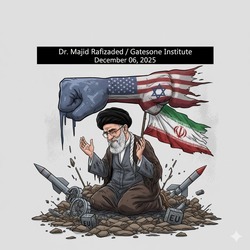
النظام الإيراني جاثٍ على ركبتيه — فلماذا بحق السماء نعيده إلى الحياة؟
الدكتور مجيد رافي زاده/معهد غايتستون/ 06 كانون الأول/ 2025
(ترجمة بحرية من العربية بواسطة الياس بجاني بالإستعانة بمواقع ترجمة ألكترونية)
Iran’s Regime Is on Its Knees — Why for God’s Sake Revive It?
Dr. Majid Rafizadeh/Gatestone Institute/December 06/2025
The European Union is reportedly preparing to sit down with Iran to negotiate on its nuclear program — again.
On the surface, this international charm offensive may appear to be a constructive effort toward dialogue, but a dryer analysis suggests that such negotiations risk handing a monumental victory to a vicious regime that is vulnerable and weak — and rabidly opportunistic. By offering Iran another platform for legitimacy, the EU and the UN are shoring up a monumentally brutal regime at a time when, for the West’s own good, it should be applying pressure, not extending a hand.
By granting legitimacy to a regime that represses its own citizens, the EU and UN disgrace themselves as well as betraying those Iranians fighting for basic human rights.
The efforts by the EU and the IAEA to resume talks with Iran are misguided and, frankly, dangerous. Iran’s regime apparently does not see a need for reforming or have the slightest intention of doing so.
The European Union is reportedly preparing to sit down with Iran to negotiate on its nuclear program — again. By offering Iran another platform for legitimacy, the EU and the UN are shoring up a monumentally brutal regime at a time when, for the West’s own good, it should be applying pressure, not extending a hand.
The European Union is reportedly preparing to sit down with Iran to negotiate on its nuclear program — again. Even Rafael Grossi, head of the International Atomic Energy Agency (IAEA) — the UN’s nuclear watchdog — seems interested in engaging Iran in “diplomacy” again.
Iran’s regime, not surprisingly, appears more than happy to accept these overtures. On the surface, this international charm offensive may appear to be a constructive effort toward dialogue, but a dryer analysis suggests that such negotiations risk handing a monumental victory to a vicious regime that is vulnerable and weak — and rabidly opportunistic. By offering Iran another platform for legitimacy, the EU and the UN are shoring up a monumentally brutal regime at a time when, for the West’s own good, it should be applying pressure, not extending a hand.
Iran’s nuclear program was, after half a century of international procrastination, finally damaged in a significant way by strikes carried out by Israel and the United States. The damage has left the regime not much to offer in return for concessions, although the only concession called for is to stop building nuclear weapons and ballistic missiles. In a normal negotiation, a party with strong assets might offer something other than what the other party wants, in exchange for sanctions relief, but this is not Iran’s situation at the time.
Paradoxically, its vulnerability is precisely why Tehran is in a position to gain from any talks: it can accept almost any terms, secure relief from sanctions, and breathe new life into its struggling economy, its ballistic missile program and its nuclear weapons program, all without giving up anything of real value. That is why engaging in talks now is strategically flawed: it would literally reward bellicosity and hand the regime an opportunity to re-consolidate its power.
Engaging with Iran in formal negotiations setting also confers legitimacy on a regime whose human rights record is deeply troubling, if not abysmal. Over the past year, both the regime’s executions — more than 1,000 just in 2025 — and its repressive measures have raised alarms across the globe, yet EU and UN officials nevertheless appear eager to sit down with the very leaders responsible for those atrocities. Every handshake and photo opportunity signals normalizing the regime’s actions and, by extension, disempowering the moral authority of the international community. The West would be empowering hardline factions, boosting the morale of Iran’s military and paramilitary forces, and sending a message that ruthless repression is acceptable — so long as Iran will sit down to talk and buy itself more time.
The 2015 Joint Comprehensive Plan of Action (“nuclear deal”), negotiated under the Obama administration and European powers, was intended to curb Iran’s nuclear ambitions in exchange for sanctions relief. On paper, it was a diplomatic triumph; in practice, the economic and political empowerment resulting from the deal allowed Iran to expand its influence across the Middle East, and support terrorist groups and militias that destabilized the region, culminating with the Hamas invasion of Israel on October 7, 2023.
Rewarding the Iranian regime with international legitimacy and economic relief reinforces its aggression; it does not restrain it. Western powers, therefore, should focus not on negotiations, which validate the Iranian regime, but on applying sustained pressure where it is most effective – in particular targeting Iran’s oil sector and the financial networks that sustain the regime. These measures would limit Iran’s ability to fund its nuclear program, ballistic missile production, and network of proxy terrorist groups and militias. At the same time, there should be a push for a total, extremely verifiable, dismantlement of its nuclear and missile programs, and full cooperation with international inspectors.
Anything short of complete transparency and disarmament simply repeats past mistakes, where concessions were not meaningful guarantees, to say the least, and in fact provided a pathway for Iran to continue developing nuclear weapons.
There is an imperative to consider the voices of the Iranian people, who have risked their lives, again and again, for justice and freedom. Tens of thousands of Iranian citizens have taken to the streets to oppose the Iranian regime over the years despite severe consequences, yet negotiations with Tehran often occur without the slightest interest in their plight. By granting legitimacy to a regime that represses its own citizens, the EU and UN disgrace themselves as well as betraying those Iranians fighting for basic human rights.
The efforts by the EU and the IAEA to resume talks with Iran are misguided and, frankly, dangerous. Iran’s regime apparently does not see a need for reforming or have the slightest intention of doing so.
Dr. Majid Rafizadeh, is a political scientist, Harvard-educated analyst, and board member of Harvard International Review. He has authored several books on the US foreign policy. He can be reached at dr.rafizadeh@post.harvard.edu
Follow Majid Rafizadeh on X (formerly Twitter)
https://www.gatestoneinstitute.org/22097/iran-on-its-knees
© 2025 Gatestone Institute. All rights reserved. The articles printed here do not necessarily reflect the views of the Editors or of Gatestone Institute.
النظام الإيراني جاثٍ على ركبتيه — فلماذا بحق السماء نعيده إلى الحياة؟
الدكتور مجيد رافي زاده/معهد غايتستون/ 06 كانون الأول/ 2025
(ترجمة بحرية من العربية بواسطة الياس بجاني بالإستعانة بمواقع ترجمة ألكترونية)
يُقال إن الاتحاد الأوروبي يستعد للجلوس مع إيران للتفاوض بشأن برنامجها النووي — مجدداً.
قد تبدو حملة الإغراء الدولية هذه، في ظاهرها، جهداً بنّاءً نحو الحوار، لكن تحليلاً أكثر جفافاً يشير إلى أن مثل هذه المفاوضات تنطوي على مخاطر منح نصر هائل لنظام شرس ضعيف وواهٍ — وانتهازي بشدة. فمن خلال تقديم منصة أخرى للشرعية لإيران، يعمل الاتحاد الأوروبي والأمم المتحدة على دعم نظام وحشي ضخم في وقت يجب فيه، من أجل مصلحة الغرب نفسه، تطبيق الضغط، وليس مد يد المساعدة.
إن منح الشرعية لنظام يقمع مواطنيه يسيء إلى الاتحاد الأوروبي والأمم المتحدة، فضلاً عن خيانة الإيرانيين الذين يكافحون من أجل حقوق الإنسان الأساسية.
إن جهود الاتحاد الأوروبي والوكالة الدولية للطاقة الذرية لاستئناف المحادثات مع إيران مضللة، وبصراحة، خطيرة. فمن الواضح أن النظام الإيراني لا يرى حاجة للإصلاح وليس لديه أدنى نية للقيام بذلك.
يُقال إن الاتحاد الأوروبي يستعد للجلوس مع إيران للتفاوض بشأن برنامجها النووي — مجدداً. ومن خلال تقديم منصة أخرى للشرعية لإيران، يعمل الاتحاد الأوروبي والأمم المتحدة على دعم نظام وحشي ضخم في وقت يجب فيه، من أجل مصلحة الغرب نفسه، تطبيق الضغط، وليس مد يد المساعدة.
يُقال إن الاتحاد الأوروبي يستعد للجلوس مع إيران للتفاوض بشأن برنامجها النووي — مجدداً. حتى رافائيل غروسي، رئيس الوكالة الدولية للطاقة الذرية (IAEA) — الهيئة الرقابية النووية التابعة للأمم المتحدة — يبدو مهتماً بإشراك إيران في “الدبلوماسية” مرة أخرى.
وليس من المستغرب أن يبدو النظام الإيراني سعيداً للغاية بقبول هذه المبادرات. قد تبدو حملة الإغراء الدولية هذه، في ظاهرها، جهداً بنّاءً نحو الحوار، لكن تحليلاً أكثر جفافاً يشير إلى أن مثل هذه المفاوضات تنطوي على مخاطر منح نصر هائل لنظام شرس ضعيف وواهٍ — وانتهازي بشدة. فمن خلال تقديم منصة أخرى للشرعية لإيران، يعمل الاتحاد الأوروبي والأمم المتحدة على دعم نظام وحشي ضخم في وقت يجب فيه، من أجل مصلحة الغرب نفسه، تطبيق الضغط، وليس مد يد المساعدة.
لقد تضرر برنامج إيران النووي، بعد نصف قرن من المماطلة الدولية، بطريقة مهمة بفضل الضربات التي نفذتها إسرائيل والولايات المتحدة. لم يتبق للنظام الكثير ليقدمه في مقابل التنازلات، على الرغم من أن التنازل الوحيد المطلوب هو التوقف عن بناء الأسلحة النووية والصواريخ الباليستية. في مفاوضات طبيعية، قد يقدم طرف يمتلك أصولاً قوية شيئاً آخر غير ما يريده الطرف الآخر، مقابل رفع العقوبات، لكن هذا ليس وضع إيران في الوقت الحالي.
ومن المفارقات أن ضعف طهران هو بالتحديد ما يضعها في موقع يسمح لها بالاستفادة من أي محادثات: يمكنها قبول أي شروط تقريباً، وتأمين الإعفاء من العقوبات، وبث حياة جديدة في اقتصادها المتعثر، وبرنامجها للصواريخ الباليستية، وبرنامجها للأسلحة النووية، كل ذلك دون التخلي عن أي شيء ذي قيمة حقيقية. ولهذا السبب، فإن الانخراط في المحادثات الآن هو خطأ استراتيجي: فمن شأنه أن يكافئ العدوان حرفياً ويمنح النظام فرصة لإعادة ترسيخ سلطته.
إن الانخراط مع إيران في إطار مفاوضات رسمية يضفي أيضاً شرعية على نظام سجلّه في مجال حقوق الإنسان مقلق للغاية، إن لم يكن مزرياً. على مدى العام الماضي، أثارت عمليات الإعدام التي نفذها النظام — أكثر من 1000 عملية في عام 2025 وحده — وإجراءاته القمعية، ناقوس الخطر في جميع أنحاء العالم، ومع ذلك، يبدو مسؤولو الاتحاد الأوروبي والأمم المتحدة حريصين على الجلوس مع القادة المسؤولين عن تلك الفظائع تحديداً. كل مصافحة وفرصة لالتقاط الصور تشير إلى تطبيع تصرفات النظام، وبالتالي، إضعاف السلطة الأخلاقية للمجتمع الدولي. سيقوم الغرب بتمكين الفصائل المتشددة، وتعزيز معنويات القوات العسكرية وشبه العسكرية الإيرانية، وإرسال رسالة مفادها أن القمع الوحشي مقبول — طالما أن إيران ستجلس للتحدث وتكسب المزيد من الوقت لنفسها.
كان الهدف من خطة العمل الشاملة المشتركة لعام 2015 (“الاتفاق النووي”)، التي تم التفاوض عليها في ظل إدارة أوباما والقوى الأوروبية، هو كبح طموحات إيران النووية مقابل رفع العقوبات. على الورق، كان انتصاراً دبلوماسياً؛ لكن من الناحية العملية، سمح التمكين الاقتصادي والسياسي الناتج عن الاتفاق لإيران بتوسيع نفوذها في جميع أنحاء الشرق الأوسط، ودعم الجماعات الإرهابية والميليشيات التي زعزعت استقرار المنطقة، وبلغت ذروتها بغزو حماس لإسرائيل في 7 أكتوبر 2023.
إن مكافأة النظام الإيراني بالشرعية الدولية والإغاثة الاقتصادية تعزز عدوانه؛ إنها لا تقيّده. ولذلك، يجب على القوى الغربية ألا تركز على المفاوضات، التي تمنح الشرعية للنظام الإيراني، بل على تطبيق ضغط مستدام حيث يكون أكثر فعالية – ولا سيما استهداف قطاع النفط الإيراني والشبكات المالية التي تحافظ على النظام. من شأن هذه الإجراءات أن تحد من قدرة إيران على تمويل برنامجها النووي، وإنتاج الصواريخ الباليستية، وشبكتها من الجماعات الإرهابية والميليشيات الوكيلة. وفي الوقت نفسه، يجب أن تكون هناك دفعة نحو تفكيك كامل، وقابل للتحقق بدرجة قصوى، لبرامجها النووية والصاروخية، والتعاون الكامل مع المفتشين الدوليين.
إن أي شيء أقل من الشفافية الكاملة ونزع السلاح يكرر ببساطة أخطاء الماضي، حيث لم تكن التنازلات ضمانات ذات مغزى، على أقل تقدير، بل وفرت في الواقع طريقاً لإيران لمواصلة تطوير الأسلحة النووية.
من الضروري الأخذ في الاعتبار أصوات الشعب الإيراني، الذي خاطر بحياته، مراراً وتكراراً، من أجل العدالة والحرية. لقد نزل عشرات الآلاف من المواطنين الإيرانيين إلى الشوارع لمعارضة النظام الإيراني على مر السنين على الرغم من العواقب الوخيمة، ومع ذلك غالباً ما تجري المفاوضات مع طهران دون أدنى اهتمام بمحنتهم. إن منح الشرعية لنظام يقمع مواطنيه يسيء إلى الاتحاد الأوروبي والأمم المتحدة، فضلاً عن خيانة الإيرانيين الذين يكافحون من أجل حقوق الإنسان الأساسية.
إن جهود الاتحاد الأوروبي والوكالة الدولية للطاقة الذرية لاستئناف المحادثات مع إيران مضللة، وبصراحة، خطيرة. فمن الواضح أن النظام الإيراني لا يرى حاجة للإصلاح وليس لديه أدنى نية للقيام بذلك.
الدكتور مجيد رافي زاده هو عالم سياسي، ومحلل متعلم في جامعة هارفارد، وعضو في مجلس إدارة مجلة هارفارد الدولية. قام بتأليف العديد من الكتب حول السياسة الخارجية الأمريكية. يمكن التواصل معه عبر البريد الإلكتروني: dr.rafizadeh@post.harvard.edu
تابعوا مجيد رافي زاده على X (تويتر سابقاً):
© 2025 معهد غيتستون. جميع الحقوق محفوظة. المقالات المطبوعة هنا لا تعكس بالضرورة آراء المحررين أو معهد غيتستون.