Reflections and Faith Narrative on the Life of Saint Barbara on the Anniversary of Her Annual Feast Elias Bejjani/December 04/2025 (From the Archive of 2013)
The Universal Church commemorates the memorial of Saint Barbara on December 4th and seeks her intercession. However, historians differ in determining the time of her birth and martyrdom. Some believe that she received the crown of martyrdom in 235 AD during the seventh persecution instigated by Emperor Maximinus Thrax against Christianity. What supports this opinion is that her story mentions that she corresponded with the scholar Origen, who died in 255 AD.
Her Birth and Upbringing
Barbara was born in the early third century AD in the city of “Nicomedia.” She was the only daughter of her father, “Dioscorus,” a fanatic pagan known among his people for his excessive wealth, prestige, hard-heartedness, and hatred of Christianity. His only daughter, Barbara, was gentle in manners, kind, and humble, loving all people. Barbara’s mother died when she was young, so her father placed guards on her to keep her in the magnificent palace out of extreme fear for her. He also brought in brilliant tutors to teach her all kinds of linguistic, philosophical, and historical sciences, so that she would grow up like other wealthy girls of her era. Her father also filled the corners of the palace with idols of various deities that he worshipped so that his only daughter would imitate him in prostration and worship.
Her Conversion to Christianity
Barbara received a high secular education, but she felt a great emptiness in her mind and heart. Among her servants were some Christians, so she inquired of them about their God who does not dwell in stones. They explained to her the principles of the Christian religion and suggested that she correspond with the great scholar Origen, the teacher of the School of Alexandria, who could simplify the truths of the Christian faith for educated people like her. Barbara wrote to Origen about the philosophical and religious thoughts running through her mind. She asked him to condescend to be her teacher. He rejoiced at this and answered her letter, clarifying the truths of the Christian faith. He sent her a book by the hand of his disciple, “Valentianus,” whom he instructed to explain the teachings of the Lord Jesus to Barbara. When Barbara read his letter, she was filled with the Holy Spirit. With exceptional courage, she brought Valentianus into her palace to be one of her teachers. He instructed her in the principles of the Christian faith and explained to her the doctrine of the Divine Incarnation and the perpetual virginity of Mary, the Mother of God. After deepening her understanding of Christianity, she requested the grace of baptism. The priest Valentianus baptized her, and she consecrated herself to the Lord Jesus. She was diligent in prayer and meditation on the life of the Redeemer day and night, and her disdain for the idols with which her father filled the palace increased.
Her Refusal to Marry a Pagan
One of the sons of the nobles in “Nicomedia,” a pagan, asked for Barbara’s hand in marriage. Her father broached the subject with her, but she refused to marry him, claiming her desire to remain by her father’s side and the difficulty of parting from him and moving away. Her father then decided to accustom her to separation, so he traveled to another city for a few days.
Her Destruction of Idols and Sanctifying the Trinity
Barbara took advantage of her father’s absence from the palace by increasing her fasting, prayer, and meditation on the Holy Scriptures and the lives of the saints. She also destroyed the many idols of her father scattered throughout the palace. Her father had ordered a special bathhouse to be built for her in the palace with two windows. She ordered the builders to open a third window so that the number of windows through which light entered would correspond to the number of the Holy Trinity.
The Appearance of the Lord Jesus to Her
The Lord Jesus appeared to her in the form of a very beautiful young child. She was happy for a few moments, but then her joy turned into deep sorrow when the form of the Divine Child changed, as His body was covered in blood. She remembered the Redeemer and His enduring the suffering and crucifixion for the redemption of humanity. Angels appeared to her, comforting and encouraging her. Thus, Barbara lived heaven while still on earth, resembling the angels in purity and innocence.
Her Father Learns of Her Conversion to Christianity
When her father, “Dioscorus,” returned from his trip and found that she had destroyed his idols, he raged like a wild beast and, in his fit of anger, nearly killed her with beating and cutting. But she fled from his presence. After a few days, he spoke to her again about marrying a pagan young man. She refused, declaring that she had dedicated herself to the Lord Jesus. He lost control and almost murdered her, considering her words an insult to him and his pagan religion. He tried to explain to her that if she remained this way, she would cause him to lose his prestigious position in the state. He threatened that if she remained a Christian, he would wash away his shame by shedding her blood with his own hands. Here, Barbara asked him to listen to her, just for once, and she explained to him the futility of idol worship. At that, he was infuriated and reported her to the city governor.
Her Public Confession of Christ
Based on her father’s complaint, the governor summoned her to be tried publicly. He tried to lure her with golden promises if she recanted her faith in Christ, but he failed when she expressed her disdain for all the wealth and power in the world, and her pride in Christ Jesus… The governor then ordered Barbara to be chained, stripped of her clothes, and scourged with whips barbed like knives. Her body was torn, yet she endured without complaint, but glorified Christ and asked Him to grant her the strength to confess Him before the court. The next day, the governor ordered her to be interrogated publicly. The attendees were very surprised to see her body free of the marks of the scourges. The governor tried to tempt her again, and since his promises and threats did not affect her, he ordered her legs to be lacerated with iron combs. They also burned her with lit torches, severely beat her head, cut off her breasts, and then salted her wounded body… All this happened while she was praising God and proclaiming her faith in Jesus.
Her Continued Struggle and Endurance of Torment
They returned Barbara to her dark prison, and the next day they led her before the governor. Great was the astonishment of the people as they saw her in perfect health. The governor attributed her healing to his gods. The latter said to her: “See how the gods were able to protect you!” Barbara replied: “If your idols had life, they could have protected themselves the day I destroyed them in my father’s palace. The living God is the one who bandaged my wounds.” The governor became furious and asked his soldiers to behead Barbara after dragging her naked through the streets. God covered her with a heavenly light.
Her Martyrdom at the Hands of Her Father
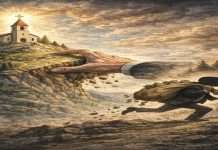
Her father asked the governor to allow him to cut off her head with his own hand, and he allowed him to do so. Her father led her outside the city, foaming with rage. When they reached the top of the hill, Barbara knelt on the ground, crossed her hands over her chest in the shape of a cross, and bowed her head. Her father took the axe, swung it at her neck, and cut it off.
The Life of Saint Barbara of Baalbek and “Hashle Barbara”
In her book about Saint Barbara, entitled in French Barbara of Baalbek, the writer and artist Lina Mor Nehmé asserts that Saint Barbara belongs to Phoenicia (and specifically to Baalbek). In a special interview in Anwar newspaper, Nehmé considered this book a “revolution” against the material celebrations that the Feast of Saint Barbara is limited to today, as it is overshadowed by the feast of demons and fairies known as Halloween, imported from the Celtic groups who settled in Britain and Ireland, and brought with them by the Irish to the United States, where it overshadowed All Saints’ Day, which coincides with it, as it is considered a pagan holiday. Although Lebanon is still less affected than other countries, Nehmé says, it has begun to catch the contagion little by little, as many practice the customs of the Western holiday just to have fun. It is important to emphasize that the rituals of Halloween are an act of devil worship, and it is important to spread the true story of the holiday among people.
Despite the existence of many stories about Saint Barbara, with details varying according to the region and the locals, Nehmé chooses the story of the people of Baalbek and explains in the end that it is the most convincing among others. She narrates the story in the voice of “Master Abdullah,” a Phoenician engineer who inherited his profession in building the Baalbek complex, which his ancestors started, and who is responsible for one of the main working teams in 235 AD. The author adds some details for dramatic necessity, as he fell in love with Barbara and asked for her hand.
Abdullah and the Story
Abdullah opens the story by introducing himself and pointing out that the Phoenicians built the Baalbek complex, not the Romans, as is commonly rumored. The writer expands on this in a French book from 1997, entitled Baalbek, a Phoenician Mark, in which she works to prove that the temples of Baalbek were built by Phoenicians, and that these transferred their art to the Romans, who gave their name to what (they could not carry back to their country) as was customary at the time. Abdullah then introduces the Phoenician merchant “Dyxorus,” one of the most important and powerful aristocrats in the region, who offered him a job for his daughter Barbara. The engineer describes the man’s cruelty and his love for the Romans in a style similar to comic books, showing the educational side of the writer, as it seems she is telling a story for children, wrapped in simplicity and humor, and including the necessary basic meanings. In the following four chapters, the narrator describes Barbara’s struggle to believe in gods who demand the sacrifice of the innocent, her search for answers to her cosmic questions, and her finding them with the Egyptian theologian Origen. He also describes her rebellion against her father’s gods and against him, and her defense of her faith in (the God of Christians), despite the hardships that awaited her, which did not push her to change her mind, but led her to death. But the story of Saint Barbara does not end here, but with what she did after her death to the souls of the living, especially Abdullah, the engineer who loved her before he knew her, and learned the love of Christ through her, as many have done and continue to do to this day. Today is connected to yesterday for Nehmé, who published the first part of a study on Prophecies of the Bible on Contemporary Lebanon last July (2000), which sparked controversy.
“Bsiyeh Barbara”
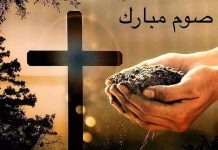
For her part, in an article by the writer Zina Khalil about Saint Barbara, “Bsiyeh Barbara,” she says: The Lord Jesus said, “Unless a grain of wheat falls into the earth and dies, it remains alone; but if it dies, it bears much fruit.” The wheat, or the grain of wheat, is the symbol of this night, “St. Barbara’s Eve,” which is celebrated by the majority of Christians in Lebanon in memory of “Saint Barbara,” who was martyred on December 4, 303 AD, and whose body is currently in a church in Old Cairo. Her father, Dioscorus, was fiercely attached to paganism… Saint Barbara, however, received knowledge from the Christian scholar Origen, and her heart became attached to the Lord Jesus. She dedicated her life to Him and received baptism without informing her father, deciding to live as a virgin devoted to worship. When her father realized the matter, he flogged her until blood flowed from her, and tore her body with sharp awls while she remained silent and praying… After this incident, “Barbara” fled to the wheat fields and wore clothes to hide her features… Since then, the Christian world has celebrated her feast. On the night of December 3rd every year, adults and children leave their homes in costumes, each chosen according to their taste. Over time, the costumes have evolved according to the trends of the era, which have an impact on the clothes and masks used on this occasion… After dressing up, they roam the houses of neighbors, relatives, and friends, greeting them, dancing joyfully, and chanting the song, “Hashle Barbara with the girls of the neighborhood, I recognized her by her eyes, by the touch of her hands, and by this bracelet, Hashle Barbara”… We also don’t forget the “Eid Sweets” from every house they visit (candies, Qatayef with cream and almonds or walnuts)… After the hospitality, they complete the song if the hostess was generous, saying: “Argheeli fawq Argheeli, the house people are generous.” But if she was stingy, they leave the house with angry looks on their faces, saying: “Argheeli fawq Argheeli, the house people are stingy.”
We also remember some sayings that people repeat on this occasion:
Barbara, you have spoken (or glittered), before the Lord you have strutted. Your father, the infidel, the worshiper of stones, brought the sword to kill you, the sword became a fishhook. He brought the rope to hang you, the rope became a belt. He brought the ember to burn you, the ember became incense.
Bsiyeh Barbara, and the wheat is in the cave, O my teacher, open the bag, may God send you a groom, by the grace of the Virgin and Christ. And a tile above a tile, the mistress of the house is a seamstress, a hook above a hook, the mistress of the house is wealthy. Bsiyeh Barbara, two columns and a saw, if it weren’t for the Sheikh (master/lady), we wouldn’t have come or entered this neighborhood.
In the West, Christians turn to prayer and supplication to Saint Barbara to protect them from misfortunes and dangers, especially during lightning strikes and at the hour of death… This martyr is honored by those in dangerous trades and industries, such as those who fire cannons, make gunpowder, work with weapons, and smelt metals. Also, all those who risk their lives have taken the saint as their special patroness, such as builders, firefighters, and others. It is mentioned in the life of Saint Stanislaus, the Jesuit monk, that he sought the intercession of Saint Barbara when he was approaching death and had no one to feed him with the sacrament of the Holy Eucharist. She answered his call and appeared to him with two angels, and one of them administered the food of the angels to him. He says: “I have a custom that, upon arriving at Father Joseph Yammine’s office, we open the ‘Synaxarion’ to discover which saint’s feast we are under. It happened once that there was confusion about the origin of a saint, as the information about him conflicted, as is the case with Saint Barbara, whom the Maronite Synaxarion says was born in Nicomedia, while Lebanese traditions and Father Boutros Daou confirm that she is from the city of Baalbek, as stated in his book History of the Maronites.”
NOTE: The information in this study is cited from various documented ecclesiastical, theological, research, and media references.